
Service
Obedience That Holds Up in the Real World
Your dog already knows "sit". The question is whether they do it when a magpie lands on the fence.
In short
Obedience training teaches your dog to respond to you reliably — sit, drop, stay, heel, recall, and settle — in the places where it actually matters. Most dogs can perform every command perfectly in a quiet kitchen. The work is making those same responses hold when there is a bike, a beach, a barbecue or another dog in the picture. That is what we build, in your home and on your street.
Sound familiar?
Sound familiar?
- Listens perfectly at home, deaf as a post at the park
- Pulls so hard on the lead that walks have stopped being walks
- Launches at visitors before they get through the door
- Ignores their name completely once something more interesting appears
- Counter-surfs, door-dashes, or steals whatever is left within reach
- Fine with you, chaos with the kids or your partner
How it works
How it works
We talk first
Before anything else I want to hear what a normal day looks like — where it goes wrong, what you have already tried, and what you actually want. There is no point teaching a perfect competition heel to someone who just wants to walk to the shops in peace.
I watch your dog in your world
Most of what I need to know shows up in the first ten minutes at your place: how your dog greets, where they position themselves, what they have quietly taken charge of. That is information you cannot get in a hall on a Tuesday night.
We build the foundations, hands on
You do the handling, not me. A dog that only responds to the trainer is a party trick. We work through the core skills together until they feel natural in your hands, and we practise them where the problems actually happen.
You leave with one thing to practise
Not twelve. One hour, one topic, demonstrated until you can do it yourself — then a week or two to make it automatic before we add the next thing.
Inside the process
What actually happens
Here is the thing about obedience that most people never get told: your dog is not being disobedient. They are being consistent — with the training they have actually received, which is usually a mix of accidental rewards, inconsistent rules and a few commands taught in the one room where nothing interesting ever happens.
So we start where the behaviour lives. I come to your house, and for the first part of the session I mostly watch and ask questions. Where does your dog sleep? Who feeds them? What happens when the doorbell goes? Who taught them that jumping up gets a cuddle? None of these are trick questions. They are the actual training programme your dog has been on, and it usually explains everything.
From there we get hands on. You handle your dog, I coach you. We work through the foundation skills — attention, loose lead, sit and drop with duration, a settle on the mat, and the beginnings of a recall that means something. Then we take it outside, onto your street, past the fence-line dog and the bin day chaos and whatever else your neighbourhood serves up. That transfer step is the part group classes almost never do, and it is the whole reason obedience falls apart in public.
By the end of a session you will have seen your dog do things you did not think they were capable of. That is not because I am magic. It is because clear, consistent information is dramatically more motivating to a dog than anyone expects, and most dogs have never been given any.
Then you practise, for a week or two, before we add anything else. Short sessions, often — five focused minutes twice a day beats an hour on Sunday every time. The next hour starts by checking that the first thing held, because building on something that did not is how training quietly falls over.
What you actually get
What a dog obedience training session actually involves
- Where
- Your home, your yard and your street
- Format
- One-on-one — just you, your dog and me
- Who should be there
- Everyone in the household, kids included
- How long
- One hour — we fix one thing properly rather than everything badly
What’s included
- A full assessment of your dog in its own environment before any training starts
- Hands-on coaching where you do the handling and I coach you through it
- Loose-lead work on your actual walking route, not a driveway
- Greeting manners worked at your own front door with your own doorbell
- A settle on the mat, built to a duration that is useful at dinner time
- Recall foundations and a staged plan to build them out
- Household rules agreed with everyone present, so they stop changing room to room
- A clear brief on the one thing to practise before the next session
- Follow-up support while you put it into practice
What’s not included
- Board-and-train — I do not take dogs away, because the handler is the variable
- Guaranteed outcomes or fixed timelines (see the limits below)
- Veterinary advice or diagnosis — that is your vet's job and I will refer you
- Equipment sales. If you need a long line or a different harness I will tell you what and why, and you buy it wherever you like
What I need from you
- Everyone in the household present if you can manage it
- Your dog's normal lead, collar or harness — not something new bought for the day
- Whatever food your dog actually values, in a pouch or a pocket
- An honest account of what you have already tried, including anything that went badly
- Five focused minutes twice a day afterwards, which beats an hour on Sunday
After the session
What happens once I leave
The session is the easy part. What determines whether it holds is the fortnight afterwards, so that is built into how this works rather than left to you.
So you leave the hour with one thing to practise, not twelve. That is the whole reason sessions are an hour rather than three: nobody retains a three-hour lesson, and a household given twelve instructions reliably does none of them. One thing, clearly demonstrated, practised until it is automatic, beats a comprehensive briefing every time.
Give it a week or two. Then the next session builds on it — and starts by checking the first thing actually held, because if it did not, adding to it is pointless.
Then follow-up support while you work through it. The questions that come up at day four are different from the ones you had on the day — usually some version of "he was brilliant on Tuesday and it has all gone backwards", which is normal and has a straightforward answer.
If you want more structured help, follow-up sessions are available and are shorter than the first. They are worth it for behaviour cases, for progressing to harder environments, and for anyone who does better with a bit of accountability. They are not compulsory, and for a lot of straightforward obedience cases one session plus the plan is genuinely enough.
The difference
Why this works where other things haven't
The usual approach
- Group classes in a hall, once a week, with fifteen other dogs
- Commands drilled in a controlled space your dog will never encounter again
- A treat pouch your dog learns to work for — and only when it is visible
- Homework sheets, no follow-up, and a certificate at the end
- Everyone taught the same thing regardless of breed, age or household
How I work
- One-on-one, in your home and on your actual walking route
- Skills built where the behaviour goes wrong, so they transfer
- Rewards used properly and then faded, so the dog works for you
- One thing to work on at a time, and real follow-up between sessions
- Built around your dog, your family and what your week actually looks like
What changes
What changes
- A loose lead you can hold in one hand with a coffee in the other
- A recall that works the first time, not the fourth
- A dog that settles on their bed while you eat, without being told twice
- Visitors greeted with four paws on the floor
- The same response from your dog whoever in the house is asking
- Walks you actually look forward to again
Expected outcomes
What you'll notice, and roughly when
The first thing that changes is usually the lead. Loose-lead walking is the fastest visible win in most households, and it is the one that changes your daily life the most, because it turns a chore back into something you do for fun.
Through the first fortnight, the household rules start to bed in. Your dog stops testing every boundary because the answer has stopped changing depending on who is home. Owners often describe this stage as the house getting quieter, which is exactly right — a dog that knows the rules does not need to keep asking about them.
Recall takes longer, and anyone who tells you otherwise is selling something. A reliable recall around real distractions is usually a matter of weeks of honest practice, built up in stages: on a long line first, in low-distraction spaces, then gradually into the places you actually want to use it. Rushing it is how you teach a dog that "come" is optional.
The longer-term picture is a dog you can take places. To the cafe on Jetty Road, down the Onkaparinga trail, to a mate's barbecue. Not a robot — a dog that is easy to be around, because they understand what is being asked and they have a handler who is clear about asking. That is what obedience is actually for.
Being straight with you
What this won't do
The honest version of what this service will and will not do.
Obedience training does not fix fear. If your dog is frightened of something, teaching it a better "sit" will not change how it feels. You can end up with a beautifully obedient dog that is still terrified of men in hats. If what you are describing is fear, reactivity, aggression or panic, the behaviour consultation is the right starting point and I will say so on the phone rather than take the obedience booking.
It does not work without the household. If one person follows the plan and three do not, your dog will correctly learn that the rules depend on who is in the room. That is not a training failure, it is an arithmetic one, and no amount of skill on my part solves it.
It is not fast for a habit with years behind it. A seven-year-old dog that has pulled on lead its whole life is not going to walk beautifully by Friday. It will improve noticeably, and it will keep improving as long as you keep going.
And if I think you need a vet, I will tell you. Sudden changes in behaviour, dogs over about seven, or anything that looks like discomfort during handling — those go to your vet before they go anywhere near an obedience plan.
Who this is for
Is this the right fit?
If you recognise yourself in this list, we should talk.
- Dogs of any age — puppies through to seniors, it is never too late
- Owners who have done a group class and found it did not stick
- Households where everyone gives a different instruction
- Adolescent dogs who have suddenly forgotten everything they knew
- Anyone who wants a dog they can take places
Suburb-specific
Dog Obedience Training in your suburb
Local guides for the suburbs where this comes up most.
City of Onkaparinga
Dog Obedience Training in Morphett Vale
One of the biggest suburbs in the state, and the densest dog population I work with. Fences and barking dominate.
Read the Morphett Vale guideCity of Onkaparinga
Dog Obedience Training in McLaren Vale
Acreage recall, vineyard boundaries and dogs that need to behave at a cellar door on a Sunday.
Read the McLaren Vale guideWhere I work
Dog Obedience Training across southern Adelaide
I travel in-home from the Adelaide CBD south through to Victor Harbor.
 27 suburbs
Adelaide's Inner South
Small blocks, shared fences and footpaths full of people. The inner south asks a lot of a dog.
Dog training in Inner South 26 suburbs
The Southern Beaches
Beach walks, esplanade crowds and off-lead hours that catch people out. Recall matters more here than anywhere.
Dog training in Southern Beaches 35 suburbs
Adelaide's Southern Suburbs
The heartland. Close-set housing, shared fences, and more council barking complaints than anywhere else I work.
Dog training in Southern Suburbs 22 suburbs
The Southern Vales
Vines, acreage and one of the best dog beaches in the state. Different geography, different problems.
Dog training in Southern Vales 25 suburbs
The Fleurieu & Victor Harbor
Hardest part of the state to find proper behaviour help. That is exactly why I come down here.
Dog training in FleurieuReal owners
Owners I've worked with on dog obedience training
After just 1 session with The Dog Obedience Guy I could already see improvement with Sammi. Today I walked both dogs, side by side with ease continuing the strategies I learnt. Thanks, one very happy customer
Often comes up alongside
Related services
These are the ones people working on this most often need to look at too.
Puppy Training
Everything your puppy learns in the next twelve weeks, they will believe for the rest of their life. Worth getting right.
Learn moreIn-Home Dog Training
Your dog does not misbehave in a training hall. It misbehaves at your front door. So that is where we work.
Learn moreReactive Dog Training
You have started walking at 6am so you do not meet anyone. That is not a walk, that is a covert operation.
Learn moreRead more
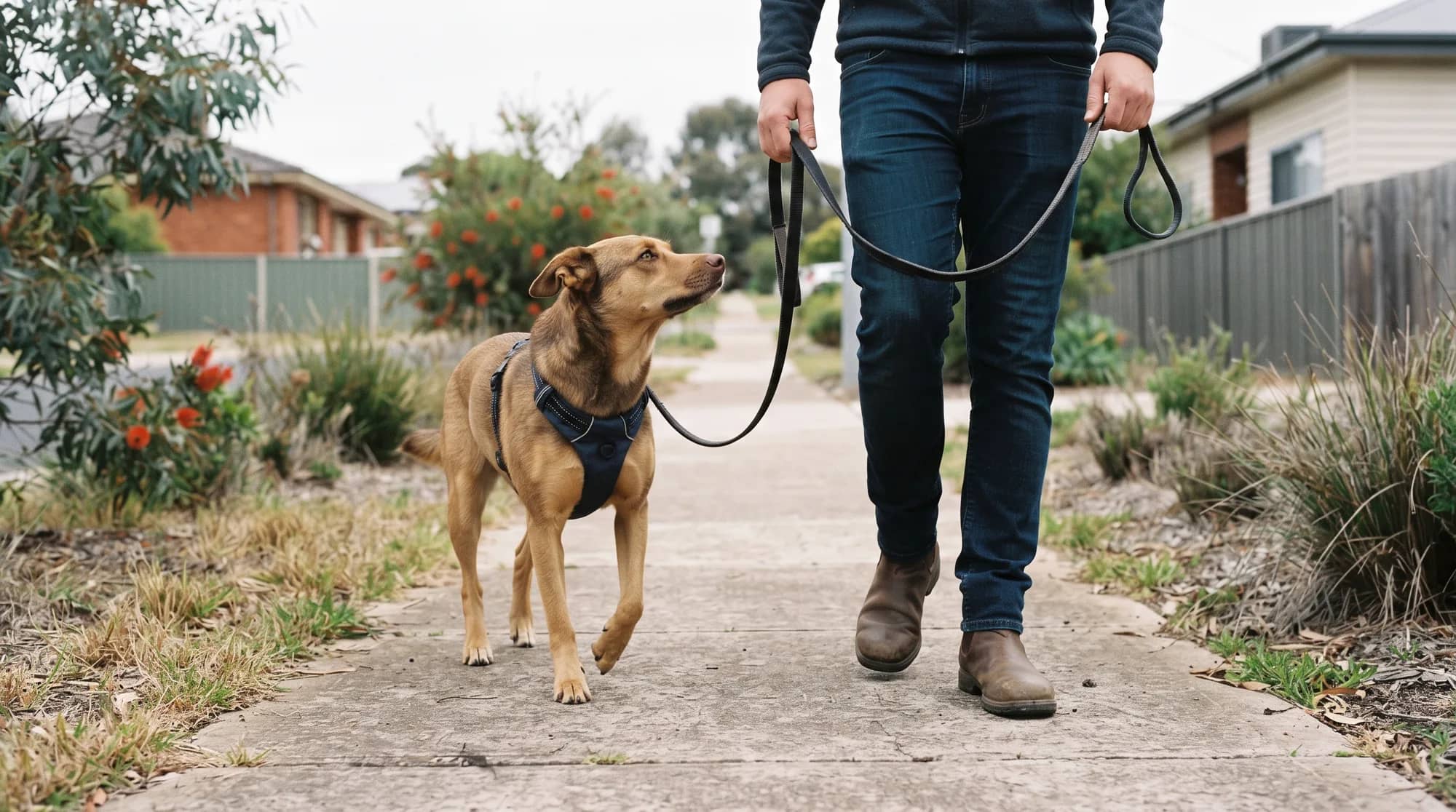
Obedience & Training
How to Stop Your Dog Pulling on the Lead
Your dog is not pulling because it is dominant, stubborn, or untrained. It is pulling because pulling works — and it has worked every single walk since the day you got it.
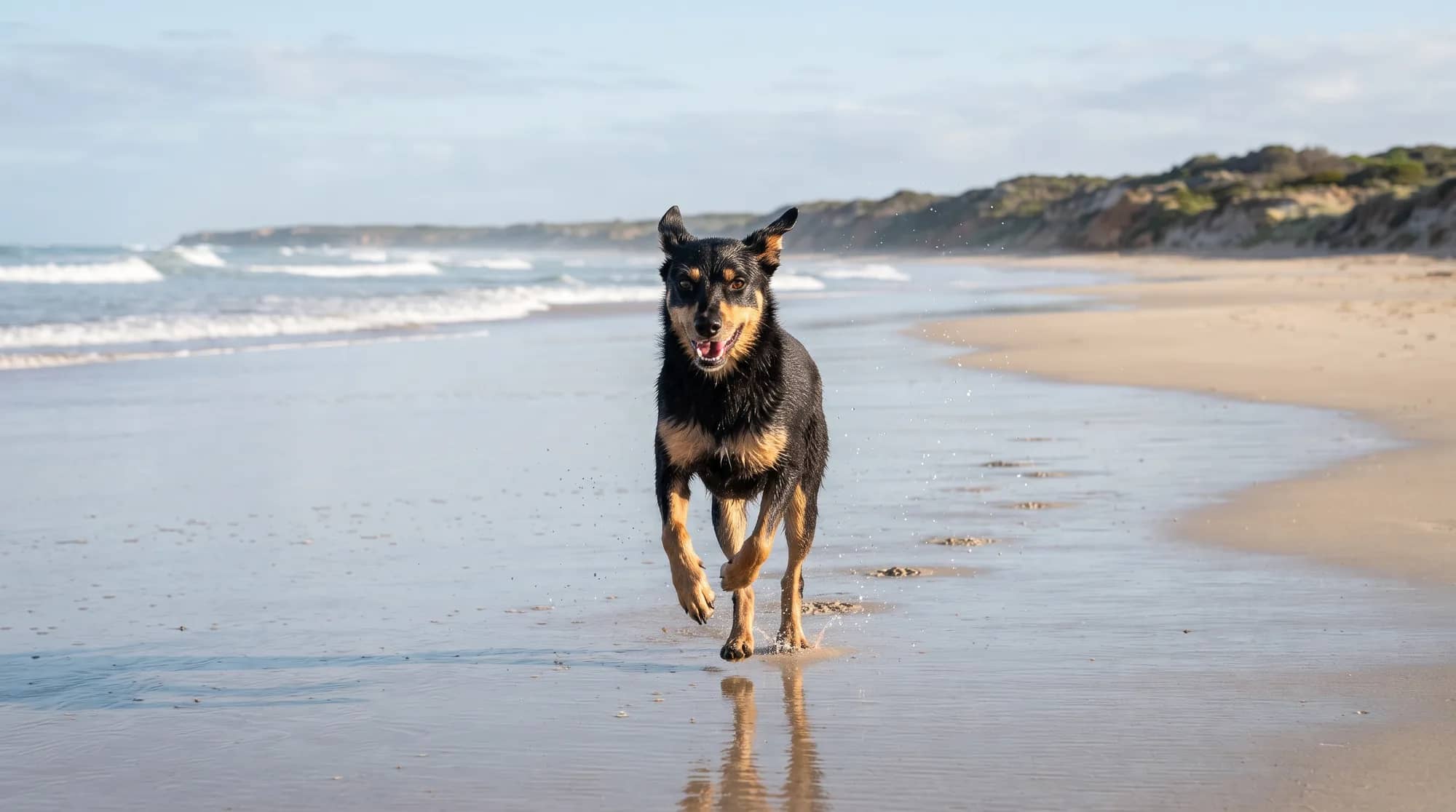
Obedience & Training
Why Your Dog Won't Come When Called (And How to Fix It)
Every time you call your dog and it does not come, you are teaching it that "come" is optional. Here is how that happens, and how to undo it.
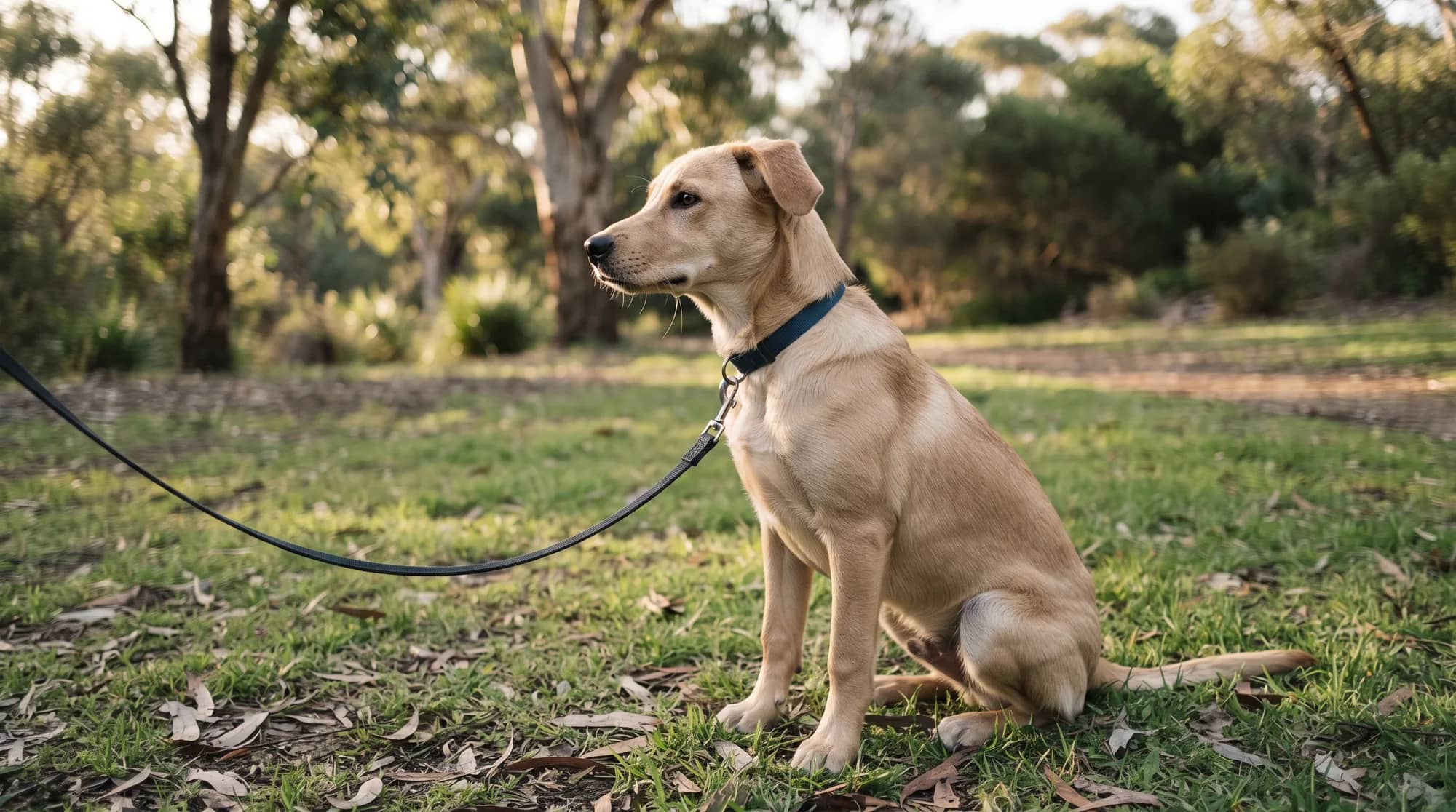
Obedience & Training
Your Dog Has Not Forgotten Its Training. It Is a Teenager.
At around ten months, a lot of owners conclude their training failed. It did not. Their dog hit adolescence — and almost nobody warns you about it.
Local pages
Dog Obedience Training near you
Same service, written for the suburb — the council, the parks and the problems that come up there.
Suburbs
Suburbs where this comes up most
Each has its own page with the council, the parks and the problems specific to it.
Read up
Free guides on dog obedience training
Written for owners in southern Adelaide. If one of these sorts your problem out and you never ring me, that is a good outcome.
Obedience & Training
How to Stop Your Dog Pulling on the Lead
Your dog is not pulling because it is dominant, stubborn, or untrained. It is pulling because pulling works — and it has worked every single walk since the day you got it.
Obedience & Training
Why Your Dog Won't Come When Called (And How to Fix It)
Every time you call your dog and it does not come, you are teaching it that "come" is optional. Here is how that happens, and how to undo it.
Obedience & Training
Your Dog Has Not Forgotten Its Training. It Is a Teenager.
At around ten months, a lot of owners conclude their training failed. It did not. Their dog hit adolescence — and almost nobody warns you about it.
Questions
Dog Obedience Training — your questions
How many sessions will my dog need?
My dog is 7. Is it too late?
Do I need to use treats forever?
Should the kids be involved?
Is in-home really better than a group class?
Ready when you are
Let's sort your dog out.
Tell me what's going on and I'll tell you straight whether I can help — and roughly what it will take. No obligation, no pressure. Southern suburbs of Adelaide — CBD to Victor Harbor.
Send a quick enquiry
Four things and I’ll come back to you. If it is urgent, ring instead — that is always faster.