
Service
For the Walk That Has Become a Battle
You have started walking at 6am so you do not meet anyone. That is not a walk, that is a covert operation.
In short
Reactivity is an over-arousal problem, not a disobedience problem. A reactive dog is not choosing to lunge and bark — it has gone over the threshold where it can think, and the explosion is what comes out. Training that only addresses the lunge misses the point. The work is lowering the arousal underneath it, and rebuilding the response at a distance where your dog can still cope.
Sound familiar?
Sound familiar?
- Lunging, barking or screaming at other dogs on lead
- Absolutely fine off lead, a nightmare on it
- Reacts to bikes, skateboards, prams, joggers, cars
- Fence-fighting with the neighbour's dog
- You have changed your walking times to avoid everyone
- Your arm and your nerves are both shot
How it works
How it works
Work out what kind of reactivity it is
Fear, frustration and over-arousal look almost identical on the end of a lead and need genuinely different approaches. Getting this wrong is why a lot of reactivity training fails.
Lower the baseline at home
Reactive dogs are usually already wound up before they leave the house. If your dog is at seven out of ten in the lounge room, the trigger only has to add three. We start indoors.
Find the threshold
The distance at which your dog notices a trigger but can still think. That distance is where all the useful work happens — and it is almost always further away than owners expect.
Rebuild it on your street
Your actual walking route, your actual triggers. We close the distance in stages, on a schedule you can follow, with a clear rule for what to do when it goes wrong.
Inside the process
What actually happens
If you have a reactive dog, you already know the drill. You spot the other dog first. You start scanning for a driveway to duck into. Your grip tightens, your shoulders go up, and your dog — who is reading you far more closely than you realise — gets the message that something bad is coming. Then it happens anyway, and you walk home feeling like a failure.
None of that is your fault, and almost none of it is your dog choosing to be difficult. Reactivity is what happens when arousal goes past the point where thinking is possible. Above that line, your dog is not ignoring you. It genuinely cannot hear you. Telling a dog to sit at that moment is like asking someone to do mental arithmetic while their smoke alarm is going off.
So we start indoors, which surprises people. Most reactive dogs are not calm before the walk. They are already running hot — patrolling the front window, reacting to the letterbox, unable to settle when someone walks past. If that is the resting state, the trigger only has to add a small amount to tip them over. Bring the baseline down and the same trigger suddenly has a lot further to push.
Then we find your dog's threshold. This is the single most useful number in reactivity work: the distance at which your dog notices the other dog but can still respond to you. Most owners are working ten metres inside it, which means every rep is a failed rep, and failed reps are practice. Get the distance right and your dog starts stringing together successes — and success is what actually rewires this.
From there it is your street, your triggers, staged. The neighbour's dog behind the colorbond. The bike path. The bloke who walks two staffies at four o'clock. We close the distance gradually, with clear criteria for when to progress and an explicit plan for the days it does not go well — because there will be days it does not go well, and having a plan for those is what stops one bad walk undoing three good weeks.
What you actually get
What a reactive dog training session actually involves
- Where
- Your home first, then your actual walking route
- Format
- One-on-one — a group is the wrong place for a reactive dog
- Starts with
- Working out whether it is fear, frustration or arousal
- How long
- One hour — we fix one thing properly rather than everything badly
What’s included
- Identifying which kind of reactivity you actually have — fear, frustration or over-arousal
- Lowering the baseline at home, because most reactive dogs are already wound up before the walk
- Finding your dog's genuine threshold distance rather than guessing at it
- Route planning: mapping the circuits near you with the sightlines to make this workable
- Threshold work on your real route with your real triggers
- Equipment guidance so you have control while you train
- A staged written progression with distances, and a rule for what to do on a bad day
- Follow-up support through the inevitable plateaus
What’s not included
- Flooding — deliberately pushing your dog past threshold to "get it over with"
- Aversive tools. Adding discomfort to an already stressed dog reliably makes reactivity worse
- Group classes. A reactive dog in a hall full of dogs is not learning, it is enduring
- A promise that your dog will end up loving other dogs. Neutral is the goal, and neutral is plenty
What I need from you
- Honesty about how bad it actually gets, including anything that frightened you
- Willingness to change your walking route and times for a few weeks
- Acceptance that fewer walks may be better in the short term than daily failed ones
- Video of a typical encounter if you can get it safely
- The discipline to work at a distance that looks unambitious but is where the progress lives
After the session
What happens once I leave
Reactivity work is measured in weeks, and the support between sessions is where most of it actually happens.
The work is a staged progression rather than a set of exercises: which routes, at which times, at what distance, and how you know when to close that distance. You will get an explicit bad-day rule too, because you will have one and the instinct is to push through, which undoes a fortnight.
Expect the shape of it to look like this. A first clean pass early — your dog walks past something that would normally have caused a scene, at whatever distance that takes, and that is the proof the mechanism works. Then weeks one to three building a run of small wins on the same routes. Then a period where the threshold compresses and new environments come online.
Then, somewhere in there, a week where it appears to have gone completely backwards. That is normal. It usually follows a startle or an off-lead dog running up, and the answer is to drop back a stage and rebuild, which comes back faster the second time.
Follow-up sessions are genuinely worth it for reactivity, more than for obedience. Progressing to harder environments is much easier with someone reading your dog's body language alongside you, because the early signals are subtle and most owners miss them until the reaction is already underway.
The difference
Why this works where other things haven't
The usual approach
- High-value treats that work in the driveway and fail on the footpath
- Corrections that add stress to a dog that is already over-stressed
- A no-pull harness or head halter as the entire plan
- "Just avoid other dogs" — forever
- Being told to assert yourself more
How I work
- Identify the actual driver — fear, frustration or arousal
- Bring the baseline down before touching the trigger
- Work under threshold so your dog can succeed every rep
- Real routes, real triggers, staged distances
- A written progression with clear rules for a bad day
What changes
What changes
- Walking past a trigger without the explosion
- A loose lead even when another dog appears
- A dog that looks to you instead of escalating
- Walking at normal hours, on normal routes, like a normal person
- Recovery in seconds rather than the rest of the walk
Expected outcomes
What you'll notice, and roughly when
The moment people remember is the first clean pass. Somewhere in the first session or two, your dog walks past something that would normally have caused a scene, and does not. It might be at forty metres. It does not matter. That is the proof that the mechanism works, and everything after that is repetition and closing distance.
Weeks one to three are about building a run of small wins. Same routes, same times, same order, working at a distance where you are winning. It looks unambitious. It is exactly right. What you are doing is giving your dog a new default, and defaults are built by repetition, not by intensity.
Through weeks four to twelve the threshold compresses. Forty metres becomes twenty becomes eight. New environments come online — a different street, the reserve, eventually somewhere genuinely busy. Progress is not linear. There will be a week where it goes backwards, usually after a startle, an off-lead dog running up, or simply a tired dog. That is expected. You drop back a stage and rebuild, and it comes back faster the second time.
Where most reactive dogs end up is not "cured" in the sense of never noticing another dog. It is a dog that notices, glances at you, and carries on — because the trigger has genuinely stopped predicting anything worth reacting to. Your dog will probably always be a bit more sensitive than the average. What changes is that it stops running your life. You walk at 5pm again. You go to the beach. That is the actual goal.
Being straight with you
What this won't do
Some honest boundaries around what reactivity work does.
Neutral is the goal, not friendship. A successful outcome is a dog that notices another dog, glances at you and carries on — not a dog that wants to play with everyone. Owners hoping for a sociable dog are sometimes disappointed by an outcome that is actually excellent.
Your dog will probably always be more sensitive than average. What changes is that it stops running your life. You walk at normal hours, on normal routes, and handle the occasional wobble rather than dreading every outing.
If it is aggression rather than reactivity, the plan is different. The two look alike from the end of a lead and need genuinely different approaches, including a safety layer that reactivity work does not carry. Working out which one you have is the first thing I do, and if it is the other one I will say so.
It does not survive a household that keeps flooding the dog. If the threshold work happens on Tuesday and someone marches the dog through a crowded market on Saturday, you are undoing it faster than we build it.
And progress is not linear. Anyone selling you a straight line has not done much of this.
Who this is for
Is this the right fit?
If you recognise yourself in this list, we should talk.
- On-lead reactive dogs of any breed or size
- Frustrated greeters who are fine off lead and awful on it
- Dogs that have escalated from barking towards snapping
- Owners walking at odd hours to avoid other dogs
- Anyone who has stopped walking their dog altogether
Suburb-specific
Reactive Dog Training in your suburb
Local guides for the suburbs where this comes up most.
Where I work
Reactive Dog Training across southern Adelaide
I travel in-home from the Adelaide CBD south through to Victor Harbor.
 27 suburbs
Adelaide's Inner South
Small blocks, shared fences and footpaths full of people. The inner south asks a lot of a dog.
Dog training in Inner South 26 suburbs
The Southern Beaches
Beach walks, esplanade crowds and off-lead hours that catch people out. Recall matters more here than anywhere.
Dog training in Southern Beaches 35 suburbs
Adelaide's Southern Suburbs
The heartland. Close-set housing, shared fences, and more council barking complaints than anywhere else I work.
Dog training in Southern Suburbs 22 suburbs
The Southern Vales
Vines, acreage and one of the best dog beaches in the state. Different geography, different problems.
Dog training in Southern Vales 25 suburbs
The Fleurieu & Victor Harbor
Hardest part of the state to find proper behaviour help. That is exactly why I come down here.
Dog training in FleurieuReal owners
Owners I've worked with on reactive dog training
After just 1 session with The Dog Obedience Guy I could already see improvement with Sammi. Today I walked both dogs, side by side with ease continuing the strategies I learnt. Thanks, one very happy customer
Have just finished our last session and I was given excellent help and ideas. Turns out it wasn't Ollie (it was me) 🤣 Thank you for all the help. Ollie loved it. Would definitely recommend. Thanks Faz
Often comes up alongside
Related services
These are the ones people working on this most often need to look at too.
Aggressive Dog Training
If you are frightened of what your dog might do, you need someone who will tell you the truth rather than sell you a quick fix.
Learn moreBehaviour Consultations
Some problems do not respond to more training. They respond to understanding what is actually driving them.
Learn moreBarking Dog Training
Barking is a symptom, not a diagnosis. Six different problems produce the same noise — and they need six different answers.
Learn moreRead more
Obedience & Training
How to Stop Your Dog Pulling on the Lead
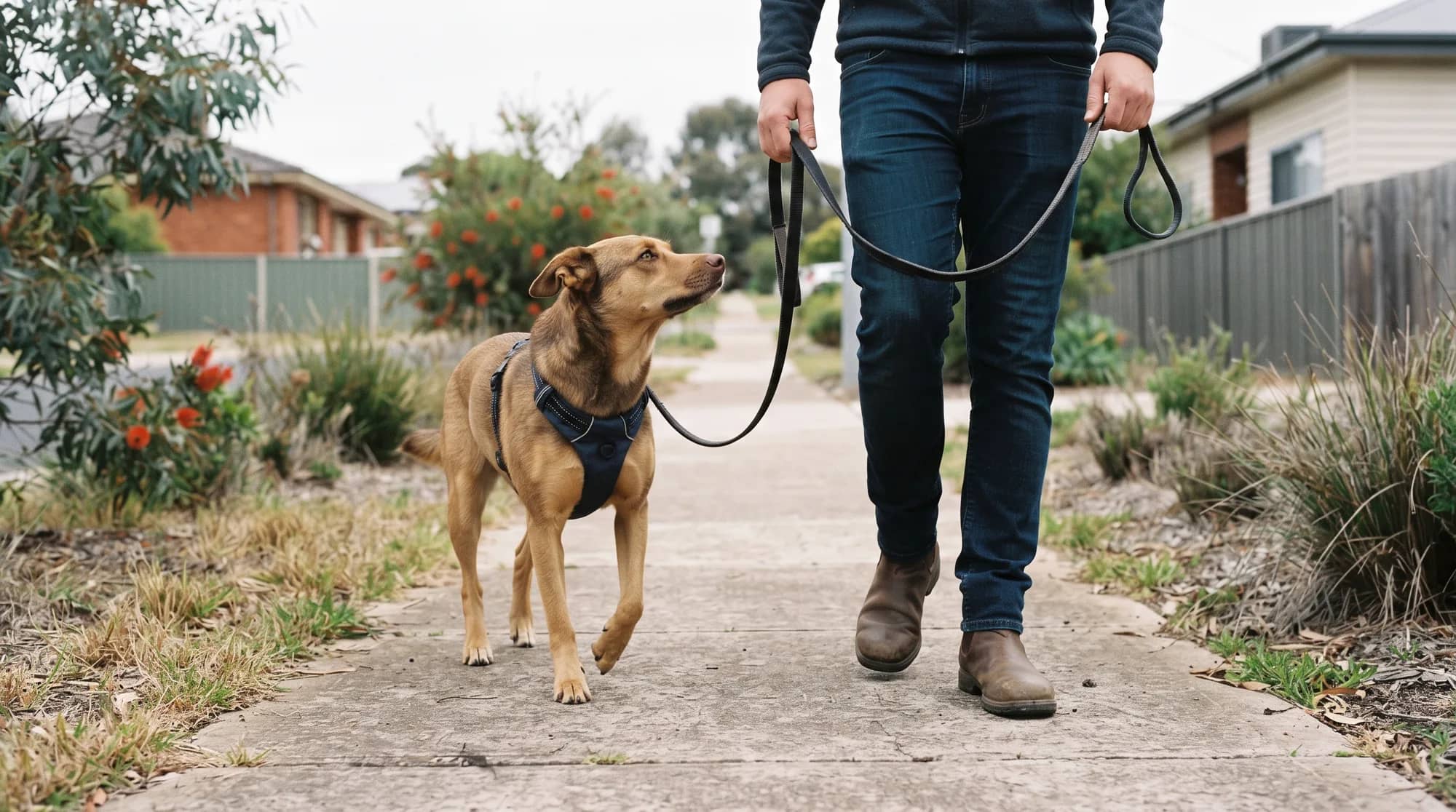
Your dog is not pulling because it is dominant, stubborn, or untrained. It is pulling because pulling works — and it has worked every single walk since the day you got it.
Obedience & Training
Why Your Dog Won't Come When Called (And How to Fix It)
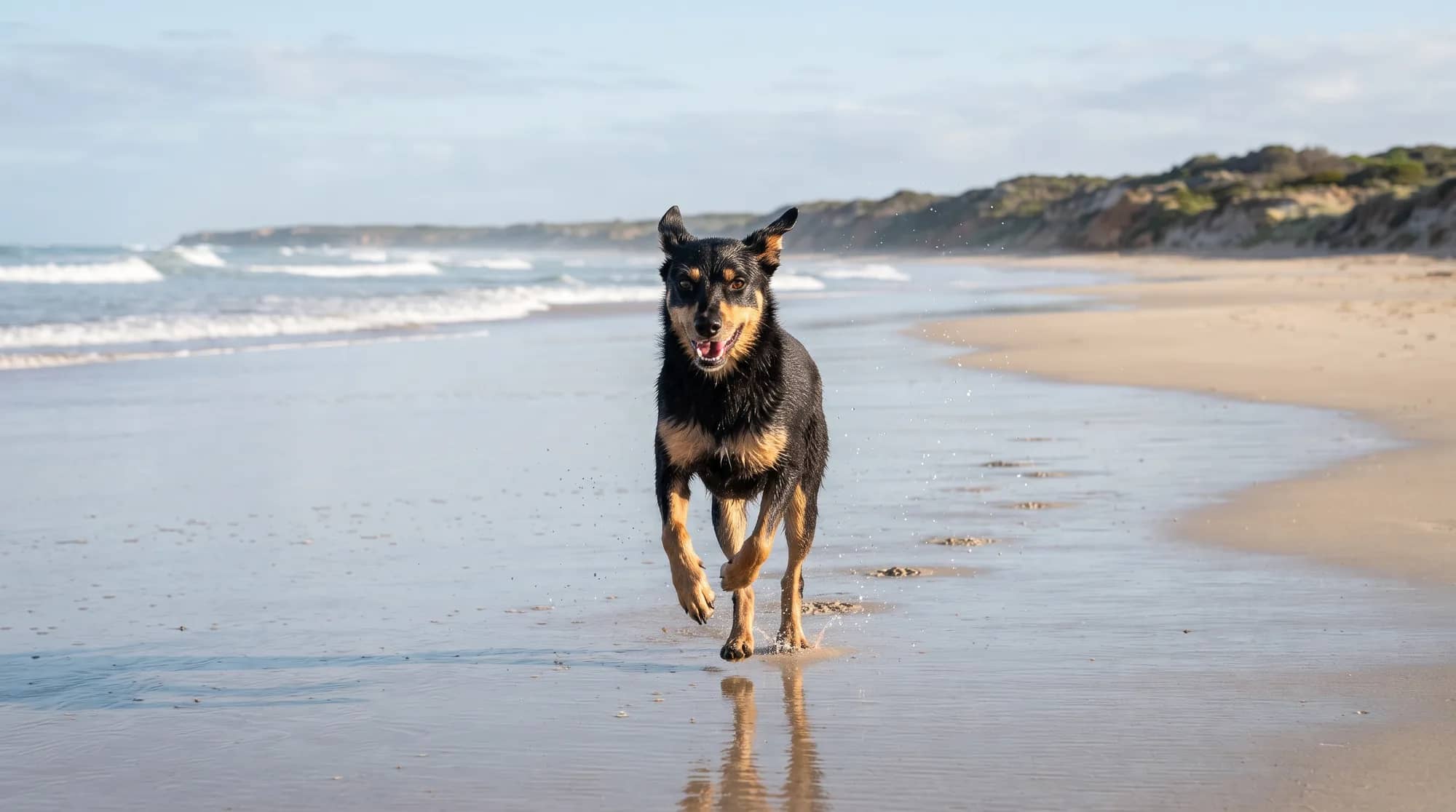
Every time you call your dog and it does not come, you are teaching it that "come" is optional. Here is how that happens, and how to undo it.
Behaviour Problems
Is My Dog Reactive or Aggressive? How to Tell the Difference
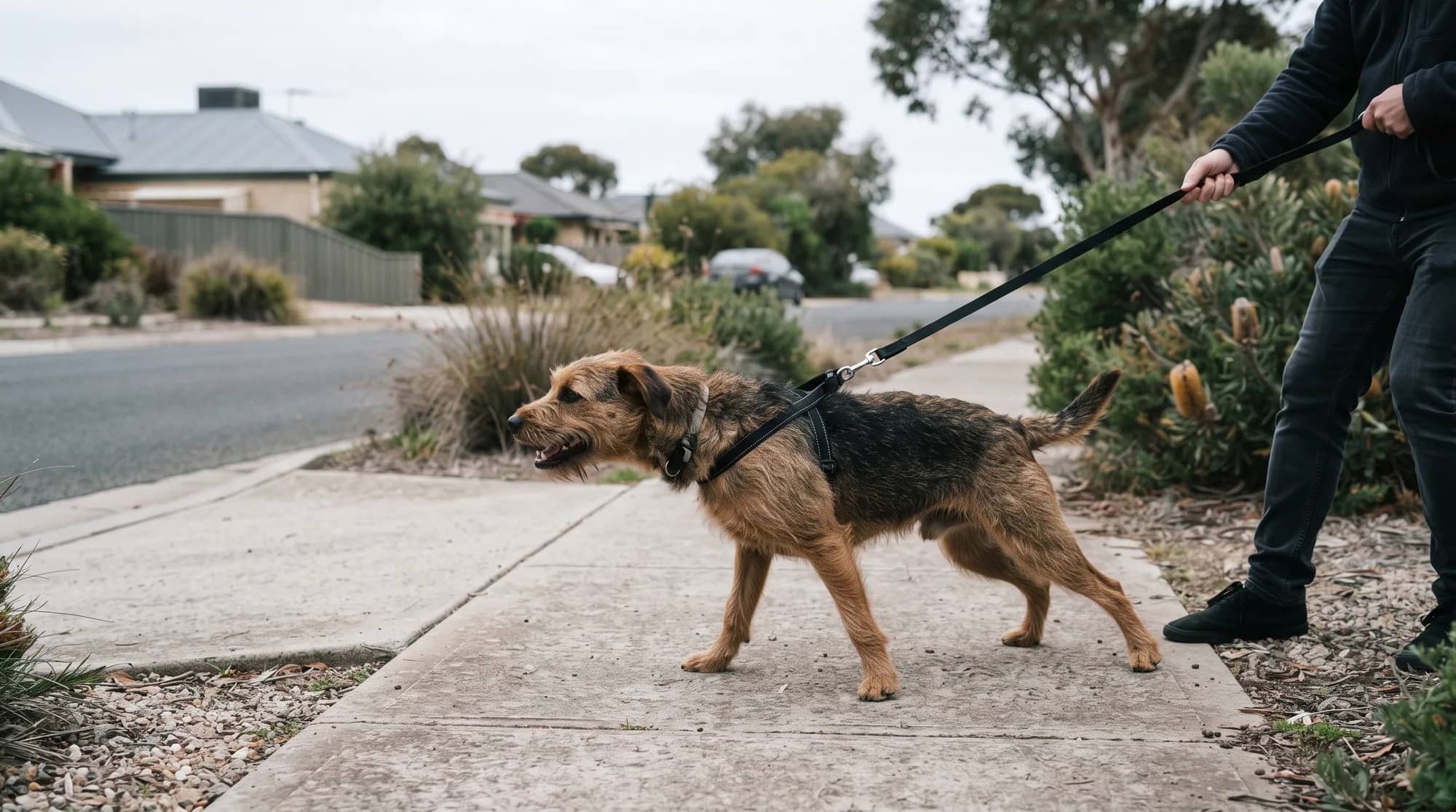
They look almost identical from the other end of the lead. They are not the same problem, and treating one like the other is why so much training fails.
Local pages
Reactive Dog Training near you
Same service, written for the suburb — the council, the parks and the problems that come up there.
Suburbs
Suburbs where this comes up most
Each has its own page with the council, the parks and the problems specific to it.
Read up
Free guides on reactive dog training
Written for owners in southern Adelaide. If one of these sorts your problem out and you never ring me, that is a good outcome.
Obedience & Training
How to Stop Your Dog Pulling on the Lead
Your dog is not pulling because it is dominant, stubborn, or untrained. It is pulling because pulling works — and it has worked every single walk since the day you got it.
Behaviour Problems
Is My Dog Reactive or Aggressive? How to Tell the Difference
They look almost identical from the other end of the lead. They are not the same problem, and treating one like the other is why so much training fails.
Adelaide Dog Life
Off-Leash Dog Beaches: Southern Adelaide to Victor Harbor
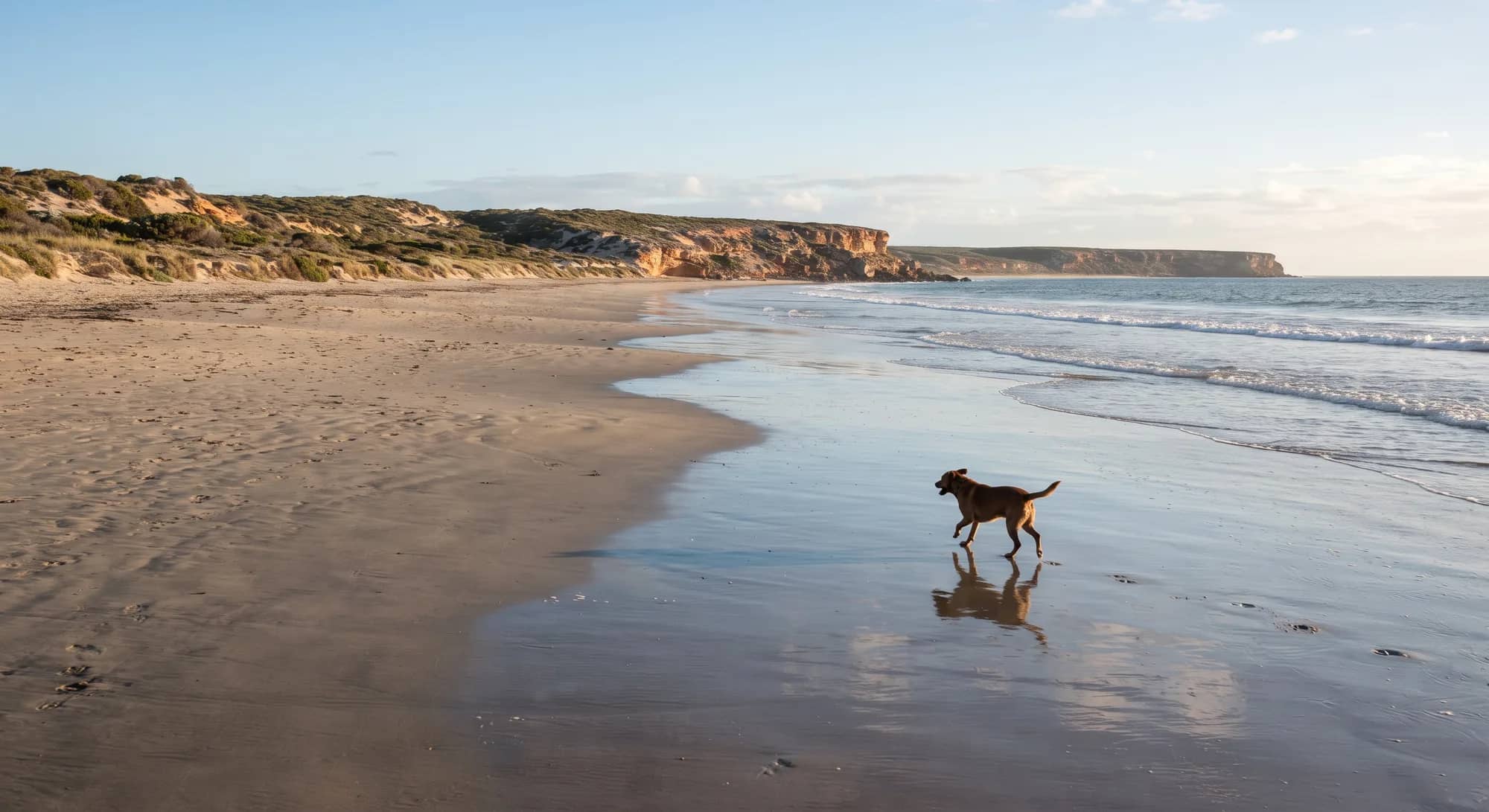
From Glenelg to Victor Harbor, a run-down of the coast, how the off-leash hours generally work, and the two words in the legislation that catch people out.
Questions
Reactive Dog Training — your questions
Is my dog reactive or aggressive?
My dog is perfect off lead but awful on it. Why?
Will a no-pull harness or head halter fix it?
What about fence-fighting with the dog next door?
Do I have to walk my dog every day while we work on this?
Ready when you are
Let's sort your dog out.
Tell me what's going on and I'll tell you straight whether I can help — and roughly what it will take. No obligation, no pressure. Southern suburbs of Adelaide — CBD to Victor Harbor.
Send a quick enquiry
Four things and I’ll come back to you. If it is urgent, ring instead — that is always faster.