
Service
Training Where the Problem Actually Happens
Your dog does not misbehave in a training hall. It misbehaves at your front door. So that is where we work.
In short
In-home dog training means the trainer comes to you and the work happens in the environment where the behaviour actually occurs — your hallway, your yard, your street. It suits behaviour problems particularly well, because context matters enormously to dogs: a dog that is calm in a neutral hall may be an entirely different animal at its own front gate.
Sound familiar?
Sound familiar?
- Your dog is a saint everywhere except home
- Group classes have not transferred to real life
- The problem only happens at the door, the fence or on your street
- No time for a fixed weekly class across town
- A dog that cannot cope in a room full of other dogs
- Multiple dogs, and the dynamic between them is the issue
How it works
How it works
Book a time that suits
Evenings and weekends included. I cover from the Adelaide CBD south through to Victor Harbor, and I group bookings for the longer Fleurieu runs.
I come to you
A full session in your home and on your street. Everyone in the household is welcome — in fact, the more of you there the better the result.
We work the real thing
The actual doorbell, the actual fence, the actual walking route, the actual dog next door. No approximations.
One thing at a time
An hour on rules and boundaries in the house. A week or two to practise. Then an hour on direction and protection out on the walk. Nobody has to remember everything, because I do not give you everything at once.
Inside the process
What actually happens
There is a reason so many owners tell me their dog was brilliant at obedience class and is still impossible at home. Dogs do not generalise the way we assume they do. To a dog, "sit" in a quiet hall on a rubber mat and "sit" at your own front door with the postie outside are two different problems in two different worlds. The first one does not automatically transfer to the second.
So I come to you. The session runs in your house, in your yard and on your street, and it starts the moment I walk in — because how your dog greets a stranger at the door is genuinely useful information and you cannot manufacture it anywhere else.
The other thing that only works in home is getting the whole household aligned. Most dog problems have a human consistency component: one person allows the couch, one does not; one lets them jump up, one knees them off; one feeds from the table when nobody is looking. In a class, one person attends and tries to relay it to everyone else. In your lounge room, everyone is there, and we sort it in one conversation.
Practically: I cover from the Adelaide CBD south, through the inner south and the southern beaches, across the City of Onkaparinga, out through the Southern Vales, and down the Fleurieu to Victor Harbor. For the further runs I group bookings so a trip covers more than one household — if you are down that way and the timing is flexible, mention it and I will try to line you up with another booking in the area.
And if what you actually need is a group class — some dogs genuinely benefit from structured work around other dogs, and there are good clubs in the south — I will tell you that. This is not a competition between formats.
What you actually get
What a in-home dog training session actually involves
- Where
- Your home, your yard and your street — I come to you
- Format
- One-on-one, whole household
- Coverage
- Adelaide CBD south through to Victor Harbor
- How long
- One hour — we fix one thing properly rather than everything badly
What’s included
- Travel to you across the whole corridor, from the CBD to the Fleurieu
- A full assessment in your own environment, starting the moment I arrive at the door
- Work on your actual triggers — your doorbell, your fence, your walking route
- Whole-household coaching so everyone leaves with the same instructions
- Hands-on practice where you handle your dog and I coach
- Evening and weekend availability, because a lot of dog problems only happen then
- One thing to practise before the next session, not a list of ten
- Follow-up support while you put it into practice
What’s not included
- Board-and-train. I do not take dogs away, because in most cases the handler is the variable being trained
- Group classes. If structured work around other dogs is what your dog needs, I will point you at a club
- Daily walking or minding services
- A fixed weekly time slot — sessions are booked individually around your schedule
What I need from you
- Everyone in the household present if you can arrange it
- Somewhere to park, and a heads-up about lift or building access if you are in an apartment
- Your dog behaving normally rather than exercised into exhaustion beforehand
- An honest account of what actually happens, not the tidy version
- Notice if your dog is difficult with strangers at the door, so I can arrive in a way that does not set it up to fail
After the session
What happens once I leave
Because the session happens in context, there is no transfer step to lose afterwards — what your dog learned at your front door was learned at your front door. That is the main reason in-home holds up better than a hall.
Having everyone present matters more here than people expect, and the reason is the household. Four people who heard four different versions of the same instruction will produce four different sets of rules by Thursday. Everyone watching the same demonstration, of one thing, is what stops that — and it is another reason the hour covers one topic rather than ten.
Follow-up support runs while you work through it. The questions that come at day four are the useful ones — usually "it was brilliant on the day and now it has fallen apart", which is normal, expected, and has a straightforward answer about consistency and criteria.
Follow-up sessions are shorter than the first and are worth it for three things specifically: progressing to harder environments once the basics hold, troubleshooting whatever has not clicked, and taking the training out into public — the cafe, the beach, the busy path. That last one is much easier with someone alongside you reading your dog.
For most straightforward cases, one session plus the plan and support is genuinely enough. I will tell you if I think you need more, and I will tell you when you do not.
The difference
Why this works where other things haven't
The usual approach
- A hall across town at a fixed time every week
- Fifteen dogs, one instructor, forty minutes
- Skills learned in a context your dog will never see again
- Only one family member can usually attend
- Nothing that addresses your specific house
How I work
- Your home, your street, your schedule
- One dog, one household, my full attention
- Skills built where they will be used
- The whole family involved and aligned
- The actual triggers, worked directly
What changes
What changes
- Training that transfers, because it never had to
- The whole household on the same page in one session
- Your actual triggers worked on, not simulated ones
- No travel, no fixed weekly time slot
- A plan built around your week rather than a curriculum
Expected outcomes
What you'll notice, and roughly when
The most common thing owners say at the end of an in-home session is some version of "I did not realise how much of this was us." That is not a criticism and it is not meant to make anyone feel bad. It is just what happens when someone with fresh eyes watches your household for an hour and points out the small things that are quietly training your dog in the opposite direction.
Because we work in context, there is no transfer step to lose. What your dog learns at your front door is learned at your front door. It does not need to be re-taught in a new environment later, which is where most of the loss happens with class-based training.
The whole-household effect tends to be the biggest single lever. Where everyone starts giving the dog the same information, dogs settle down remarkably quickly — often within days — simply because the rules have stopped changing depending on who is in the room.
After the session you have one thing to practise and support while you work through it. Most straightforward cases run to about three hour-long sessions spread over a month or so — the house, then the walk, then a check that it has held. More complex behaviour work needs more, and I will tell you honestly which one you are looking at rather than selling a package before I know.
Being straight with you
What this won't do
In-home is not automatically the right format for everything, so here is where it is not.
It is not a substitute for structured dog-to-dog work. If what your dog most needs is repeated, supervised exposure to other dogs in a controlled space, a good club does that better than I can. There are several across the southern suburbs and the Fleurieu. I will say so rather than sell you sessions.
It costs more than a class. A term of club classes is usually well under a hundred dollars; I charge a flat $110 an hour. What you are paying for is undivided attention in the environment where the problem lives. Whether that is worth it depends entirely on what you are trying to fix — for a dog that just needs sharpening up, a class is better value, and I will tell you that.
It does not work if only one person engages. The whole-household element is the biggest single lever in this format, and it is the one that gets skipped.
And distance has limits. For the Fleurieu I group bookings into runs, which means timing flexibility helps. If you are right on the edge of the corridor, ask rather than assume — I would rather tell you honestly than have you guess.
Who this is for
Is this the right fit?
If you recognise yourself in this list, we should talk.
- Any behaviour issue that is location-specific
- Busy households that cannot commit to a weekly class
- Multi-dog homes where the dynamic is part of the problem
- Dogs that cannot cope in a group setting
- Anyone in the southern suburbs, the Vales or the Fleurieu
Suburb-specific
In-Home Dog Training in your suburb
Local guides for the suburbs where this comes up most.
Where I work
In-Home Dog Training across southern Adelaide
I travel in-home from the Adelaide CBD south through to Victor Harbor.
 27 suburbs
Adelaide's Inner South
Small blocks, shared fences and footpaths full of people. The inner south asks a lot of a dog.
Dog training in Inner South 26 suburbs
The Southern Beaches
Beach walks, esplanade crowds and off-lead hours that catch people out. Recall matters more here than anywhere.
Dog training in Southern Beaches 35 suburbs
Adelaide's Southern Suburbs
The heartland. Close-set housing, shared fences, and more council barking complaints than anywhere else I work.
Dog training in Southern Suburbs 22 suburbs
The Southern Vales
Vines, acreage and one of the best dog beaches in the state. Different geography, different problems.
Dog training in Southern Vales 25 suburbs
The Fleurieu & Victor Harbor
Hardest part of the state to find proper behaviour help. That is exactly why I come down here.
Dog training in FleurieuReal owners
Owners I've worked with on in-home dog training
After just 1 session with The Dog Obedience Guy I could already see improvement with Sammi. Today I walked both dogs, side by side with ease continuing the strategies I learnt. Thanks, one very happy customer
Have just finished our last session and I was given excellent help and ideas. Turns out it wasn't Ollie (it was me) 🤣 Thank you for all the help. Ollie loved it. Would definitely recommend. Thanks Faz
Often comes up alongside
Related services
These are the ones people working on this most often need to look at too.
Dog Obedience Training
Your dog already knows "sit". The question is whether they do it when a magpie lands on the fence.
Learn morePuppy Training
Everything your puppy learns in the next twelve weeks, they will believe for the rest of their life. Worth getting right.
Learn moreBehaviour Consultations
Some problems do not respond to more training. They respond to understanding what is actually driving them.
Learn moreRead more
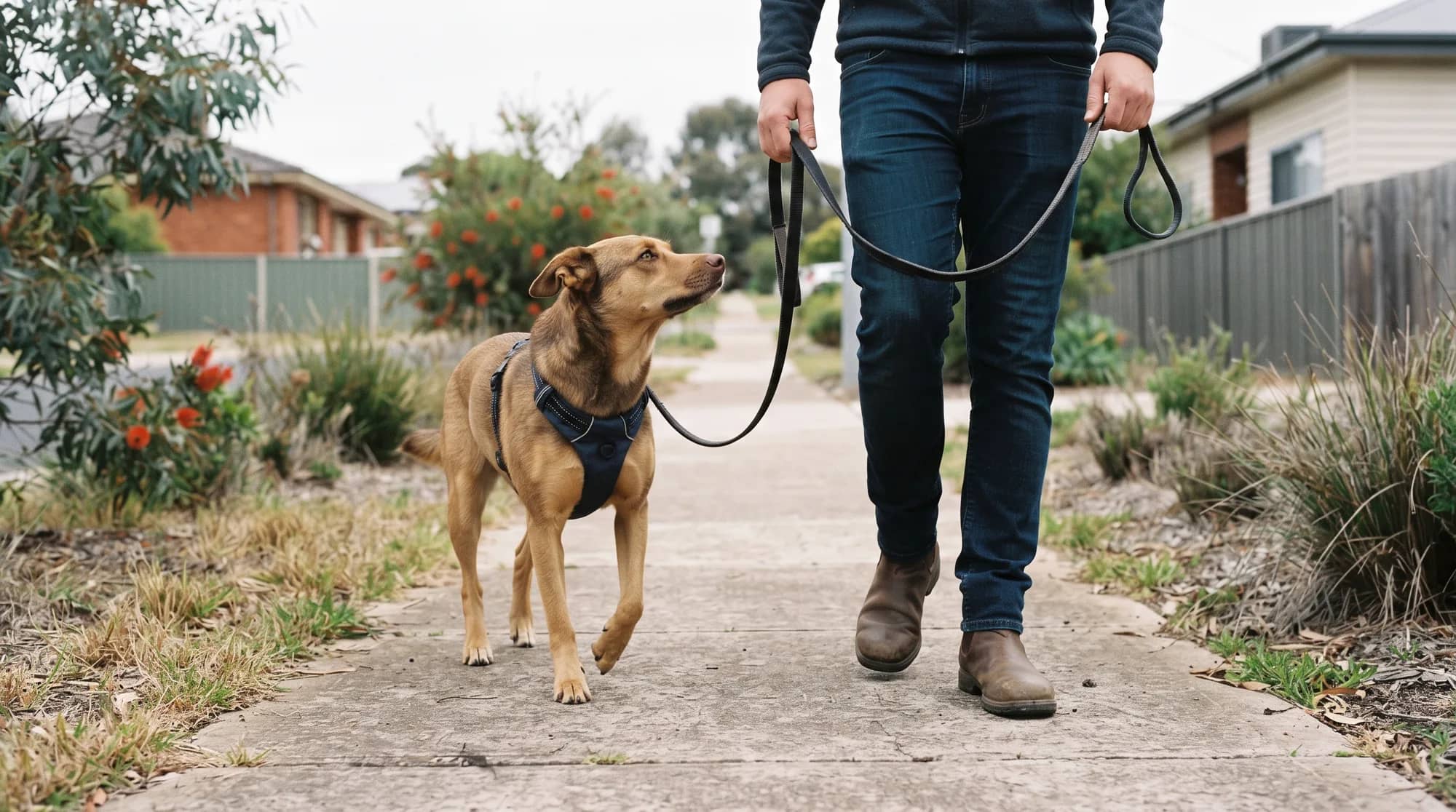
Obedience & Training
How to Stop Your Dog Pulling on the Lead
Your dog is not pulling because it is dominant, stubborn, or untrained. It is pulling because pulling works — and it has worked every single walk since the day you got it.
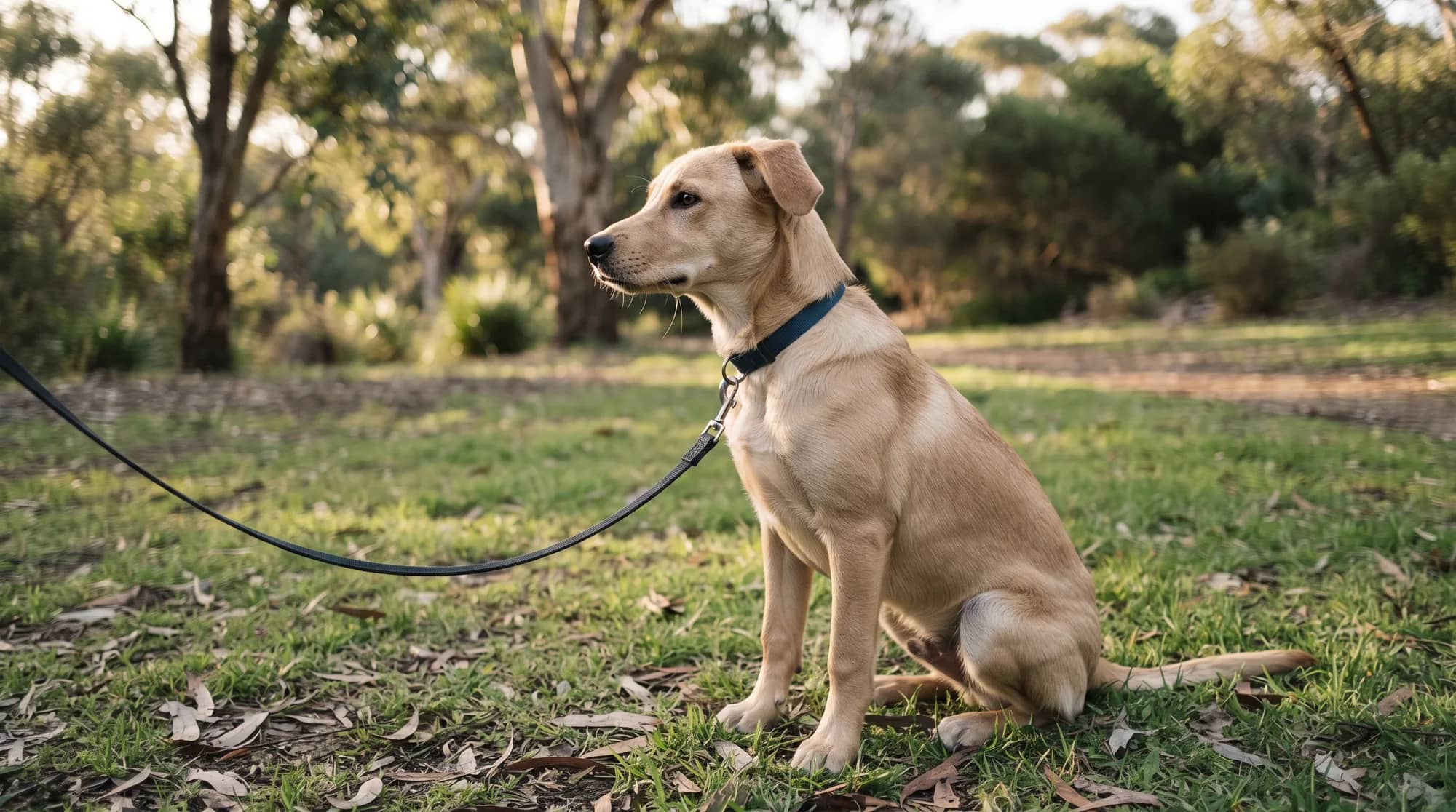
Obedience & Training
Your Dog Has Not Forgotten Its Training. It Is a Teenager.
At around ten months, a lot of owners conclude their training failed. It did not. Their dog hit adolescence — and almost nobody warns you about it.
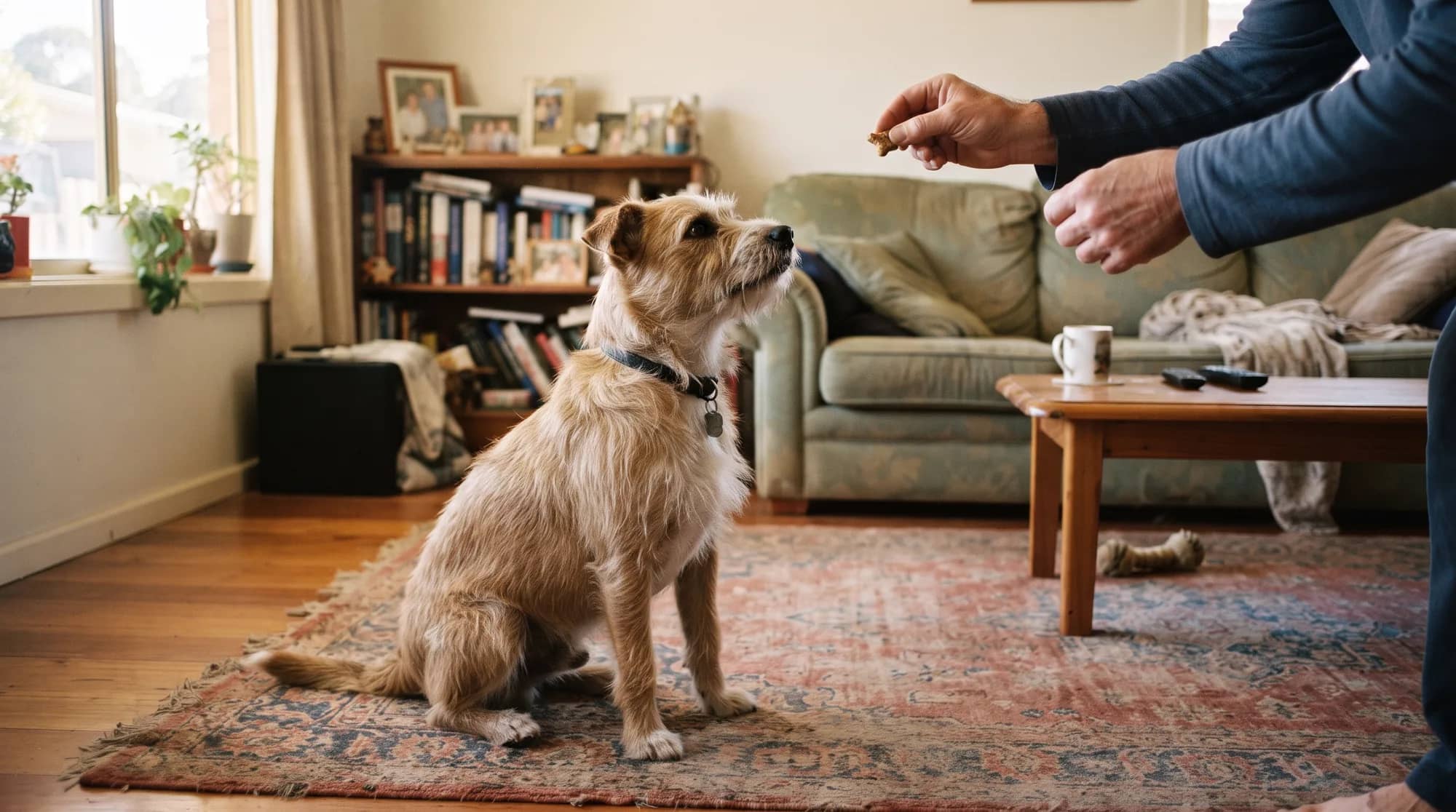
Obedience & Training
In-Home Training or a Group Class? An Honest Comparison
I do in-home training, so you would expect me to say classes are useless. They are not. Here is the honest version of when each one is the right call.
Local pages
In-Home Dog Training near you
Same service, written for the suburb — the council, the parks and the problems that come up there.
Read up
Free guides on in-home dog training
Written for owners in southern Adelaide. If one of these sorts your problem out and you never ring me, that is a good outcome.
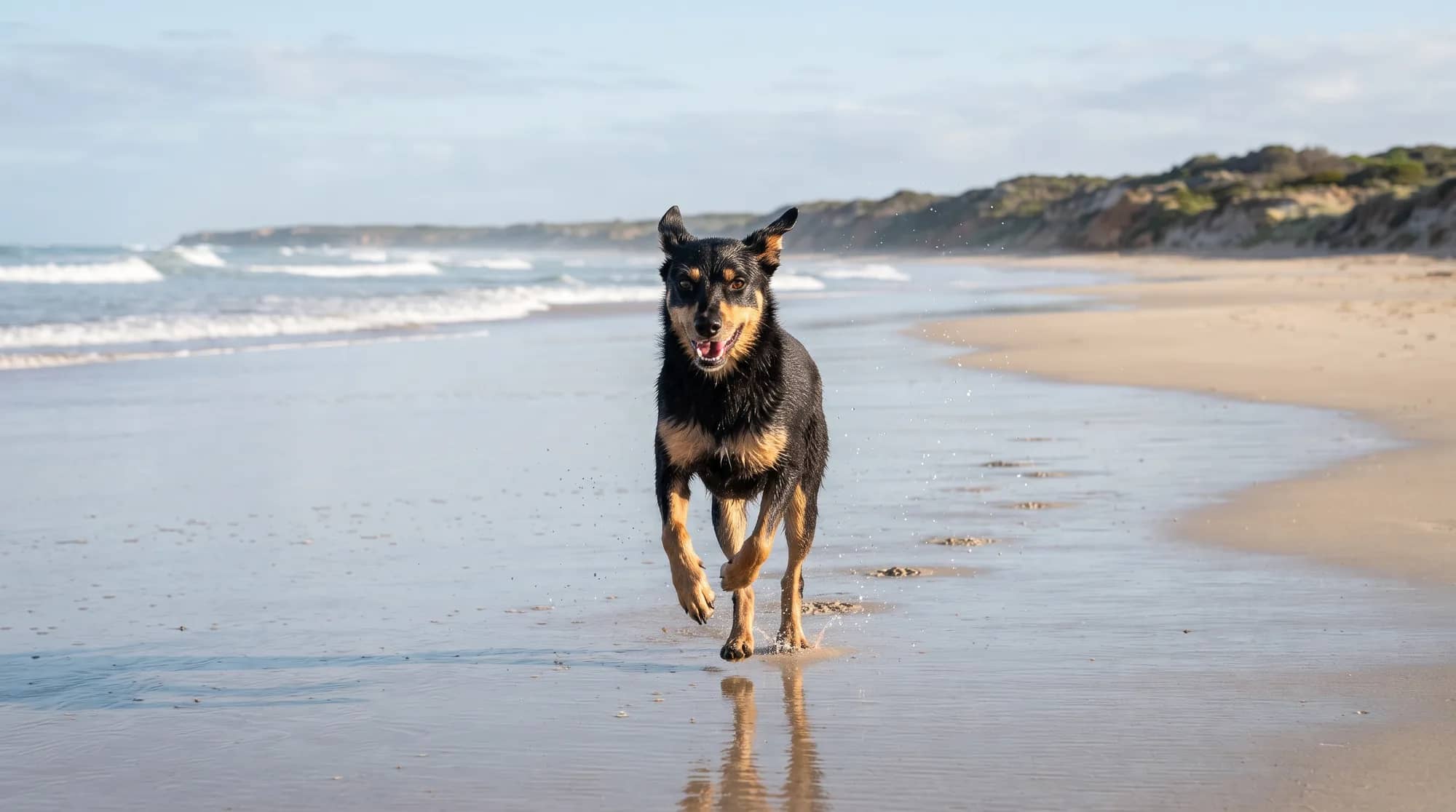
Obedience & Training
Why Your Dog Won't Come When Called (And How to Fix It)
Every time you call your dog and it does not come, you are teaching it that "come" is optional. Here is how that happens, and how to undo it.
Obedience & Training
In-Home Training or a Group Class? An Honest Comparison
I do in-home training, so you would expect me to say classes are useless. They are not. Here is the honest version of when each one is the right call.
Questions
In-Home Dog Training — your questions
How far do you travel?
How long is a session?
Should the kids be there?
Do you work with more than one dog at a time?
What do I need to have ready?
Ready when you are
Let's sort your dog out.
Tell me what's going on and I'll tell you straight whether I can help — and roughly what it will take. No obligation, no pressure. Southern suburbs of Adelaide — CBD to Victor Harbor.
Send a quick enquiry
Four things and I’ll come back to you. If it is urgent, ring instead — that is always faster.