At around ten months, a lot of people ring me convinced their training has failed.
The story is nearly always the same. They did everything right. Puppy preschool, socialisation, consistent rules. They had a lovely, biddable six-month-old that sat when asked and came when called. And then, over the space of a few weeks, it stopped listening. It started ignoring its name. It began pulling again, barking at things it never noticed before, and testing rules it had accepted for months.
Their training did not fail. Their dog became a teenager.
What is actually happening
Dogs go through adolescence roughly between eight and eighteen months, with the worst of it usually somewhere between ten and fourteen. Large breeds tend to start later and stay in it longer.
Physiologically, quite a lot is going on. The brain is reorganising — pruning connections it does not use, strengthening the ones it does. Sex hormones arrive, whether or not the dog is desexed, because the process starts before most desexing does. And the parts of the brain responsible for impulse control and risk assessment are, quite genuinely, the last to finish developing.
If that sounds familiar, it is because it is the same process human teenagers go through, for the same reasons.
There is also research showing that adolescent dogs become measurably less responsive specifically to their own owner during this period, while remaining responsive to strangers. Which is a fairly wounding thing to learn when you are the one who has been doing all the training. It is not personal. It is developmental, and it passes.
What it looks like from the outside
- Commands that were solid suddenly get ignored, especially recall
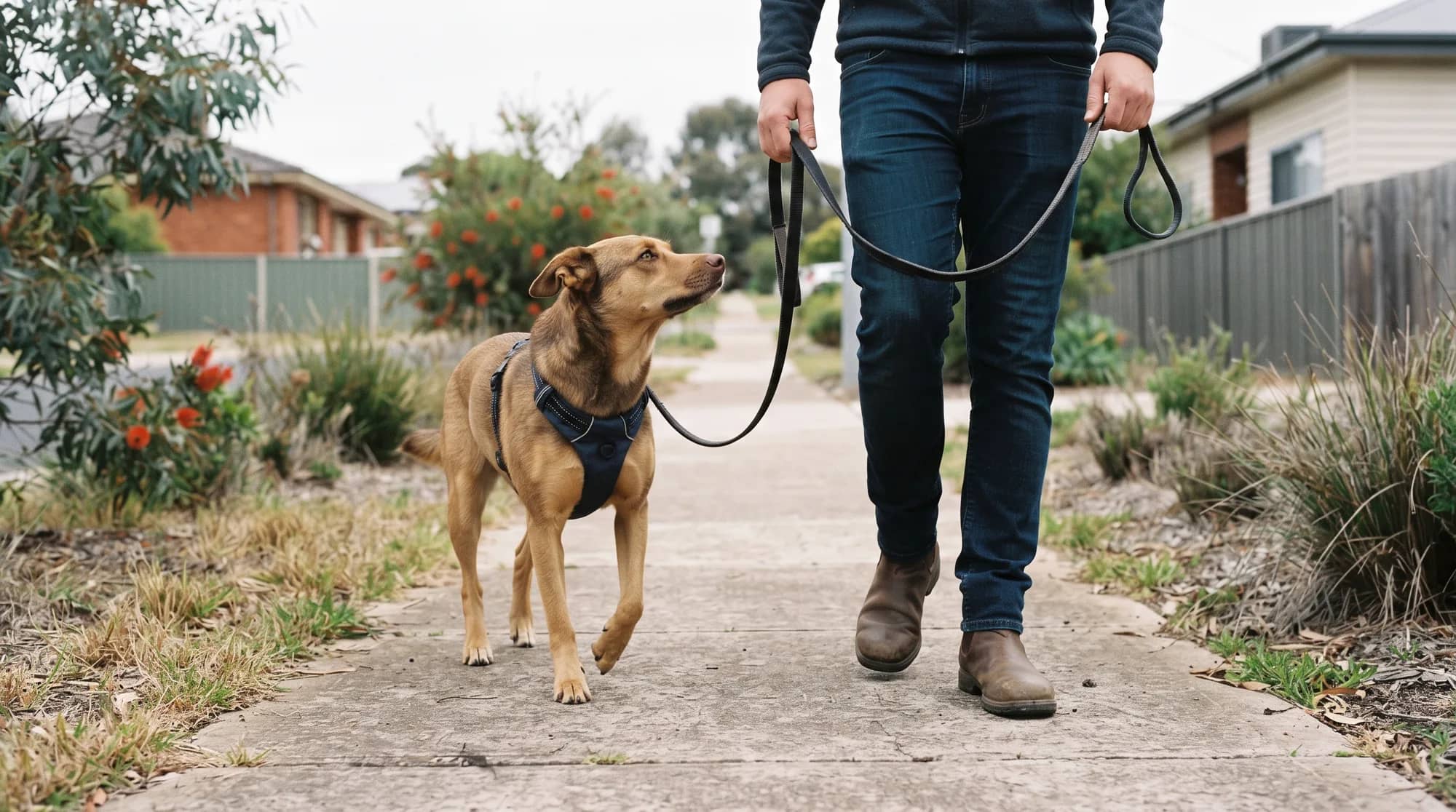
- Pulling on the lead comes back after months of loose-lead walking
- New fears appear out of nowhere — a bin, a statue, a person in a hat
- Barking at things that were never an issue before
- Boundary testing: on the couch, on the bed, counter-surfing, door-dashing
- More interest in other dogs, and less interest in you
- Toileting slips, in some dogs
- Generally more reactive, more excitable, less able to settle
The new fears deserve their own mention, because they alarm people. A "second fear period" is common in adolescence — a dog that has been confident for months can suddenly become worried about something it has walked past a hundred times. It is normal. How you handle it matters a great deal, though.
The four mistakes that turn a phase into a problem
1. Giving up on the rules
This is the big one. Owners conclude the training isn't working, so they stop enforcing it. The dog jumps up and gets a cuddle because it is easier. The couch rule quietly lapses.
Adolescence is exactly when consistency matters most, because what your dog is doing is testing whether the rules are real. If the answer turns out to be "sometimes", you have not survived adolescence — you have taught your dog that persistence pays. That is a lesson it will keep for years.
2. Escalating to punishment
The other reaction is to get harder. More corrections, harsher tone, maybe a prong or an e-collar because someone at the park suggested it.
This is a bad time for that. A brain that is reorganising and going through a fear period is unusually good at forming lasting negative associations. Adolescence is where a lot of long-term reactivity and handler-avoidance is created, and the trigger is very often an owner who got frustrated at exactly the wrong developmental moment.
3. Flooding a new fear
Your previously confident dog is suddenly worried about the wheelie bin. The instinct is to walk it straight up to the bin and show it there is nothing to worry about.
Do not. Forcing a frightened dog into proximity with the thing it fears — flooding — reliably makes fear worse, and in a fear period it can stick permanently. Let your dog observe from a distance it is comfortable with, pay it for being calm, and let it approach in its own time. It usually resolves in days.
4. Letting recall die
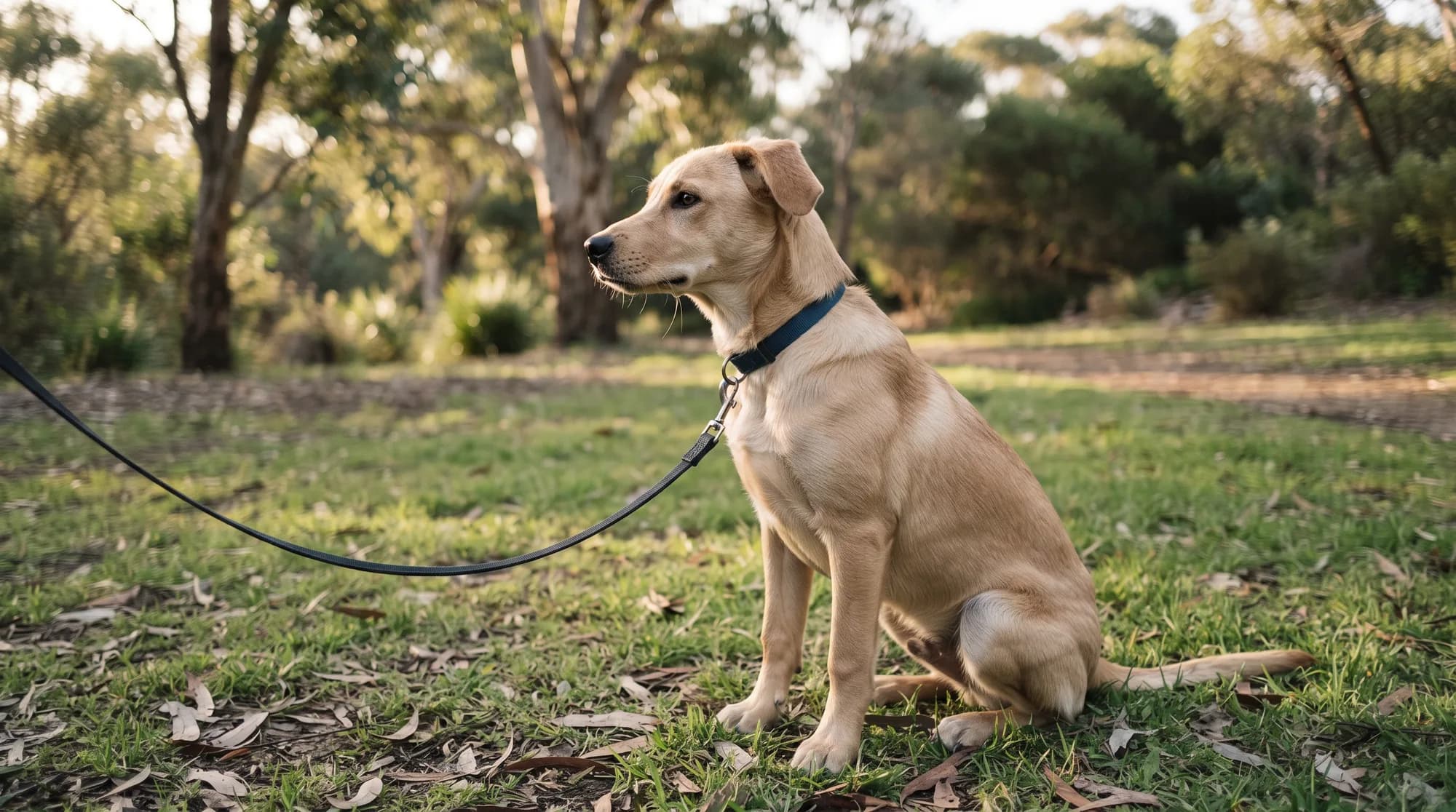
Adolescence is when most dogs' recall falls apart, and it is also when most owners stop using a long line because their dog "used to be fine off lead".
Every failed recall in this window is practice at ignoring you, and it compounds. Go back to the long line for a few months. It is not a step backwards, it is insurance, and the dog you get out the other side will have a recall that survived adolescence rather than one that was destroyed by it.
What to actually do
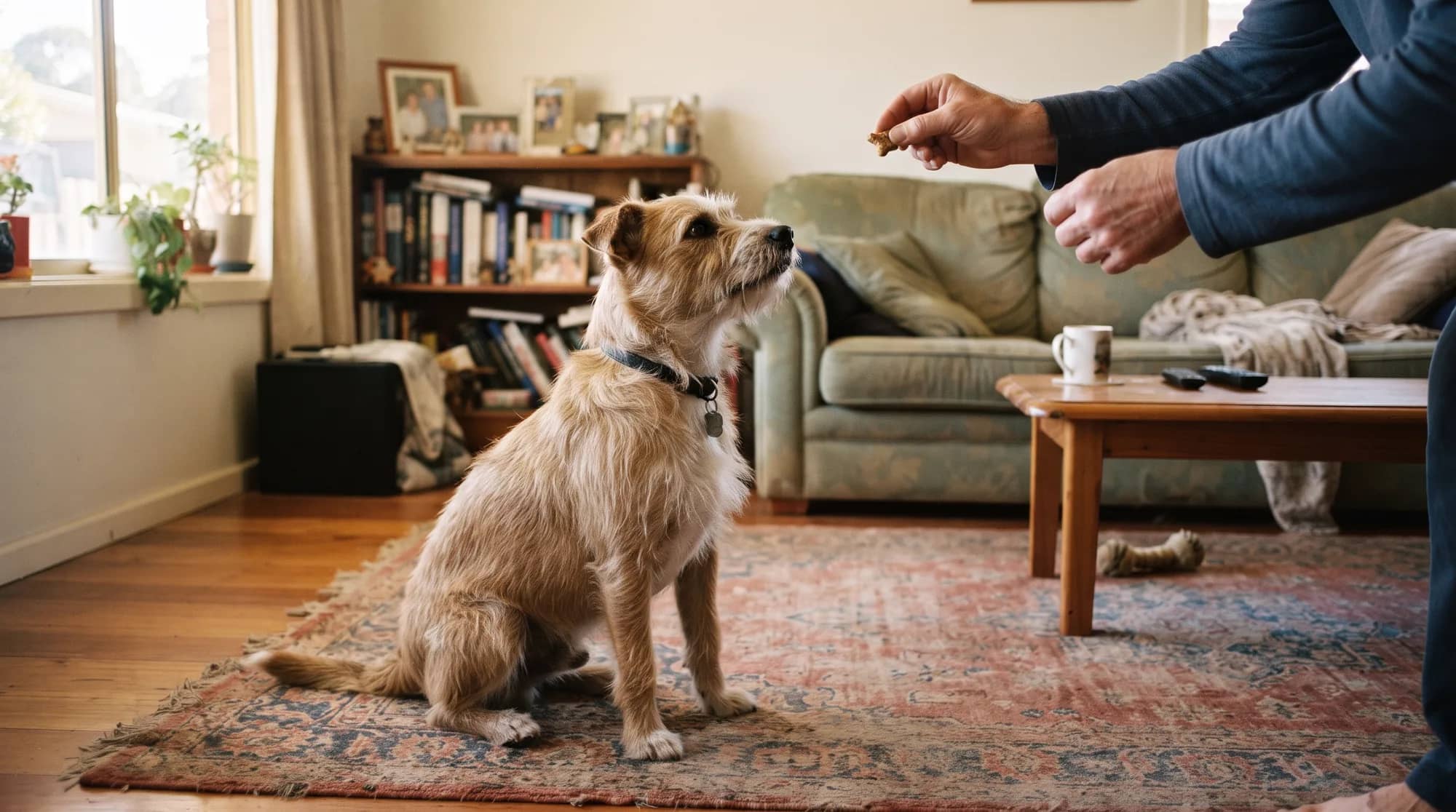
Go back to basics, and pay for them again. Treat it like your dog is six months younger. Reintroduce food rewards for things it used to do for free. This is not spoiling — it is topping up the value of behaviours that have lost ground to hormones.
Shorten and simplify. Adolescent dogs have terrible concentration. Five focused minutes twice a day beats one twenty-minute session that ends with both of you frustrated.
Manage more, ask less. If your dog cannot currently cope with off-lead time at the park, do not spend three months fighting it. Use a long line, choose quieter times, and pick your battles. Management is not failure — it is not letting your dog rehearse the things you do not want.
Increase mental work. Adolescent dogs are often described as needing more exercise, but physical exercise alone tends to produce a fitter, more aroused dog. Scentwork, food puzzles, training games, chewing — these settle a dog in a way a longer run does not.
Protect sleep. Adolescent dogs are frequently over-tired and nobody notices. A dog that cannot settle, is snappy, and seems permanently wound up is very often short on sleep. Adult dogs need a lot more rest than people assume, and adolescents are usually getting less than they need because everything is exciting.
Keep the household consistent. Same rules, same words, everyone. This is the single biggest predictor of how quickly it passes.
The local flavour of it
Around here, adolescence tends to surface in some specific ways.
In the estate suburbs — Seaford, Happy Valley, Aberfoyle Park, the newer Aldinga developments — the fence line is where it shows up first. An adolescent dog that used to ignore the neighbour's dog suddenly discovers fence-running, and because the blocks are close and colorbond hides everything, it becomes a twice-daily habit within a fortnight. Block access early.
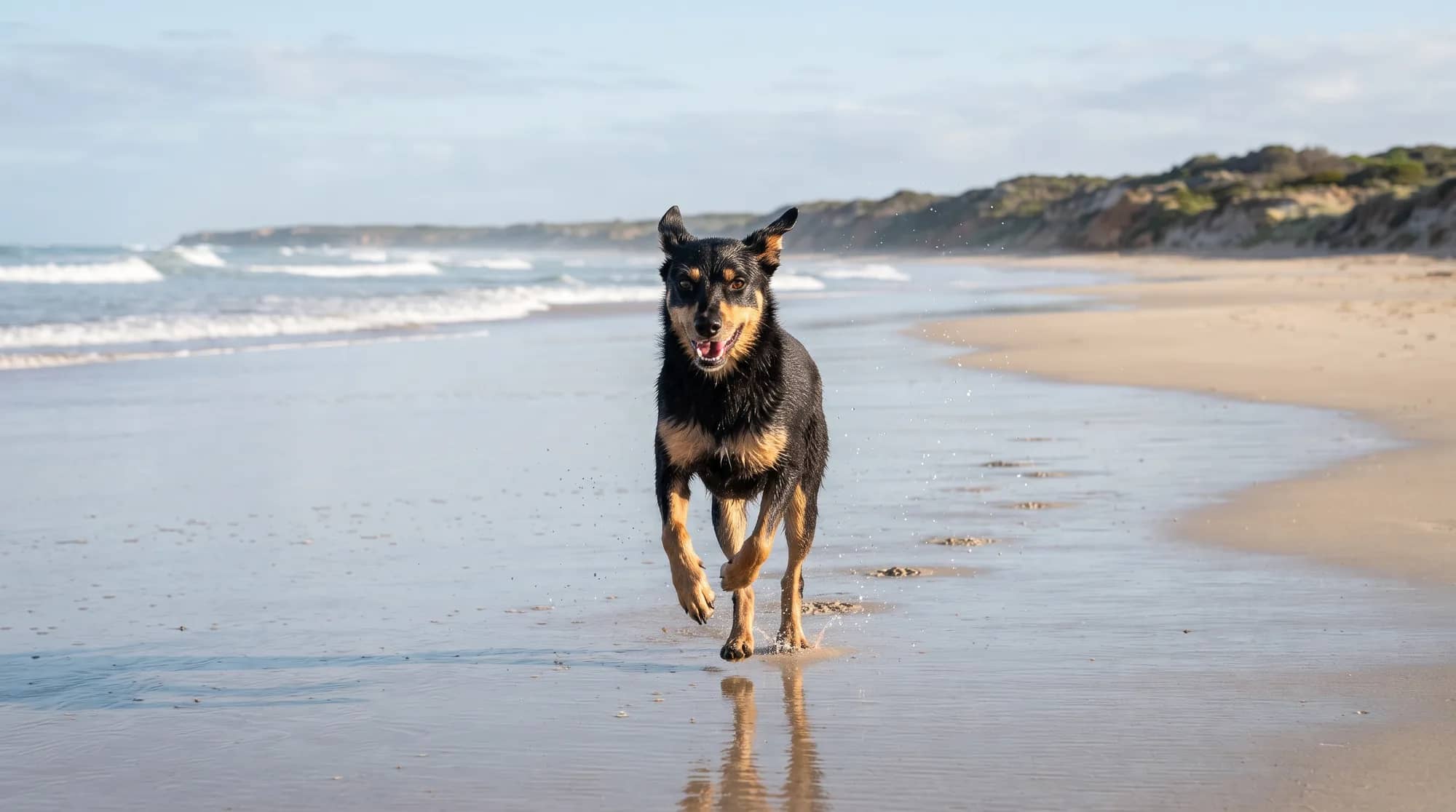
At the beaches — Brighton, Glenelg, Aldinga, Victor Harbor — it is recall. A dog that has been reliably off lead at ten months is often not reliably off lead at thirteen. That is the moment to put the long line back on rather than to hope.
On acreage in the Vales and the Fleurieu, adolescence plus prey drive is the combination that puts dogs in front of cars and into paddocks with stock. Containment and recall both need attention before the dog hits twelve months, not after.
How long
Most dogs are noticeably easier by around eighteen months, and settled by two years. Large and slow-maturing breeds can run to two and a half or three.
The thing worth holding onto: the dog on the other side of this is the dog you actually trained. Everything you put in during the first year is still in there — it is just temporarily buried under a hormonal reorganisation.
Keep the rules, keep it fun, and do not conclude at month eleven that you have ruined your dog. You almost certainly have not.