
Service
Stop the Barking — Properly
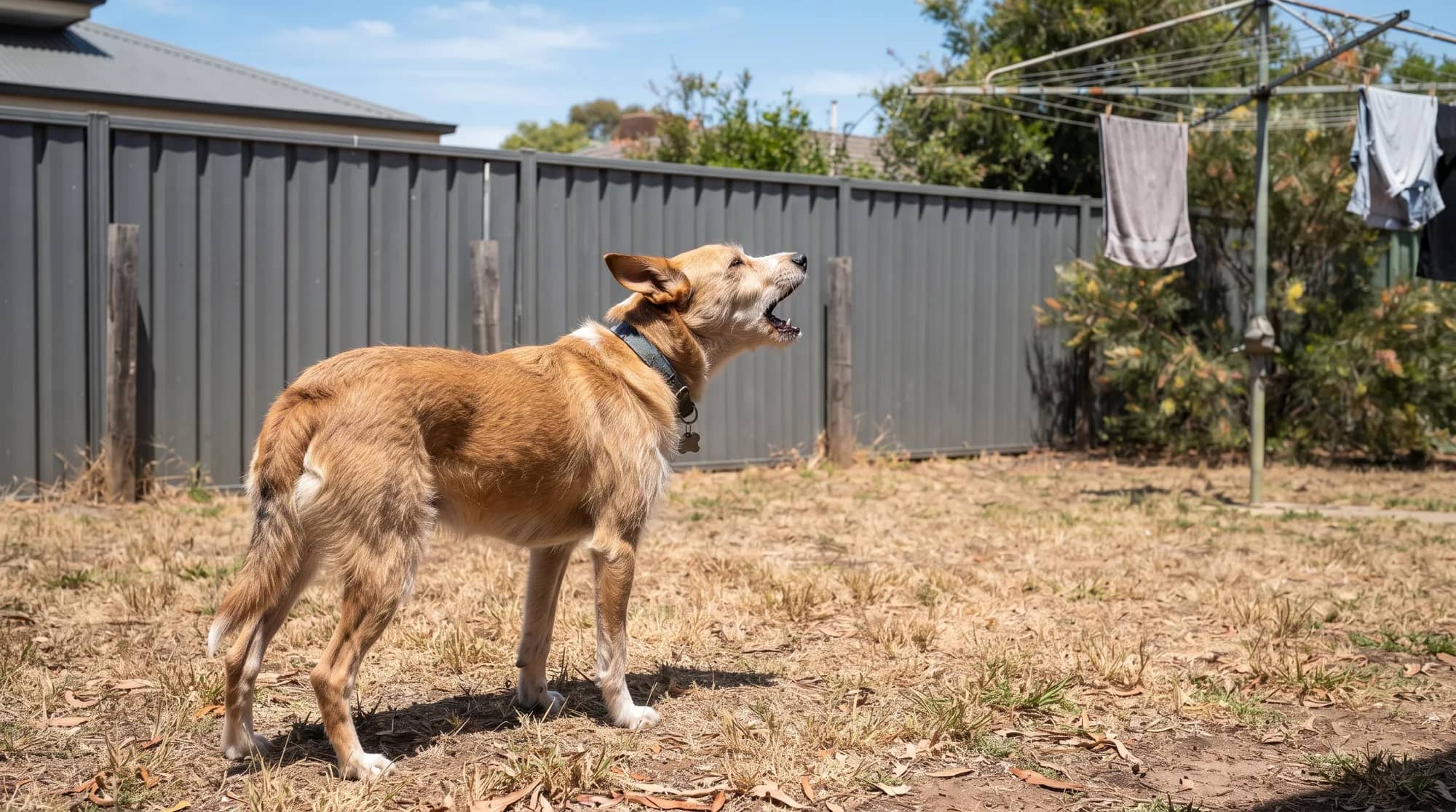
Barking is a symptom, not a diagnosis. Six different problems produce the same noise — and they need six different answers.
In short
Dogs bark for at least six distinct reasons: alert, territorial, boredom, frustration, anxiety and demand. Each one needs a different approach, which is why generic advice and anti-bark devices so often fail — they treat the noise without touching the cause. The first job is identifying which kind of barking you have. In South Australia, councils can issue a Control (Barking Dog) Order under the Dog and Cat Management Act, so if a complaint has been made there is usually a clock running too.
Sound familiar?
Sound familiar?
- Barking at everything that passes the front window
- Non-stop barking while you are at work
- A neighbour has complained, or the council has been in touch
- Fence-fighting with the dog next door
- Demand barking at you for food, attention or the ball
- You have tried a bark collar and it has not helped, or made it worse
How it works
How it works
Work out which kind of barking it is
Alert, territorial, boredom, frustration, anxiety and demand barking sound similar and need different plans. This step decides everything else.
Change the environment
Most window-barking stops when the dog cannot see the street. Most fence-fighting stops when the dog cannot reach the fence. Unglamorous, immediate, and it buys you room to train.
Teach an alternative
A dog that has been given something specific to do when the trigger appears does not have to invent a response. That is what replaces the barking.
Deal with the neighbours
If a complaint is live, there are practical things worth doing — a log, a conversation, evidence of action taken. It matters to how the council handles it.
Inside the process
What actually happens
Barking is the problem I get called about with the shortest fuse attached, because by the time someone rings, there is usually a neighbour involved and sometimes a council letter on the fridge. So let us start with the practical bit.
In South Australia, barking sits under the Dog and Cat Management Act and is handled by your local council. In the City of Onkaparinga — which covers most of the southern suburbs I work in — the process is well documented: a neighbour lodges a complaint, the council gathers information, and if the barking is found to be a nuisance they can issue a Control (Barking Dog) Order. From there it can escalate to SACAT. The important thing to understand is that councils generally want to see the owner taking genuine action, and being able to demonstrate that you have engaged a trainer and have a plan carries real weight.
Now the actual behaviour. The single most useful thing I can tell you is that "barking" is not one problem. There are at least six, and they need different answers:
Alert barking — something happened, the dog announced it. Normal, and you do not want to remove it entirely. You want to be able to switch it off after two barks.
Territorial barking — the front window, the fence line, anything approaching the boundary. Usually the most fixable, and often mostly an environmental fix.
Boredom barking — long stretches alone with nothing to do. The dog is generating its own entertainment.
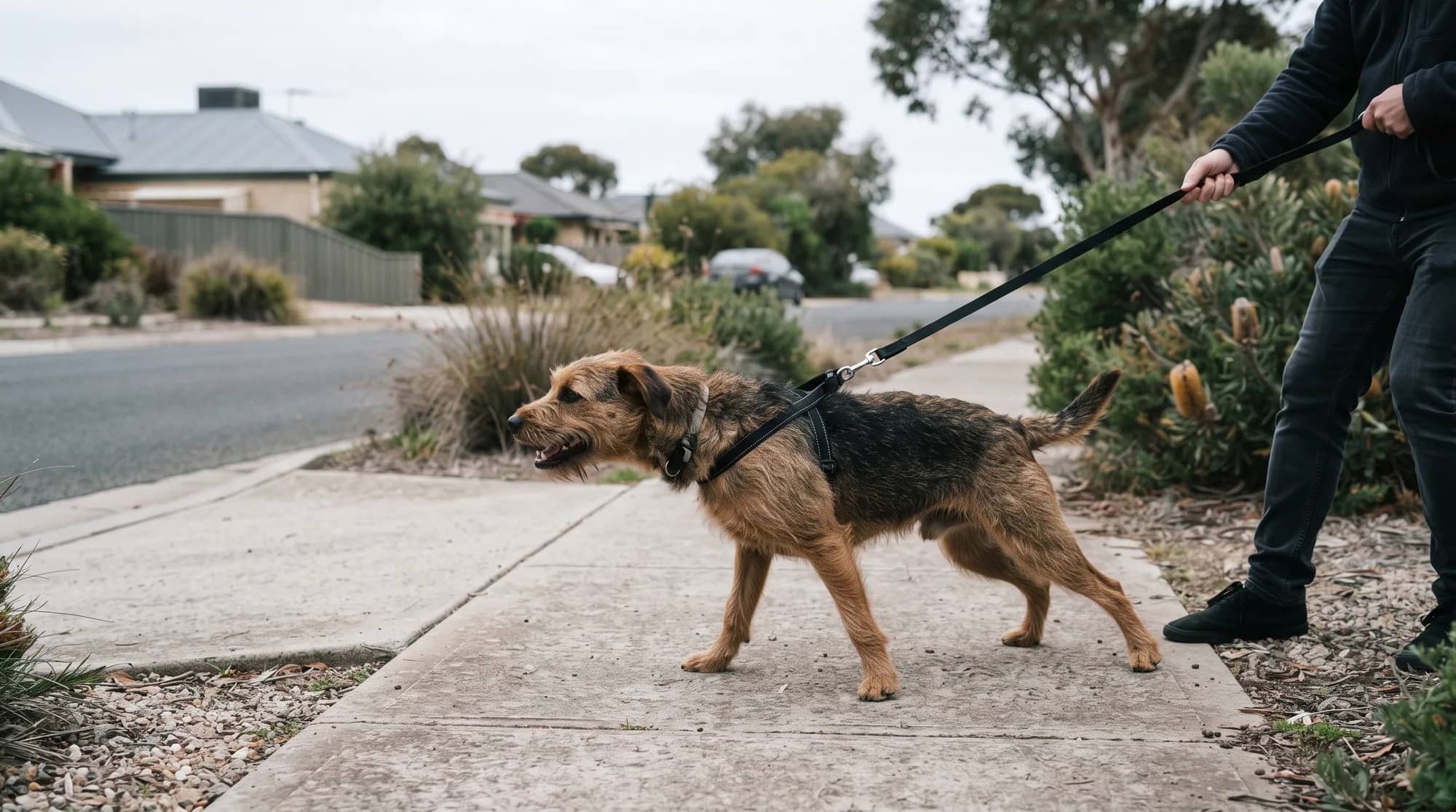
Frustration barking — the dog wants something it cannot get to. Common at fences and windows where another dog is visible but unreachable.
Anxiety barking — panic, usually when left alone. This one is a separation problem wearing a barking costume, and treating it as noise makes it worse.
Demand barking — barking at you, and it works, which is why it continues.
Get the category right and the plan almost writes itself. Get it wrong and you can spend months on the wrong intervention. This is exactly why bark collars have such a patchy record: a device that punishes noise will sometimes suppress a bored dog and will reliably make an anxious one worse.
The environmental work comes first because it is instant. Frosted film on the front window. Blocking access to the shared fence. Moving the dog's day-space to the back of the house. Changing what time the dog is out. None of this is training, and all of it reduces the barking today, which matters when there is a complaint running.
Then we teach an alternative. A dog that knows exactly what to do when the doorbell goes does not need to improvise, and improvising is what barking is.
What you actually get
What a barking dog training session actually involves
- Where
- Your home and yard, where the barking actually happens
- Format
- One-on-one, diagnosis before technique
- Starts with
- Working out which of six kinds of barking you have
- How long
- One hour — we fix one thing properly rather than everything badly
What’s included
- Identifying which kind of barking you have — alert, territorial, boredom, frustration, anxiety or demand
- Reviewing camera footage, because the timing is what tells them apart
- Environmental changes that reduce the barking within days: line of sight, fence access, day-space
- Teaching a specific alternative behaviour rather than just suppressing the noise
- Fence-line management where a neighbouring dog is the trigger
- Practical help with the neighbour conversation and with what councils want to see
- What to log if a complaint is running, and how to present it to the council
- Follow-up support, which matters most where the cause turns out to be anxiety
What’s not included
- Bark collars, ultrasonic devices or anti-bark gadgets. They target the noise, not the cause
- Silencing your dog completely. A couple of barks at something notable is a working dog, not a problem
- Legal representation or advice on a control order — that is your council
- Anything that punishes an anxious dog for the noise it makes while panicking
What I need from you
- Camera footage of the first hour after you leave, if the barking happens while you are out
- A log: dates, times, duration, and what you think set it off
- Willingness to make environmental changes that may not be pretty — screening, blocked access, changed routines
- A conversation with your neighbour, which does more than people expect
- Any council correspondence, so I know what deadline we are working to
After the session
What happens once I leave
Barking cases usually arrive with a clock attached, so the aftercare is built around producing visible progress quickly.
We lead with the environmental changes, because they are the fastest wins available and they work within days rather than weeks. Blocking line of sight to the street, preventing access to the fence line the barking happens at, and moving where the dog spends the day will often cut the volume substantially before any training has happened at all.
If a complaint is running I will show you what to log and how to present it. Councils respond well to owners who can demonstrate what they changed and when, and a dated log of concrete changes is a materially stronger position than an assurance.
Then follow-up, and how long that runs depends entirely on the cause. Territorial and window barking often improves within days. Boredom takes a week or two once the day is properly structured. Frustration at a fence resolves quickly once access is genuinely prevented.
Anxiety-driven barking is the slow one, because it is a separation problem wearing a barking costume, and it tracks the timeline of that work instead — weeks to months. If that is what the footage shows, I will tell you plainly rather than let you expect a fortnight.
The difference
Why this works where other things haven't
The usual approach
- A bark collar aimed at the noise regardless of cause
- Yelling at the dog — which from a dog's view is joining in
- Ultrasonic devices and anti-bark gadgets
- "More exercise" as the answer to every kind of barking
- Nothing, until the council letter arrives
How I work
- Diagnose the type of barking before doing anything
- Change what the dog can see and reach first
- Teach a specific alternative behaviour
- Address anxiety-driven barking as anxiety, not noise
- Practical help with the neighbour and council side
What changes
What changes
- Quiet when there is nothing worth barking about
- An alert bark you can interrupt in a word or two
- Neighbours who stop leaving notes
- A council complaint resolved rather than escalating
- A dog that is genuinely calmer, not just suppressed
Expected outcomes
What you'll notice, and roughly when
Territorial and window barking usually improves the fastest, because so much of it is environmental. Blocking line of sight to the street often cuts the volume dramatically within days — before any training has happened at all. It is the cheapest win in dog behaviour.
Alert barking does not disappear and should not. What changes is the length. A dog that barks twice and then checks in with you is a dog doing its job properly. Most owners are perfectly happy with two barks; it is the eleven-minute session that ruins relationships with the neighbours.
Boredom and frustration barking respond to enrichment and to changing what the dog can access, and generally shift within a couple of weeks once the day is structured properly.
Anxiety barking is the slow one, because it is not really a barking problem. If your dog is barking because it is panicking when left alone, progress tracks with the separation work, and that is measured in weeks to months rather than days. There is a whole page on that if it sounds familiar.
On the council side: in my experience, complaints tend to de-escalate once the neighbour can see something is actually being done. Keeping a dated log of what you have changed, and telling your neighbour directly that you have engaged a trainer, does more than people expect. Silence is what makes complaints escalate.
Being straight with you
What this won't do
What this service will not do.
It will not make your dog silent, and it should not. A dog that never barks would be unusual and slightly concerning. The goal is proportionate: a couple of barks at something genuinely notable, then quiet. Most neighbours are fine with two barks; it is the eleven-minute session that ruins relationships.
It cannot control the dog next door. You can only manage your side of a fence-line conflict. The good news is that your side is usually enough — if your dog physically cannot reach or see through that fence, the trigger largely disappears even if the neighbour does nothing.
If the cause is anxiety, this becomes a longer project. Barking is the symptom. Where the footage shows genuine separation distress, the realistic timeline is the separation-anxiety one, and pretending otherwise just sets you up for disappointment with a council deadline running.
And I cannot give you legal advice. Barking sits under the Dog and Cat Management Act and is administered by your council. If an order has been issued, talk to them directly about exactly what they need to see. I can fix the behaviour and help you demonstrate action; I am not the right person for your legal position.
A formal order may also require a specific kind of trainer. Where a council order requires you to complete a structured training program, the Dog and Cat Management Board sets the rules for that program — including a minimum number of sessions, a written report at the end, and who is approved to deliver it. That is a separate question from whether the barking stops. Ask your council exactly what they need before you book anyone, me included. If your order requires a Board-accredited trainer, I will say so and point you toward one rather than take work I cannot finish.
Who this is for
Is this the right fit?
If you recognise yourself in this list, we should talk.
- Households facing a neighbour complaint or council notice
- Dogs that bark all day while the house is empty
- Front-window and fence-line barkers
- Small dogs in close-set housing where sound carries
- Anyone who has tried a bark collar without success
Suburb-specific
Barking Dog Training in your suburb
Local guides for the suburbs where this comes up most.
Where I work
Barking Dog Training across southern Adelaide
I travel in-home from the Adelaide CBD south through to Victor Harbor.
 27 suburbs
Adelaide's Inner South
Small blocks, shared fences and footpaths full of people. The inner south asks a lot of a dog.
Dog training in Inner South 26 suburbs
The Southern Beaches
Beach walks, esplanade crowds and off-lead hours that catch people out. Recall matters more here than anywhere.
Dog training in Southern Beaches 35 suburbs
Adelaide's Southern Suburbs
The heartland. Close-set housing, shared fences, and more council barking complaints than anywhere else I work.
Dog training in Southern Suburbs 22 suburbs
The Southern Vales
Vines, acreage and one of the best dog beaches in the state. Different geography, different problems.
Dog training in Southern Vales 25 suburbs
The Fleurieu & Victor Harbor
Hardest part of the state to find proper behaviour help. That is exactly why I come down here.
Dog training in FleurieuReal owners
Owners I've worked with on barking dog training
After just 1 session with The Dog Obedience Guy I could already see improvement with Sammi. Today I walked both dogs, side by side with ease continuing the strategies I learnt. Thanks, one very happy customer
Have just finished our last session and I was given excellent help and ideas. Turns out it wasn't Ollie (it was me) 🤣 Thank you for all the help. Ollie loved it. Would definitely recommend. Thanks Faz
Often comes up alongside
Related services
These are the ones people working on this most often need to look at too.
Separation Anxiety
The neighbours have mentioned the howling. The door frame is destroyed. Your dog is not being naughty — it is genuinely panicking.
Learn moreReactive Dog Training
You have started walking at 6am so you do not meet anyone. That is not a walk, that is a covert operation.
Learn moreBehaviour Consultations
Some problems do not respond to more training. They respond to understanding what is actually driving them.
Learn moreRead more
Behaviour Problems
You Have Had a Barking Complaint. What Happens Now?
There is a letter from the council on your kitchen bench. Here is exactly what it means, what happens next, and the two things worth doing today.
Behaviour Problems
Is My Dog Reactive or Aggressive? How to Tell the Difference
They look almost identical from the other end of the lead. They are not the same problem, and treating one like the other is why so much training fails.

Behaviour Problems
Separation Anxiety or Just Boredom? How to Tell
Four completely different problems produce the same chewed door frame. Thirty minutes of phone footage will tell you which one you have.
Local pages
Barking Dog Training near you
Same service, written for the suburb — the council, the parks and the problems that come up there.
Suburbs
Suburbs where this comes up most
Each has its own page with the council, the parks and the problems specific to it.
Read up
Free guides on barking dog training
Written for owners in southern Adelaide. If one of these sorts your problem out and you never ring me, that is a good outcome.
Behaviour Problems
You Have Had a Barking Complaint. What Happens Now?
There is a letter from the council on your kitchen bench. Here is exactly what it means, what happens next, and the two things worth doing today.
Behaviour Problems
Separation Anxiety or Just Boredom? How to Tell
Four completely different problems produce the same chewed door frame. Thirty minutes of phone footage will tell you which one you have.
Questions
Barking Dog Training — your questions
My council has sent me a barking notice. What should I do first?
Do bark collars work?
My dog only barks when I am not home. How can I train that?
What about the dog next door setting mine off?
Is some barking normal?
Ready when you are
Let's sort your dog out.
Tell me what's going on and I'll tell you straight whether I can help — and roughly what it will take. No obligation, no pressure. Southern suburbs of Adelaide — CBD to Victor Harbor.
Send a quick enquiry
Four things and I’ll come back to you. If it is urgent, ring instead — that is always faster.