
Dog Obedience Training · Morphett Vale
Dog Obedience Training in Morphett Vale
Your dog already knows "sit". The question is whether they do it when a magpie lands on the fence.
In short
Obedience training in Morphett Vale has to work in a specific environment: standard suburban blocks with dogs on both sides, colorbond fencing, and a household where several people give the dog instructions. That means the training has to hold with distraction on the other side of the fence, and it has to be consistent across everyone in the house.
Why Morphett Vale
What makes this different in Morphett Vale
Morphett Vale obedience cases almost always have a fence component, even when that is not what the owner rang about.
Here is the pattern. Someone calls about a dog that will not come when called, or jumps on visitors, or pulls on the lead. We start the session, and within twenty minutes it becomes obvious that the dog spends a good part of every day at high arousal running the fence line with the neighbours' dogs. That dog is not in a state where it can learn anything, and its baseline arousal is sitting far above where useful training happens.
So in this suburb obedience work usually starts with the yard. Not because the yard is what you asked about, but because a dog that spends two hours a day in a frenzy is not going to hold a settle in the lounge room. Bring the baseline down first and the obedience gets dramatically easier.
The second Morphett Vale factor is household size. These are family blocks, and family households mean several people, several standards and several sets of rules. One person lets the dog on the couch, one does not. One knees the dog off when it jumps, one gives it a cuddle. The dog is not confused — it has correctly learned that the rules depend on who is in the room, and it is testing accordingly.
Fixing that is a conversation, not a technique, and it is one of the things in-home does that a class simply cannot. Everyone is there. We agree the rules once, in the room, and the dog settles within days because the answers have stopped changing.
Local factors
What sets dogs off in Morphett Vale
The specifics of this suburb, and why they matter for dog obedience training.
- The dogs either side, audible through the fence all day
- Standard blocks with no distance between yards
- Multiple family members giving different instructions
- Front doors that open directly onto foot traffic
- Kids and their friends coming and going constantly
In practice
What a Morphett Vale obedience session actually covers
The booking usually says "he won't listen". What the session covers is generally wider than that, because in this suburb the listening problem tends to have a yard problem underneath it.
We start inside, with the household. Who feeds the dog, who lets it on the couch, who knees it off the visitors and who gives it a cuddle for the same behaviour. In a family block with four or five people coming and going, that inconsistency is doing more damage than any missing command, and it is the one thing a group class structurally cannot fix. Everyone is there, we agree the rules once, and the dog settles within days because the answers have stopped changing depending on who is in the room.
Then the yard, which is where the Morphett Vale specifics live. If your dog is running a fence line twice a day with the neighbours' dogs, its baseline arousal is sitting far above the level where learning happens, and no amount of lounge-room practice will hold up against that. Blocking access to the fence and screening line of sight is not glamorous and it is not what you booked, but it is usually the intervention that makes everything else possible.
Then the actual skills: attention, a loose lead on your street, a settle on the mat, greetings at your own front door, and the start of a recall. Worked in the places they will be used — which on a standard block here means the hallway, the front gate and the footpath outside, not a hall across town.
That is more than one hour's work, which is why it is not all one session. The yard and the house rules come first, the street work comes next, and you get a week or two in between to make each one stick.
Locally
Working around the Onkaparinga dog parks
Morphett Vale is well served for enclosed space and most local owners under-use it.
The Woodcroft fenced dog park is the closest, with agility equipment and toilets. Minkarra Park at Happy Valley is a short drive and is the better-equipped of the two — fenced, agility, a separate small-dog area, toilets and water. Between them you have two enclosed spaces within about ten minutes, which is unusual and genuinely valuable.
The value is the fence, and it is worth being precise about why. A recall is built by repetition, and repetitions only count if they succeed. In an unfenced reserve, a dog that ignores you has just practised ignoring you and there is nothing you can do about it. Inside a fence, a failed recall costs nothing — you walk over, reset, and try again at a distance the dog can actually manage. That is the condition under which recalls get built.
What does not work is treating a fenced park as a social free-for-all. For a dog that is already wound up around other dogs, forty minutes of chaotic play is high-intensity practice at being wound up. A fair number of reactive dogs were made in dog parks by owners doing what they were told was right.
So: go at quiet times, work deliberately, and leave before your dog tips over rather than after. If Minkarra is busy and your dog is struggling, Woodcroft or Dinton Farm Reserve at Huntfield Heights will be quieter. For a reactive dog an empty park beats a well-equipped one every time.
Sound familiar?
What I'm called about in Morphett Vale
- Listens perfectly at home, deaf as a post at the park
- Pulls so hard on the lead that walks have stopped being walks
- Launches at visitors before they get through the door
- Ignores their name completely once something more interesting appears
- Counter-surfs, door-dashes, or steals whatever is left within reach
- Fine with you, chaos with the kids or your partner
How it works
How it works
We talk first
Before anything else I want to hear what a normal day looks like — where it goes wrong, what you have already tried, and what you actually want. There is no point teaching a perfect competition heel to someone who just wants to walk to the shops in peace.
I watch your dog in your world
Most of what I need to know shows up in the first ten minutes at your place: how your dog greets, where they position themselves, what they have quietly taken charge of. That is information you cannot get in a hall on a Tuesday night.
We build the foundations, hands on
You do the handling, not me. A dog that only responds to the trainer is a party trick. We work through the core skills together until they feel natural in your hands, and we practise them where the problems actually happen.
You leave with one thing to practise
Not twelve. One hour, one topic, demonstrated until you can do it yourself — then a week or two to make it automatic before we add the next thing.
Related
The full service page, the suburb guide, and the wider area.
Read up
Free guides on this
Written for owners in this part of the south. If one of these fixes it and you never ring me, that is a good outcome.
Adelaide Dog Life
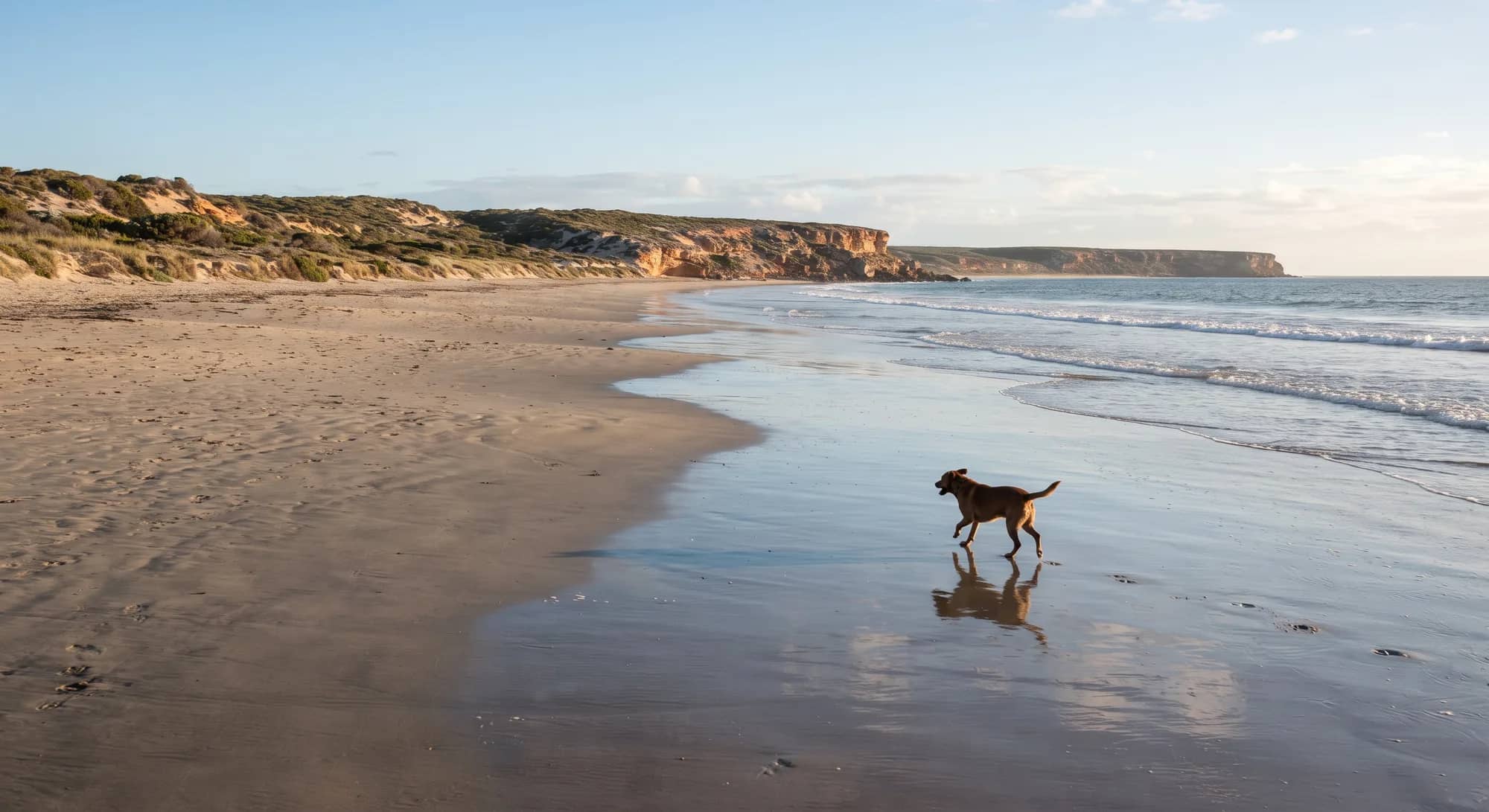
Off-Leash Dog Beaches: Southern Adelaide to Victor Harbor
From Glenelg to Victor Harbor, a run-down of the coast, how the off-leash hours generally work, and the two words in the legislation that catch people out.
Obedience & Training
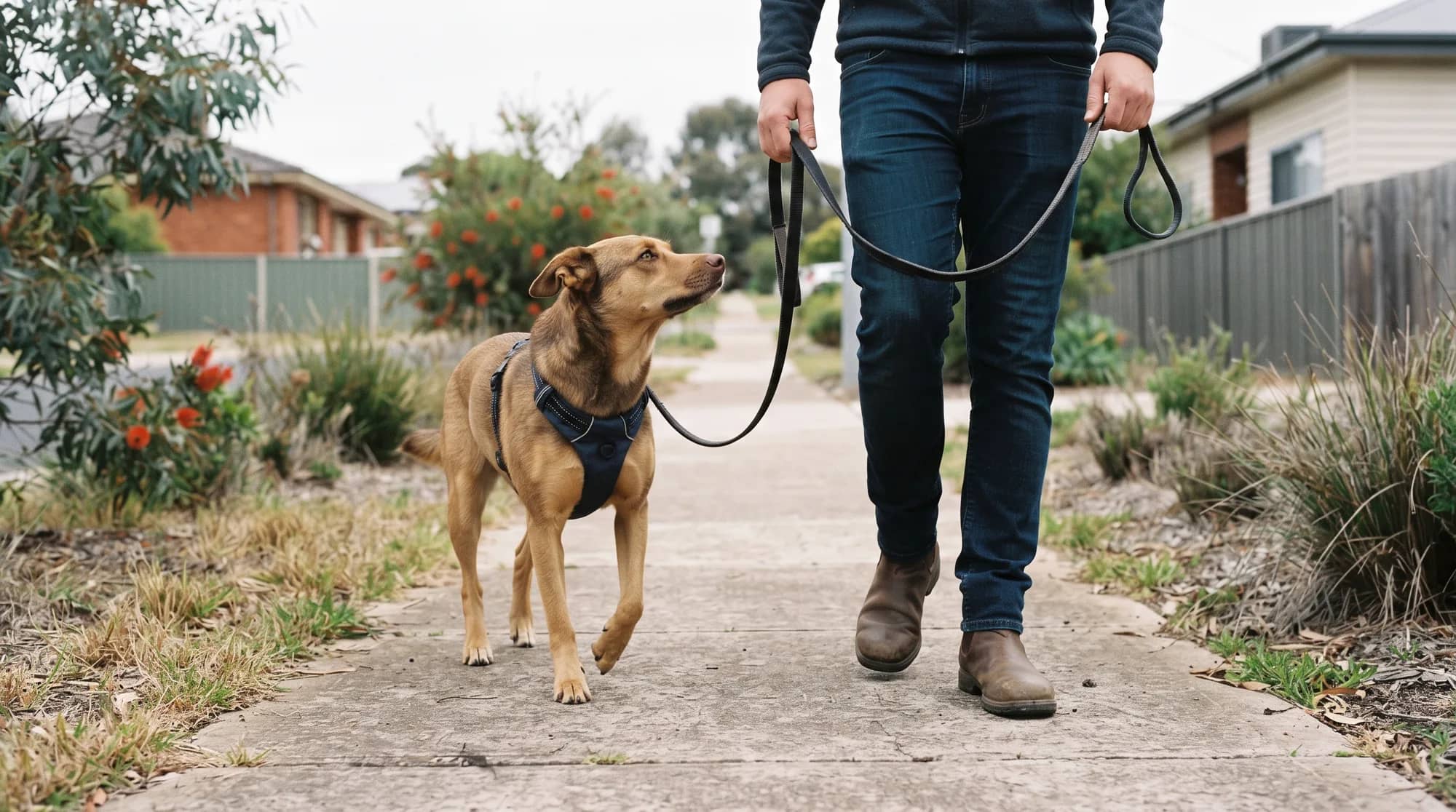
How to Stop Your Dog Pulling on the Lead
Your dog is not pulling because it is dominant, stubborn, or untrained. It is pulling because pulling works — and it has worked every single walk since the day you got it.
Behaviour Problems
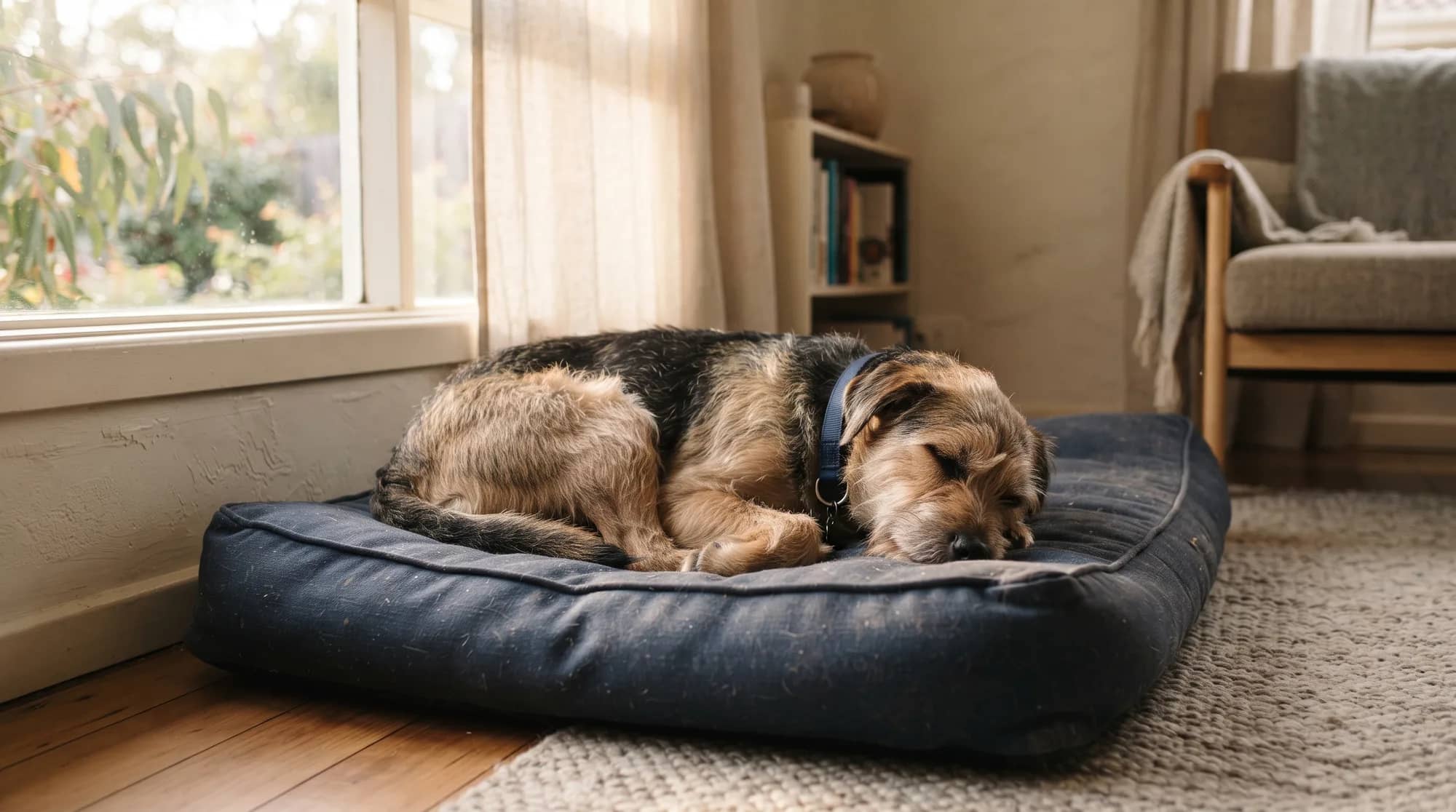
The First 30 Days With a Rescue Dog
The dog you bring home is not the dog you have adopted. It takes about three weeks for the real one to show up — and what you do in that window matters.
Questions
Dog Obedience Training in Morphett Vale — questions
Do you cover Reynella and Woodcroft as well?
Should everyone in the house be there for the session?
How many sessions will my dog need?
My dog is 7. Is it too late?
Do I need to use treats forever?
Ready when you are
Dog training in Morphett Vale, starting this week.
Tell me what's going on and I'll tell you straight whether I can help — and roughly what it will take. No obligation, no pressure. Southern suburbs of Adelaide — CBD to Victor Harbor.
Send a quick enquiry
Four things and I’ll come back to you. If it is urgent, ring instead — that is always faster.