
Service
When It Is Not Obedience, It Is Behaviour
Some problems do not respond to more training. They respond to understanding what is actually driving them.
In short
A behaviour consultation is for problems that obedience training will not touch — fear, anxiety, resource guarding, aggression, compulsive behaviour, or reactivity that has an emotional driver underneath it. The difference matters: obedience teaches a dog what to do, behaviour work changes how a dog feels. Drilling a "sit" at a dog that is frightened does not make it less frightened.
Sound familiar?
Sound familiar?
- Guarding food, toys, the couch, or a particular person
- Freezing, cowering, hiding or bolting from ordinary things
- Growling that has appeared out of nowhere
- Behaviour that has got worse despite obedience training
- A dog whose triggers you cannot reliably predict
- Something has changed and you do not know why
How it works
How it works
Full history
Behaviour cases live in the detail. When did it start, what changed around then, what does the pattern look like, what has been tried. I will ask a lot of questions before I offer a single opinion.
Observe, do not provoke
I am not going to deliberately trigger your dog to see what happens. I will watch how they move through their own space, read the body language, and find the pattern from safe distance.
Management first
Before any behaviour modification, we make the situation safe and stop the behaviour being rehearsed. Every repetition makes it stronger, so step one is always to reduce the reps.
Then modification, in order
A structured plan working the triggers from easiest to hardest, at a distance your dog can actually cope with, with clear criteria for when to progress.
Inside the process
What actually happens
The most useful question in behaviour work is not "how do I stop this?" It is "what is my dog trying to achieve?" Almost every behaviour that owners find baffling makes complete sense once you know what the dog is trying to make happen or make stop.
A dog guarding a bone is not being dominant. It is worried the bone is about to disappear, and it has learned that stiffening up works. A dog that growls at your father-in-law is not being rude. It is telling you clearly that something about that person worries it, and growling is the polite version of what comes next. A dog that shreds the couch on Thursdays is not getting revenge. Something about Thursdays is different.
So the consultation starts with history, and it is not a formality. When did it start. What else changed at that time. What is the pattern — time of day, person, place, trigger. What have you tried and what happened when you did. I will ask questions that seem unrelated, because in behaviour cases the answer is usually in the detail nobody thought was relevant.
Then I watch. I do not set your dog up to fail to prove a point — that is unnecessary and it makes the case worse. I watch how your dog moves through their own house, where they position themselves, what they monitor, how they respond to ordinary events. Body language tells you most of what you need if you slow down enough to read it.
Management always comes before modification. If your dog is rehearsing the behaviour every day, we are working uphill. So the first plan is about reducing the repetitions and keeping everyone safe — gates, routines, changed routes, changed timing. Boring, unglamorous, and it does more than any exercise in the first fortnight.
The modification plan comes after that, and it works from easiest to hardest, always at a distance or intensity your dog can cope with. Push past that and you are not training, you are just frightening a dog while it happens to be near you.
What you actually get
What a behaviour consultations session actually involves
- Where
- Your home, at your dog's pace
- Format
- One-on-one, observation-led rather than drill-led
- Who should be there
- Everyone the behaviour involves
- How long
- One hour, like everything else — the difference is how many sessions it takes
What’s included
- A full behavioural history taken properly, including the questions that seem irrelevant
- Careful observation in your dog's own space — no deliberate provocation to "see what happens"
- Trigger mapping: what sets it off, at what distance, and how fast your dog recovers
- An immediate management plan so the behaviour stops being rehearsed while we work
- A structured, staged behaviour modification programme with clear criteria for progressing
- An honest prognosis, including the parts that will need managing rather than resolving
- Referral to your vet or a veterinary behaviourist where that is the right call
- One thing to practise before the next session, not a list of ten
- Follow-up support through the first weeks
What’s not included
- Diagnosis or medication — those are veterinary, and I will refer rather than guess
- A guaranteed outcome. Anyone offering one on a behaviour case has not met your dog
- A quick fix. Behaviour work moves slower than obedience and it moves unevenly
- Deliberately triggering your dog to demonstrate the problem
What I need from you
- A complete history, including any bite or near-bite, however embarrassing
- Video of the behaviour if you can safely capture it — fifteen seconds tells me more than a paragraph
- A vet check first, or alongside, if anything about this appeared suddenly
- Willingness to do the management before the modification, even though management is the boring part
- Patience with a plan that will go backwards before it goes forwards
After the session
What happens once I leave
Behaviour cases need more support after the session than during it, because progress is uneven and the setbacks are where people give up.
The work comes in two halves, and they are deliberately not taught in the same hour. First the management — the gates, routines, changed walking times and adjusted patterns that stop the behaviour being rehearsed. That takes effect immediately and buys you a calmer household while the slow work happens. Only once that is genuinely in place does the modification programme start, staged, with clear criteria for when to move up.
Follow-up matters because the questions that arrive at week three are the important ones. Almost every behaviour case has a week where it appears to have completely unravelled — usually after a startle, an off-lead dog running up, or simply a tired dog. That week is normal, it is not failure, and knowing what to do with it is the difference between dropping back one stage and losing a month.
I will also tell you when to stop. Some cases reach a good, stable, well-managed plateau and do not need more sessions. Continuing to sell you appointments past that point would be taking your money.
The difference
Why this works where other things haven't
The usual approach
- Treating a fear problem as a disobedience problem
- Suppressing the growl and calling it progress
- Flooding — throwing the dog at the trigger until it "gets over it"
- Generic advice pulled from a video about a different dog
- No safety plan while the work is underway
How I work
- Identify the emotion driving the behaviour before touching the behaviour
- Keep the growl — it is a warning system worth having
- Work under threshold, where the dog can still think
- A plan built from your dog's actual history and triggers
- Management and safety in place from day one
What changes
What changes
- A clear explanation of what is actually driving the behaviour
- A management plan that keeps everyone safe while the work happens
- Triggers identified, ranked, and worked in a sensible order
- Realistic expectations — including what will and will not fully resolve
- A dog that is genuinely calmer, not just better at suppressing it
Expected outcomes
What you'll notice, and roughly when
The honest version: behaviour cases move slower than obedience cases, and they move unevenly. There will be a good fortnight, then a bad day that feels like everything has come undone. That is normal and it is not failure. Behaviour change is not a straight line for any animal, us included.
The first genuine milestone is usually a change in recovery time. Your dog will still react, but they will come back down faster — thirty seconds instead of ten minutes. That is the nervous system learning that the thing was survivable, and it is a far better early indicator than whether the reaction happened at all.
The second is predictability. Once you can reliably say what will set your dog off and what will not, you have most of your life back, because you can plan around it while the work continues. Owners consistently report this as the point where the stress lifts.
And I will be straight with you about ceilings. Some behaviour resolves completely. Some does not, and the realistic outcome is a dog that copes well with good management and a handler who knows what to watch for. A dog with a genuine bite history, a long-established fear, or a strong genetic component may always need thought put into certain situations. That is not a failure — it is a dog living a good, safe life. Anyone promising a complete cure on a case like that before they have met the dog is not being honest with you.
If at any point I think your dog needs a veterinary behaviourist, a medication conversation, or a pain workup rather than more training, I will tell you. Pain is behind more behaviour cases than most people realise, and no amount of training fixes a sore dog.
Being straight with you
What this won't do
This is the service where being straight matters most, so here is the honest picture.
Not everything resolves. Some behaviour resolves completely. Some reaches a good, safe, well-managed life where certain situations are simply avoided — a dog that is happy within a life set up for it. That is a legitimate outcome, not a failure, and I would rather tell you that at the start than let you spend a year expecting something else.
Pain is behind more of this than people realise. If the change came on suddenly, if your dog is over about seven, or if it is worse when touched in a particular place, see your vet first. No amount of training fixes a sore dog, and starting with a vet saves you money as well as time.
Some cases need a veterinary behaviourist, not me. For severe anxiety, compulsive behaviour or serious aggression, the ability to diagnose and prescribe genuinely matters. There are relatively few of them and there is usually a waiting list, so if I think that is where you should be, I will say so early rather than after six sessions.
And I am not a vet. Where medication would help the training get traction — which for moderate to severe anxiety is well-evidenced and mainstream — that conversation belongs with your vet. I will tell you when I think it is worth having.
Who this is for
Is this the right fit?
If you recognise yourself in this list, we should talk.
- Dogs with fear, anxiety or guarding behaviours
- Owners who have tried obedience training and seen no change
- Rescue dogs with unknown or difficult histories
- Households where behaviour has escalated and safety is a concern
- Anyone whose vet has suggested a behaviour referral
Where I work
Behaviour Consultations across southern Adelaide
I travel in-home from the Adelaide CBD south through to Victor Harbor.
 27 suburbs
Adelaide's Inner South
Small blocks, shared fences and footpaths full of people. The inner south asks a lot of a dog.
Dog training in Inner South 26 suburbs
The Southern Beaches
Beach walks, esplanade crowds and off-lead hours that catch people out. Recall matters more here than anywhere.
Dog training in Southern Beaches 35 suburbs
Adelaide's Southern Suburbs
The heartland. Close-set housing, shared fences, and more council barking complaints than anywhere else I work.
Dog training in Southern Suburbs 22 suburbs
The Southern Vales
Vines, acreage and one of the best dog beaches in the state. Different geography, different problems.
Dog training in Southern Vales 25 suburbs
The Fleurieu & Victor Harbor
Hardest part of the state to find proper behaviour help. That is exactly why I come down here.
Dog training in FleurieuReal owners
Owners I've worked with on behaviour consultations
Have just finished our last session and I was given excellent help and ideas. Turns out it wasn't Ollie (it was me) 🤣 Thank you for all the help. Ollie loved it. Would definitely recommend. Thanks Faz
Often comes up alongside
Related services
These are the ones people working on this most often need to look at too.
Reactive Dog Training
You have started walking at 6am so you do not meet anyone. That is not a walk, that is a covert operation.
Learn moreAggressive Dog Training
If you are frightened of what your dog might do, you need someone who will tell you the truth rather than sell you a quick fix.
Learn moreSeparation Anxiety
The neighbours have mentioned the howling. The door frame is destroyed. Your dog is not being naughty — it is genuinely panicking.
Learn moreRead more
Behaviour Problems
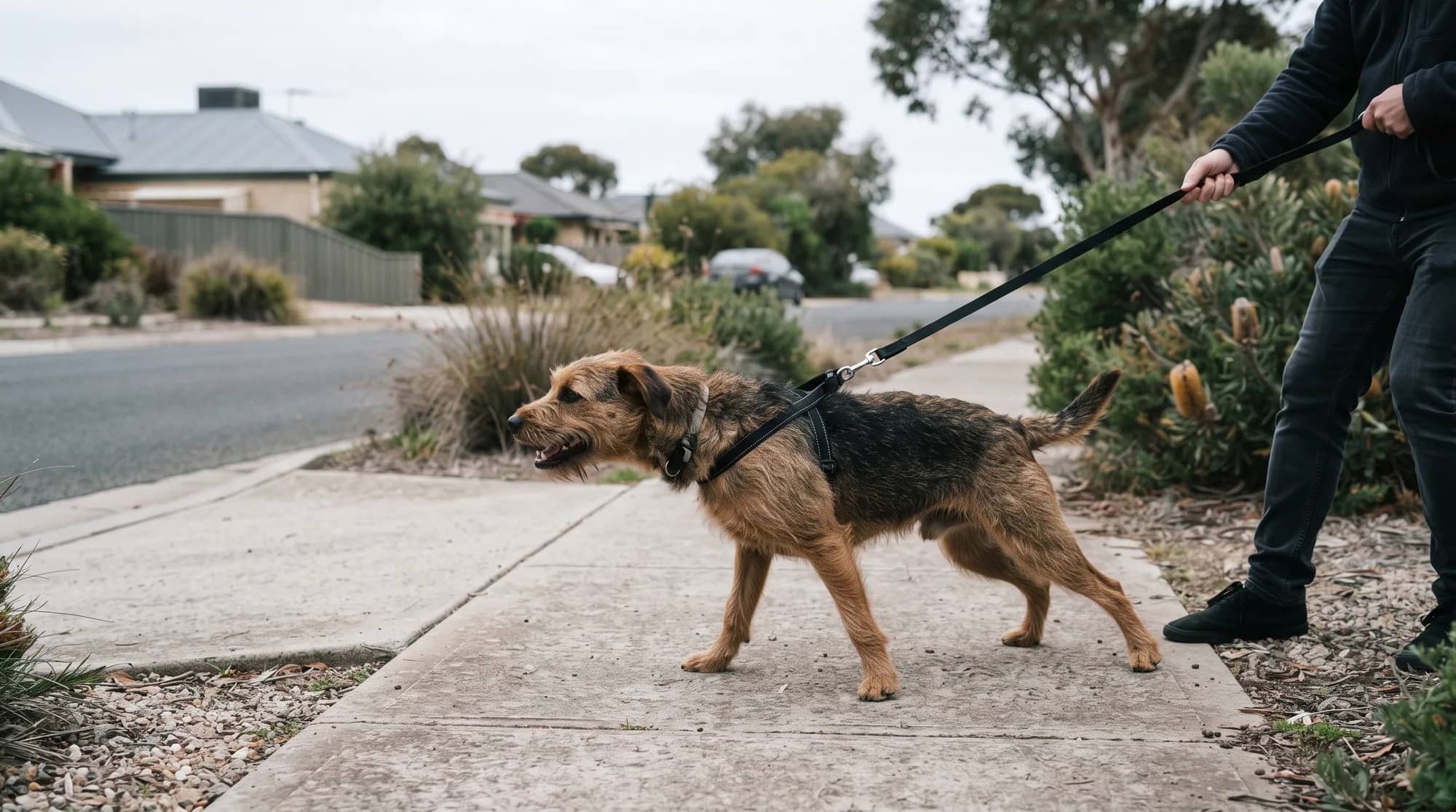
Is My Dog Reactive or Aggressive? How to Tell the Difference
They look almost identical from the other end of the lead. They are not the same problem, and treating one like the other is why so much training fails.
Behaviour Problems
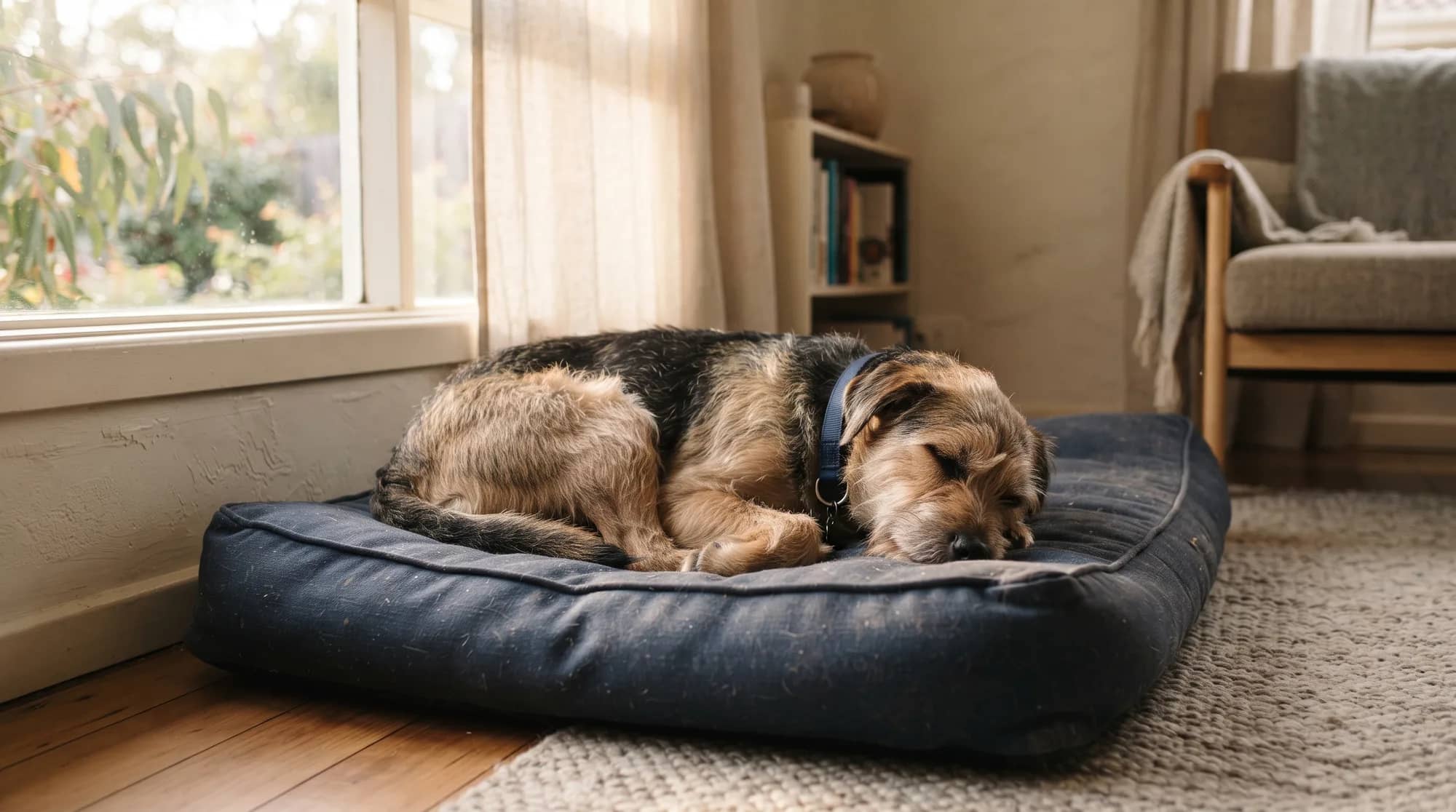
The First 30 Days With a Rescue Dog
The dog you bring home is not the dog you have adopted. It takes about three weeks for the real one to show up — and what you do in that window matters.
Behaviour Problems
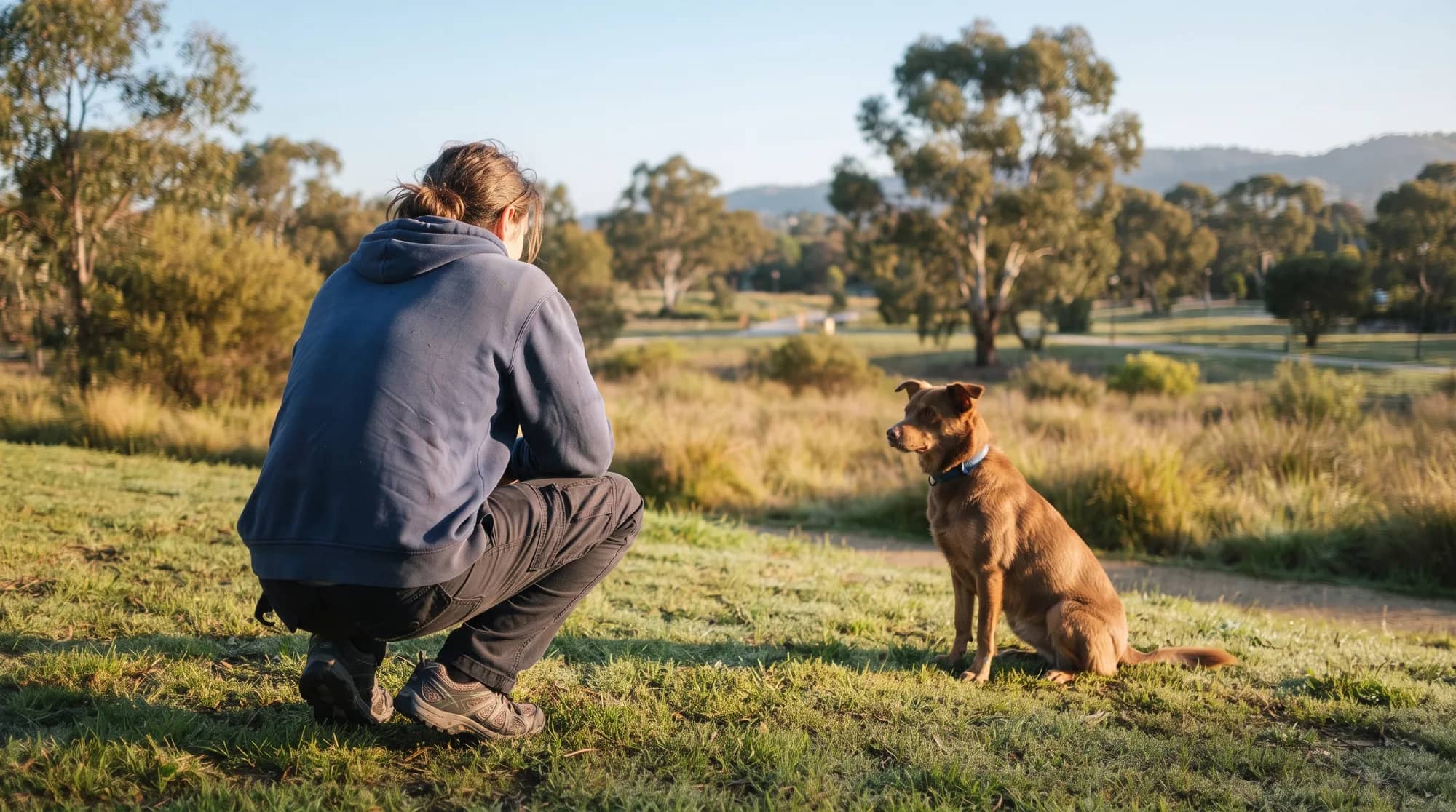
Dog Behaviourist or Dog Trainer? Which One Do You Need?
Neither title is protected in Australia. Anyone can use either. Here is what the words actually mean and how to work out which one your dog needs.
Suburbs
Suburbs where this comes up most
Each has its own page with the council, the parks and the problems specific to it.
Read up
Free guides on behaviour consultations
Written for owners in southern Adelaide. If one of these sorts your problem out and you never ring me, that is a good outcome.
Obedience & Training
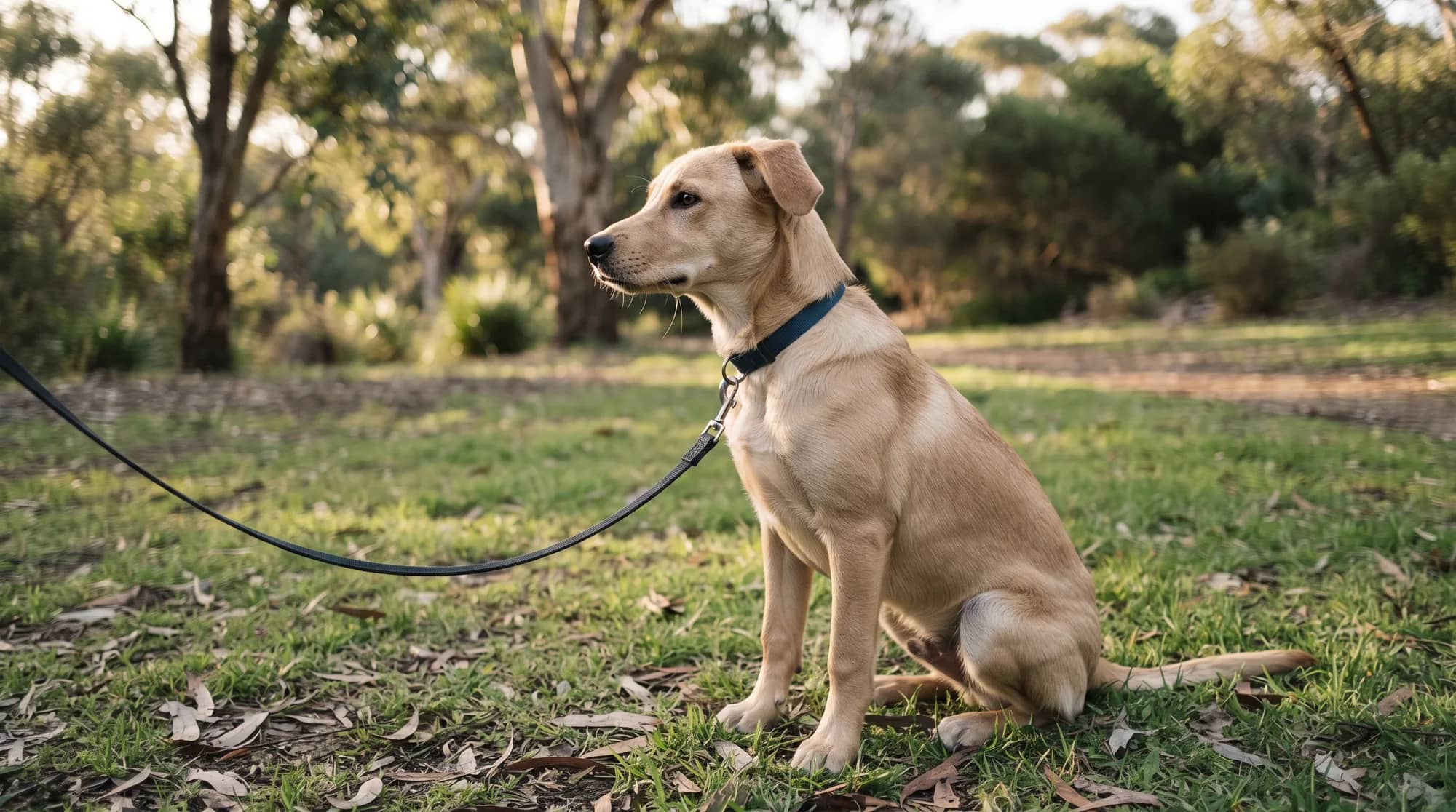
Your Dog Has Not Forgotten Its Training. It Is a Teenager.
At around ten months, a lot of owners conclude their training failed. It did not. Their dog hit adolescence — and almost nobody warns you about it.
Behaviour Problems
The First 30 Days With a Rescue Dog
The dog you bring home is not the dog you have adopted. It takes about three weeks for the real one to show up — and what you do in that window matters.
Behaviour Problems
Dog Behaviourist or Dog Trainer? Which One Do You Need?
Neither title is protected in Australia. Anyone can use either. Here is what the words actually mean and how to work out which one your dog needs.
Questions
Behaviour Consultations — your questions
What is the difference between a trainer and a behaviourist?
My dog has growled. Should I punish it?
Do I need a vet referral?
Can you guarantee it will be fixed?
Ready when you are
Let's sort your dog out.
Tell me what's going on and I'll tell you straight whether I can help — and roughly what it will take. No obligation, no pressure. Southern suburbs of Adelaide — CBD to Victor Harbor.
Send a quick enquiry
Four things and I’ll come back to you. If it is urgent, ring instead — that is always faster.