
Dog Obedience Training · McLaren Vale
Dog Obedience Training in McLaren Vale
Your dog already knows "sit". The question is whether they do it when a magpie lands on the fence.
In short
Obedience training in McLaren Vale is shaped by space rather than by neighbours. Recall carries far more weight here than in the suburbs because the consequences of a failed recall on acreage — roads, livestock, wildlife — are real. Boundary training and settling in public at dog-friendly cellar doors are the other two skills owners here consistently want.
Why McLaren Vale
What makes this different in McLaren Vale
Vales obedience is a different curriculum from suburban obedience, and it is worth being explicit about that.
In a suburb, the obedience priorities are usually loose lead, greeting manners and settling — because those are the behaviours that create friction with other people. Out here, the priority list reorders. Recall comes first, and it comes first by a distance, because a dog that does not come back on five acres has options a suburban dog does not: the road at the end of the drive, the neighbour's sheep, the roos in the paddock at dusk.
Building that recall properly takes staged work on a long line, across increasing distances and increasing distractions, in the actual paddock rather than in a yard. It is not fast, and anyone who tells you they can install a bombproof recall in an afternoon is describing a dog that has not yet met anything interesting.
Boundary training runs alongside it. A lot of Vales properties are partly fenced, stock-fenced, or open at the driveway. Teaching a dog where the edges of its world are is genuinely valuable, and dogs generally find it reassuring — an animal that knows the rules of its territory relaxes into it.
Then there is the cellar-door skill, which is unique to this part of my service area. Settling on a mat under a table, with food arriving, strangers walking past at half a metre and other dogs at the next table, is a real trained behaviour. It is achievable for most dogs. What it is not is something you should discover on a Sunday in October at a busy venue — that is the exam, not the lesson.
Local factors
What sets dogs off in McLaren Vale
The specifics of this suburb, and why they matter for dog obedience training.
- Roads at the end of long unfenced driveways
- Livestock on neighbouring properties
- Roos and rabbits at dawn and dusk
- Working-breed crosses with high drive and no job
- Dog-friendly cellar doors on busy weekends
In practice
Building a recall that holds on acreage
This is the skill that matters most out here and the one people most often try to shortcut, so it is worth setting out what "properly" actually looks like.
Stage one is indoors and boring. A fresh cue word, paid every single time with something genuinely worth crossing a room for. Twenty repetitions over a few days until the word is a reflex rather than a request. If your existing recall word has been worn out by years of being ignored, retire it — a clean start is faster than rehabilitation.
Stage two is a long line in your own paddock. Ten metres, clipped to a harness. The line is a safety net, not a steering wheel: it exists so your dog never gets to practise ignoring you. Work at distances where you are winning.
Stage three is the distraction ladder, written down and worked in order. For a Vales dog that list usually runs: a smell in the grass, a person, a ball, another dog at distance, another dog up close, birds, rabbits, and roos at the top. Train at each level until it is boring before you move up. Every time you test your dog somewhere it fails, you have taught it the cue is optional there.
Stage four is the paddock off line, and only once your dog is responding first time, every time, with the roos out.
The bit people skip is the ladder, and it is the bit that determines whether the recall holds when it counts. If you want a fence while you build it, Symonds Reserve at Aldinga Beach is the nearest enclosed park and it is worth the drive.
Locally
Cellar-door manners, step by step
The Vales is the only part of my service area where "I want to be able to take him to lunch" is a mainstream training goal rather than an afterthought, and it is entirely achievable — provided you build it rather than attempt it.
What it actually requires is five separate skills stacked: settling on a mat on cue, holding that settle for forty minutes, ignoring food at nose height, tolerating strangers passing at half a metre, and staying settled when another dog arrives at the next table. Each has to be solid before the next gets added, and attempting all five at once on a busy Sunday is why so many owners conclude their dog "just can't do cafes".
Build it at home on the mat you will carry with you. Add duration before you add distraction — a dog that can hold twenty quiet minutes in your kitchen is ready for five noisy ones somewhere else. Then a quiet venue mid-week, outside table, back to a wall so nobody can approach from behind. Then somewhere busier. Then a weekend.
Two Vales-specific cautions. Cellar doors have food on the ground and dogs at close quarters, so a dog with any resource guarding needs that dealt with first rather than discovered at a table. And spring and autumn weekends are genuinely busy — the difference between a Tuesday and a Sunday in October is not marginal, and it is not the day to find out where your dog's limit is.
Done in order, most dogs get there. Done backwards, most owners give up.
Sound familiar?
What I'm called about in McLaren Vale
- Listens perfectly at home, deaf as a post at the park
- Pulls so hard on the lead that walks have stopped being walks
- Launches at visitors before they get through the door
- Ignores their name completely once something more interesting appears
- Counter-surfs, door-dashes, or steals whatever is left within reach
- Fine with you, chaos with the kids or your partner
How it works
How it works
We talk first
Before anything else I want to hear what a normal day looks like — where it goes wrong, what you have already tried, and what you actually want. There is no point teaching a perfect competition heel to someone who just wants to walk to the shops in peace.
I watch your dog in your world
Most of what I need to know shows up in the first ten minutes at your place: how your dog greets, where they position themselves, what they have quietly taken charge of. That is information you cannot get in a hall on a Tuesday night.
We build the foundations, hands on
You do the handling, not me. A dog that only responds to the trainer is a party trick. We work through the core skills together until they feel natural in your hands, and we practise them where the problems actually happen.
You leave with one thing to practise
Not twelve. One hour, one topic, demonstrated until you can do it yourself — then a week or two to make it automatic before we add the next thing.
Related
The full service page, the suburb guide, and the wider area.
Read up
Free guides on this
Written for owners in this part of the south. If one of these fixes it and you never ring me, that is a good outcome.
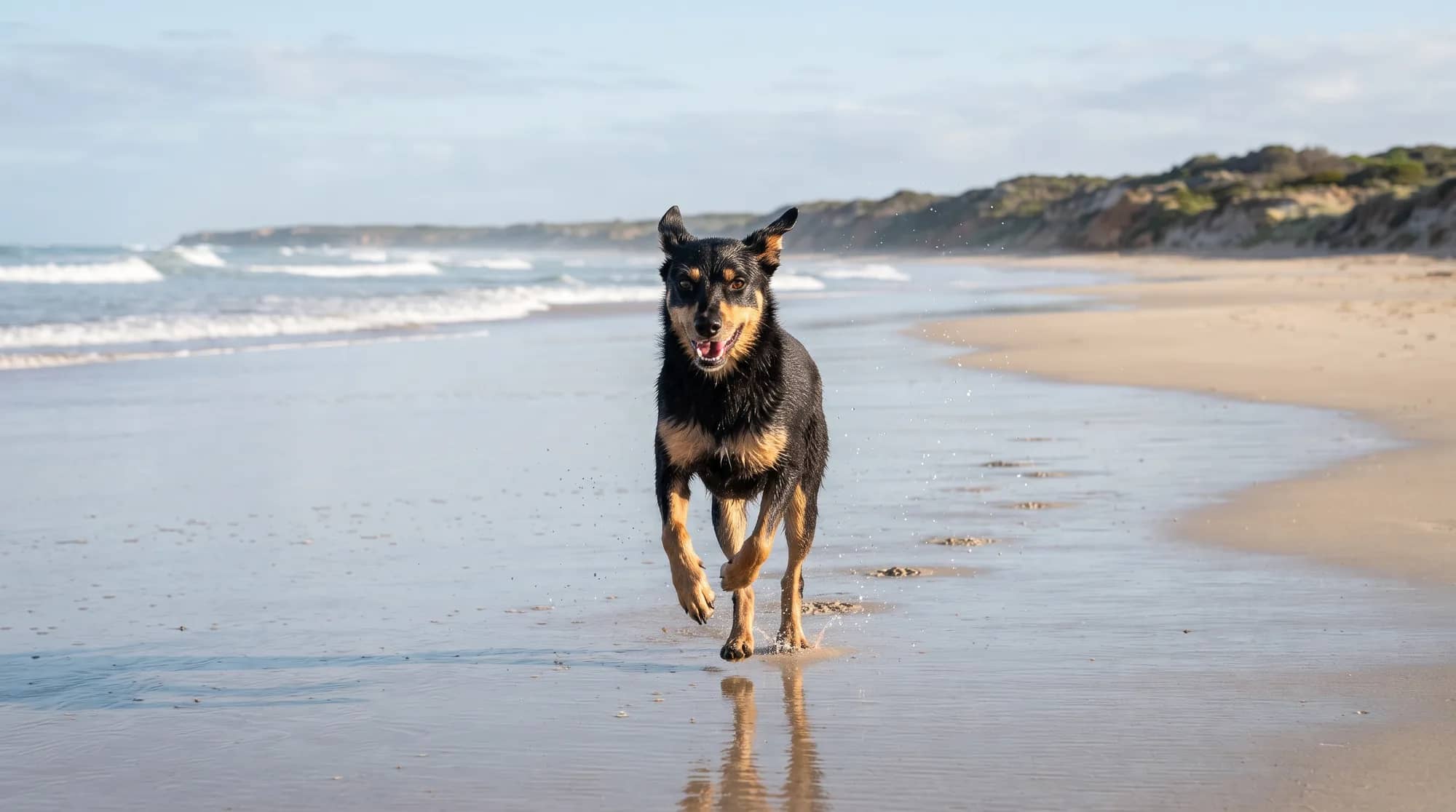
Obedience & Training
Why Your Dog Won't Come When Called (And How to Fix It)
Every time you call your dog and it does not come, you are teaching it that "come" is optional. Here is how that happens, and how to undo it.
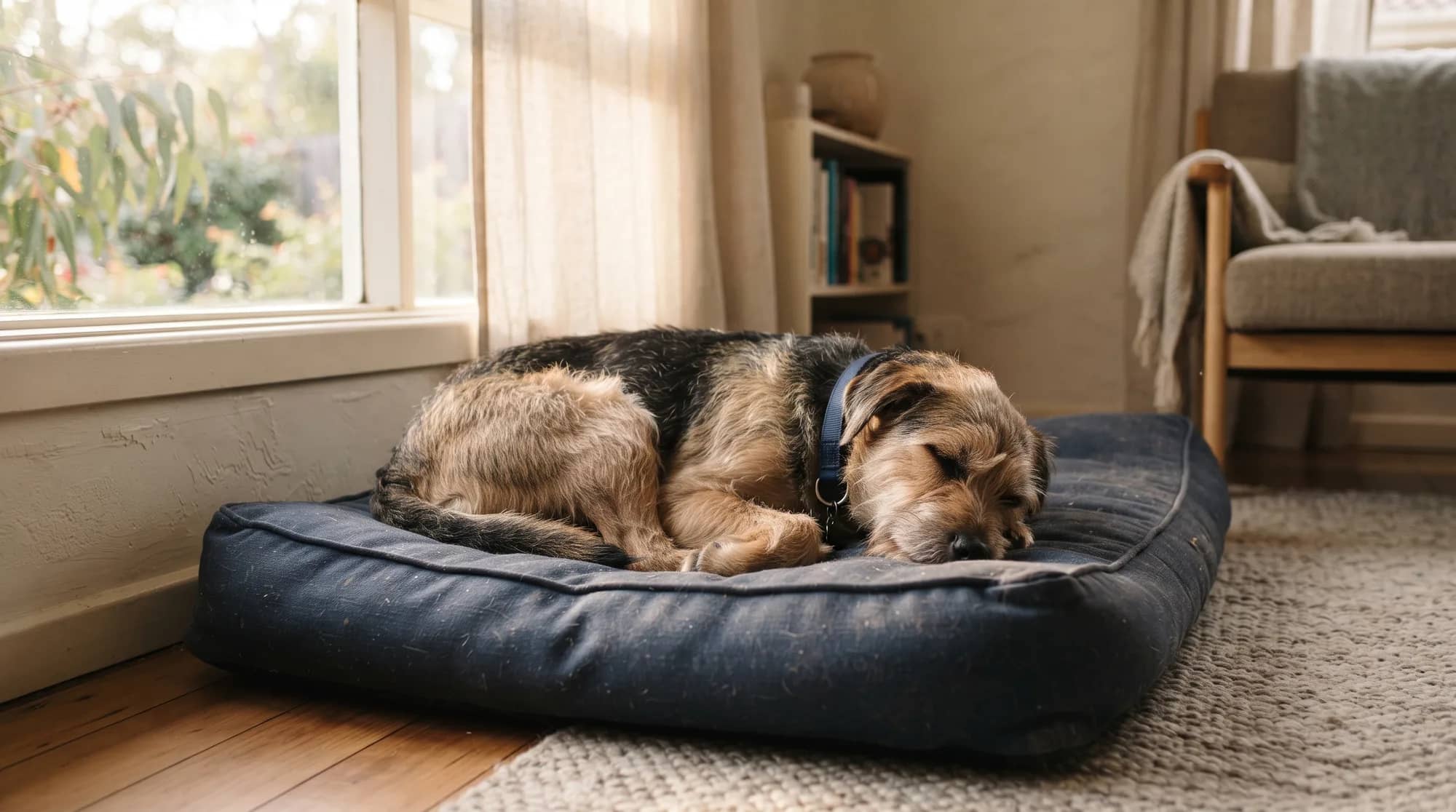
Behaviour Problems
The First 30 Days With a Rescue Dog
The dog you bring home is not the dog you have adopted. It takes about three weeks for the real one to show up — and what you do in that window matters.
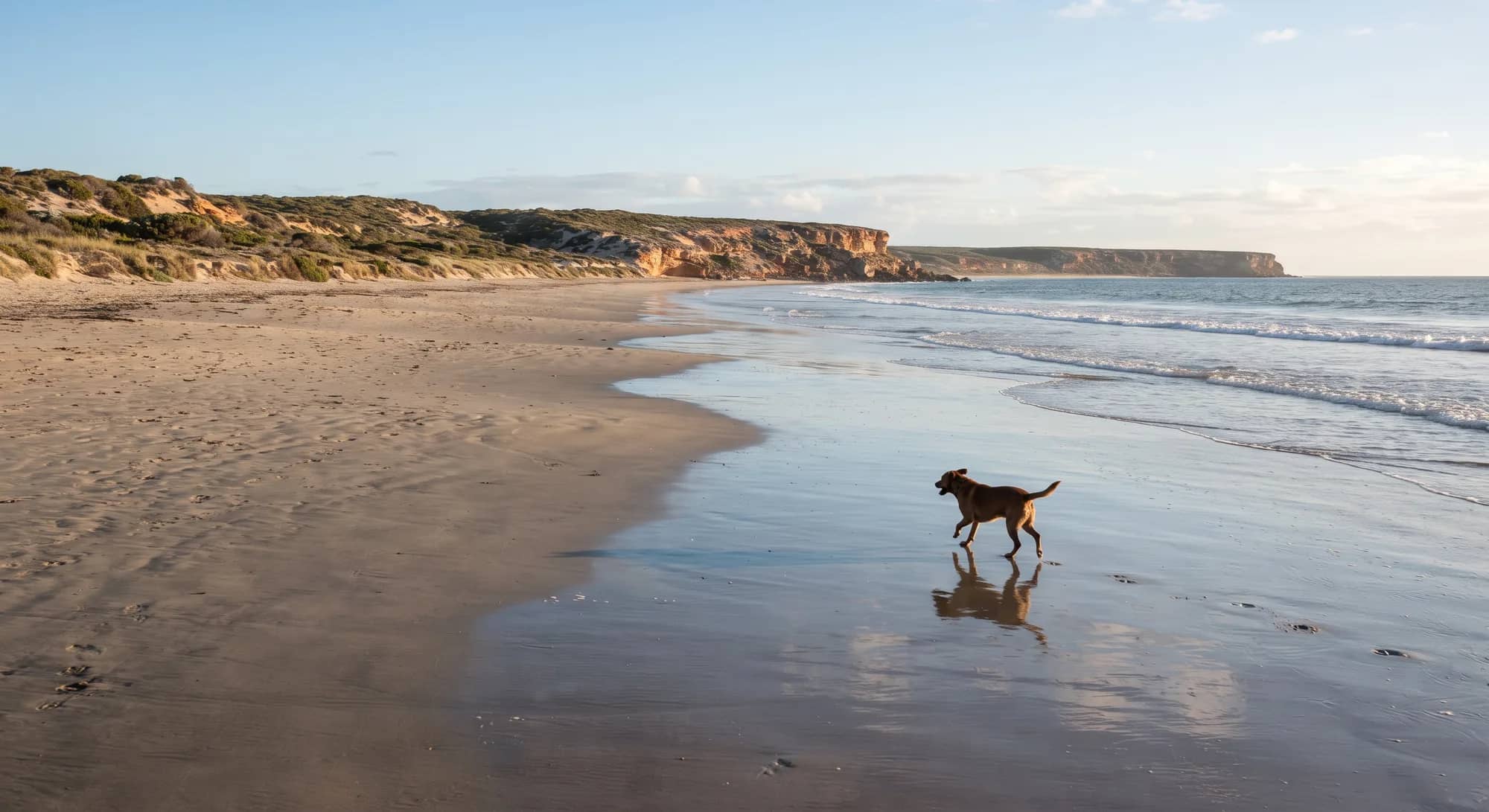
Adelaide Dog Life
Off-Leash Dog Beaches: Southern Adelaide to Victor Harbor
From Glenelg to Victor Harbor, a run-down of the coast, how the off-leash hours generally work, and the two words in the legislation that catch people out.
Questions
Dog Obedience Training in McLaren Vale — questions
How long does a reliable acreage recall take to build?
Can you help with a dog that runs the fence line at the stock next door?
How many sessions will my dog need?
My dog is 7. Is it too late?
Do I need to use treats forever?
Ready when you are
Dog training in McLaren Vale, starting this week.
Tell me what's going on and I'll tell you straight whether I can help — and roughly what it will take. No obligation, no pressure. Southern suburbs of Adelaide — CBD to Victor Harbor.
Send a quick enquiry
Four things and I’ll come back to you. If it is urgent, ring instead — that is always faster.