
The Southern Beaches
Dog Training & Behaviour in Brighton
Brighton, North Brighton, South Brighton, Hove, Seacliff and Seaview Downs.
In short
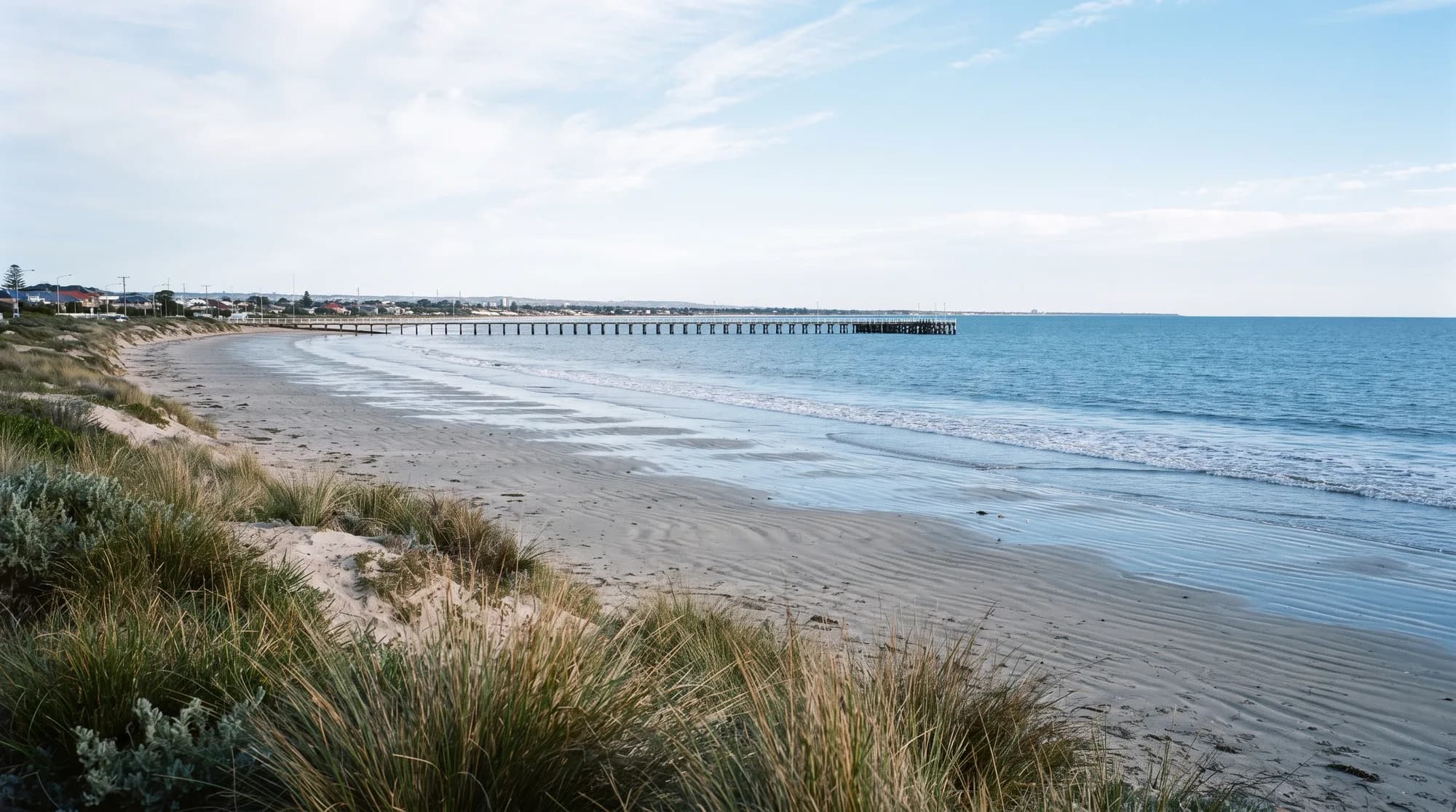
Brighton is a family beach suburb where the daily esplanade walk is central to how people live with their dogs. That walk is also the problem: it is narrow, linear and busy, so a dog with any reactivity has nowhere to create distance. Most Brighton training work is about making that specific walk possible again.
Local knowledge
Dog life in Brighton
Almost every Brighton enquiry I get mentions the esplanade. It is the reason people live here, and it is the exact place their dog problem is most visible.
The esplanade path is narrow, straight and shared. Cyclists, joggers, prams, scooters and a steady stream of other dogs, all funnelled along a strip a couple of metres wide with the beach on one side and the road on the other. If your dog needs distance to stay calm, there is none available. Owners describe a dog that is "totally fine at the park and impossible on the esplanade" and they are describing a distance problem, not a personality change.
Brighton is also strongly family-oriented, which shapes the dogs. Lots of medium-sized family breeds, lots of households where the dog arrived when the kids were small, and lots of adolescent dogs that were doing fine until about ten months and then apparently forgot everything. That adolescent collapse is completely normal and completely fixable, but it does need addressing rather than waiting out.
The jetty and the surrounding cafes get busy, particularly through summer and on jetty-side event days. A dog that is comfortable in June meets a different suburb in January.
Down towards Seacliff and Seaview Downs the streets get steeper and quieter, which is actually useful — those back streets are some of the best early-stage training environments in the area, because you can see what is coming and create distance.
The beach itself follows the standard Holdfast Bay pattern: off lead under effective control outside the middle of the day, on lead in between. Confirm current hours with the council.
Where you can take a dog
Dog parks, beaches and reserves near Brighton
The council-designated spots that actually matter for training — and which of them have a fence.
- Off-lead beach
Brighton Beach off-lead area
Off lead under effective control outside the middle of the day, with seasonal City of Holdfast Bay time restrictions. Confirm the current hours before you go.
- Fenced dog parkSouth Brighton
Dover Square Reserve fenced dog park
The council's only fenced dog park, with toilets, and effectively the local one for Brighton. The single best place in the suburb to build a recall safely.
- Off-lead beachSeacliff
Seacliff Beach off-lead area
Just south, and usually quieter than Brighton outside summer. Time restrictions apply here too.
- On lead
The Esplanade path
Narrow, linear, and shared with cyclists, joggers and prams. The single most common location for Brighton dog problems.
Taken from the councils’ own dog registers and current as at August 2026. Councils genuinely do add, fence and re-designate these areas, and seasonal beach hours change — check with your council before you rely on any of it, and the signage on the day beats everything.
Training locally
Why the esplanade is so hard, and what to do about it
Almost every Brighton enquiry I get mentions the esplanade. It is the reason people move here, and it is the exact place their dog problem is most visible. It is worth understanding why, because the explanation points straight at the fix.
The path is narrow, straight and shared. Cyclists, joggers, prams, scooters and a steady stream of other dogs, all funnelled along a strip a couple of metres wide with the beach on one side and the road on the other. There are no side streets to duck into and no verge to step onto. When another dog appears, you pass at two metres whether either of you wants to or not.
For a dog that needs twenty or thirty metres to stay under its threshold, that is a losing position before you have done anything. Owners describe a dog that is "totally fine at the park and impossible on the esplanade" and they are describing a distance problem, not a personality change. Same dog, completely different level of difficulty.
So the first intervention is usually free: stop walking the esplanade for a few weeks. Not forever — while the threshold work happens. Use the beach itself, which is wide enough to create fifty metres of distance in any direction, or the quieter back streets towards Seacliff and Seaview Downs where the sightlines are long and the traffic is thin.
Every reactive episode on that path is a rehearsal, and a dog that rehearses three times a walk gets very good at it. Cut the rehearsals and the training finally has room to work. Then take the esplanade back.
Worth knowing
The ten-month wall
Brighton is strongly family-oriented, and the caseload reflects it: a lot of medium-sized family breeds, a lot of households where the dog arrived when the kids were small, and a very consistent pattern of owners ringing me at around ten months convinced their training has failed.
It has not. Their dog hit adolescence.
Dogs go through a genuine developmental stage between roughly eight and eighteen months. The brain is reorganising, sex hormones have arrived, and the parts responsible for impulse control finish developing last. There is research showing adolescent dogs become measurably less responsive specifically to their own owner during this window while remaining responsive to strangers — which is a wounding thing to learn when you are the one who did all the training.
What it looks like: recall stops working, the lead walking regresses, new fears appear out of nowhere, and rules that were settled for months are suddenly being tested nightly.
The mistake is concluding the training failed and easing off the rules. Adolescence is precisely when consistency matters most, because what your dog is testing is whether the rules are real. If the answer turns out to be "sometimes", you have not survived adolescence — you have taught your dog that persistence pays, and that is a lesson it will keep for years.
The second mistake is escalating to punishment. A brain that is reorganising and going through a fear period forms lasting negative associations unusually easily. A great deal of long-term reactivity gets created in this window by owners who got frustrated at exactly the wrong developmental moment.
Hold the rules, shorten the sessions, put the long line back on, and wait it out. Most Brighton dogs are noticeably easier by eighteen months.
What I get called about
What comes up in Brighton
- Reactivity on the narrow, busy esplanade path
- Adolescent dogs that stopped listening at around ten months
- Recall that does not hold on a beach full of families
- Pulling on lead the whole way from the house to the beach
- Dogs overwhelmed by summer and event-day crowds
Around here
Around Brighton
Where the training happens, and where things tend to go wrong.
Brighton Esplanade
Narrow, linear, shared with cyclists. The single most common location for Brighton dog problems.
Brighton Jetty and foreshore
Busy year-round and very busy in summer. Off-lead access varies by time of day — check Holdfast Bay.
Seacliff and Seaview Downs back streets
Quiet, steep and with good sightlines. Underrated as an early-stage training environment.
Most requested here
What I'm booked for in Brighton
Reactive Dog Training
You have started walking at 6am so you do not meet anyone. That is not a walk, that is a covert operation.
Learn moreDog Obedience Training
Your dog already knows "sit". The question is whether they do it when a magpie lands on the fence.
Learn morePuppy Training
Everything your puppy learns in the next twelve weeks, they will believe for the rest of their life. Worth getting right.
Learn moreIn-Home Dog Training
Your dog does not misbehave in a training hall. It misbehaves at your front door. So that is where we work.
Learn moreUseful locally
Council and nearby suburbs
Brighton sits inside City of Holdfast Bay, whose rules cover dog registration, leash requirements and barking complaints.
Nearby
Other suburbs close by
City of Holdfast Bay
Glenelg
Apartments, Jetty Road crowds and a beach that changes character with the tide of tourists.
Dog training in GlenelgCity of Marion
Hallett Cove
The boardwalk is spectacular and genuinely narrow. A lunging dog there is a safety problem, not an embarrassment.
Dog training in Hallett CoveRead up
Reading for Brighton dog owners
Free guides on the problems that come up most in this part of the south.
Adelaide Dog Life
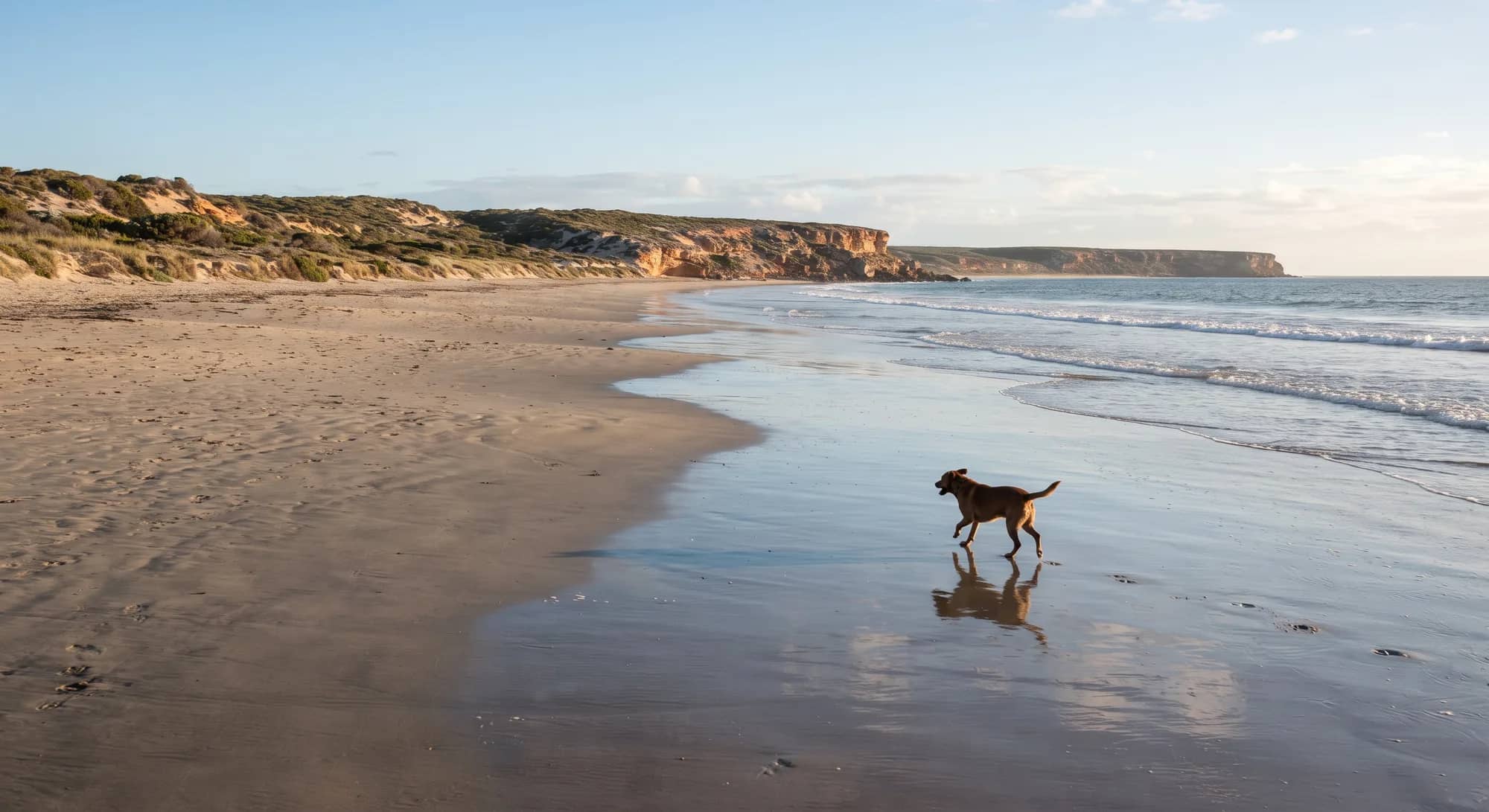
Off-Leash Dog Beaches: Southern Adelaide to Victor Harbor
From Glenelg to Victor Harbor, a run-down of the coast, how the off-leash hours generally work, and the two words in the legislation that catch people out.
Obedience & Training
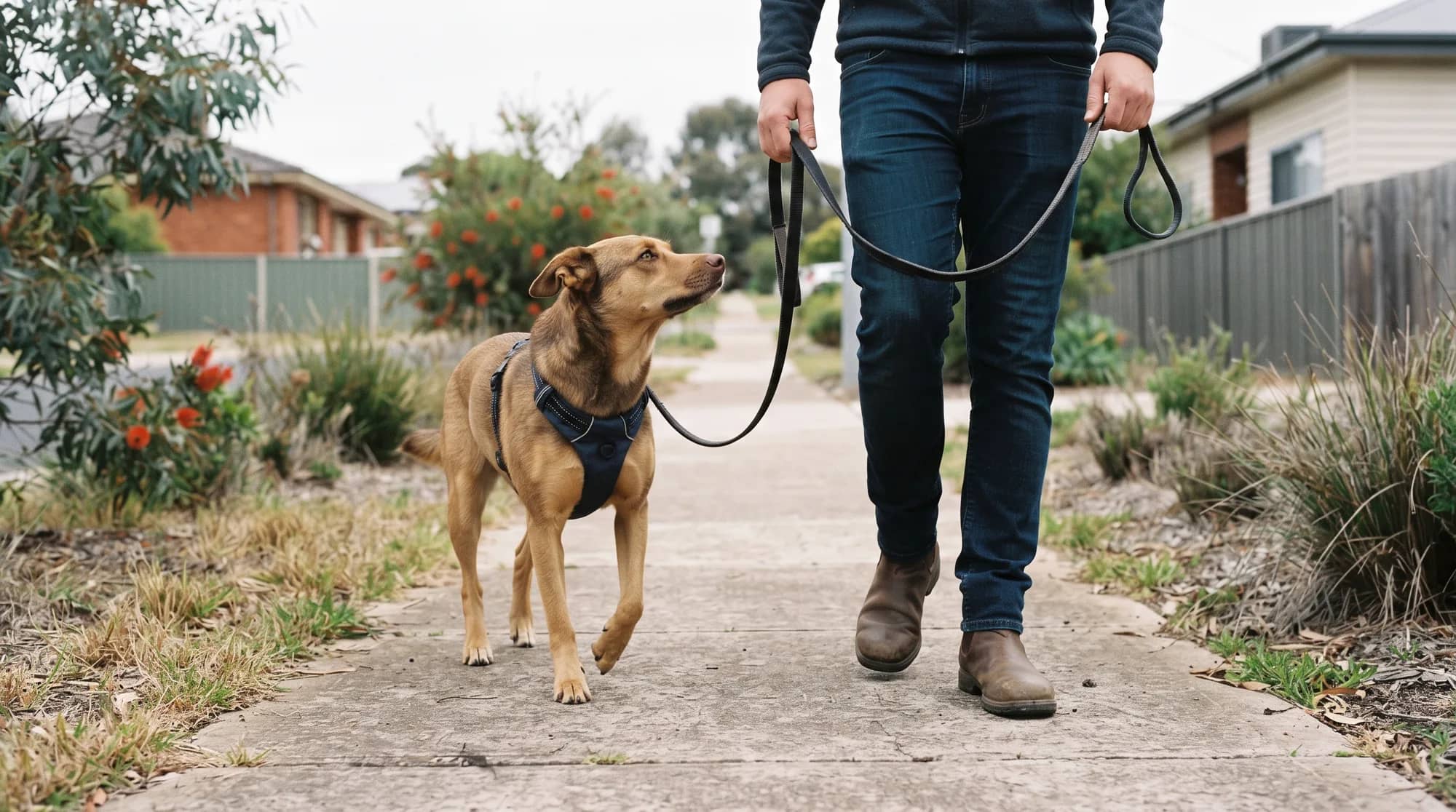
How to Stop Your Dog Pulling on the Lead
Your dog is not pulling because it is dominant, stubborn, or untrained. It is pulling because pulling works — and it has worked every single walk since the day you got it.
Puppy Training
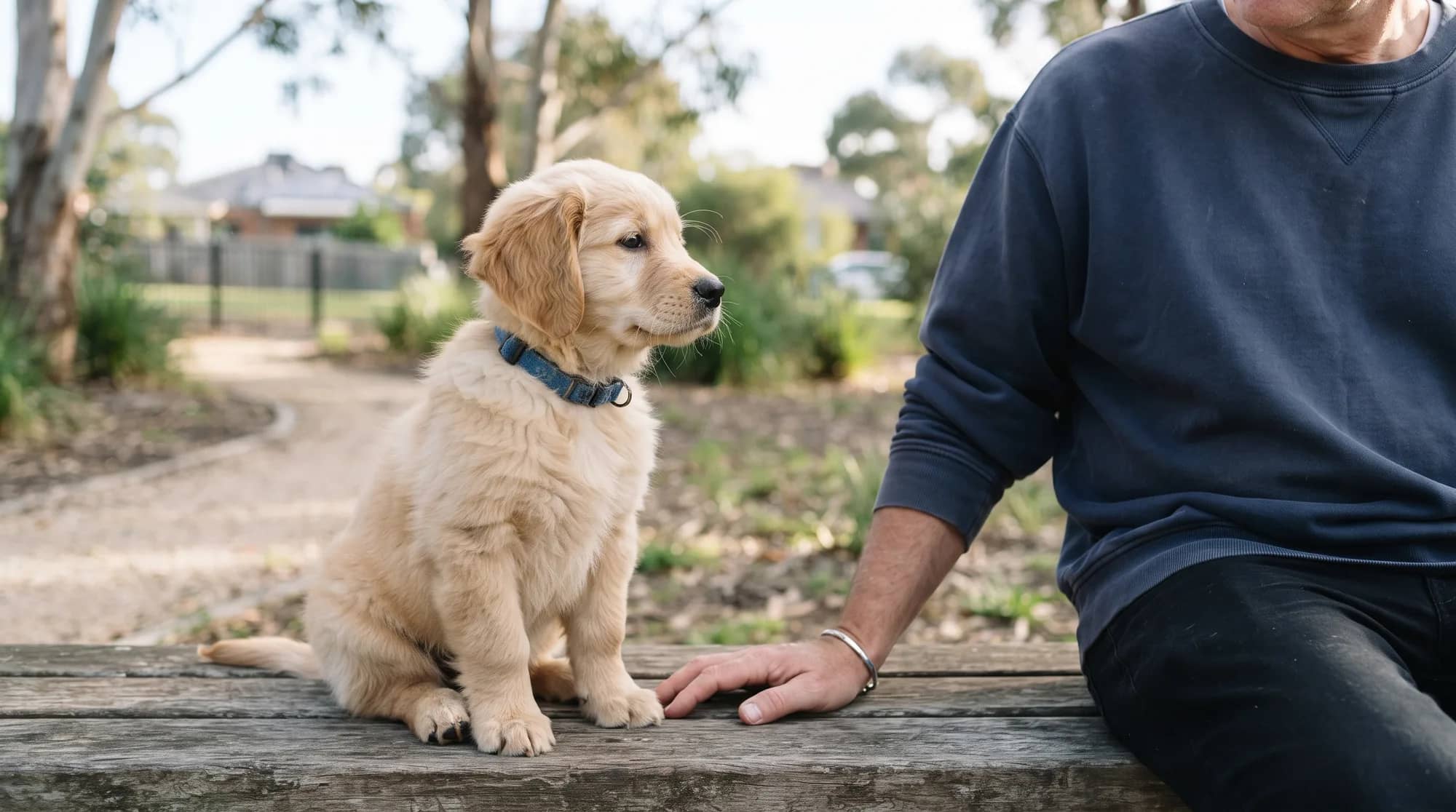
When Should Puppy Training Actually Start?
The most valuable training window in your dog's entire life closes at around sixteen weeks. Most people start using it at six months.
Questions
Dog training in Brighton — questions
My dog is fine at the park but reacts to everything on the esplanade. Why?
My eleven-month-old has stopped listening. What happened?
Ready when you are
Dog training in Brighton, starting this week.
Tell me what's going on and I'll tell you straight whether I can help — and roughly what it will take. No obligation, no pressure. Southern suburbs of Adelaide — CBD to Victor Harbor.
Send a quick enquiry
Four things and I’ll come back to you. If it is urgent, ring instead — that is always faster.