
Adelaide's Southern Suburbs
Dog Training & Behaviour in Morphett Vale
Morphett Vale, Old Reynella, Reynella, Reynella East, Woodcroft and Hackham.
In short
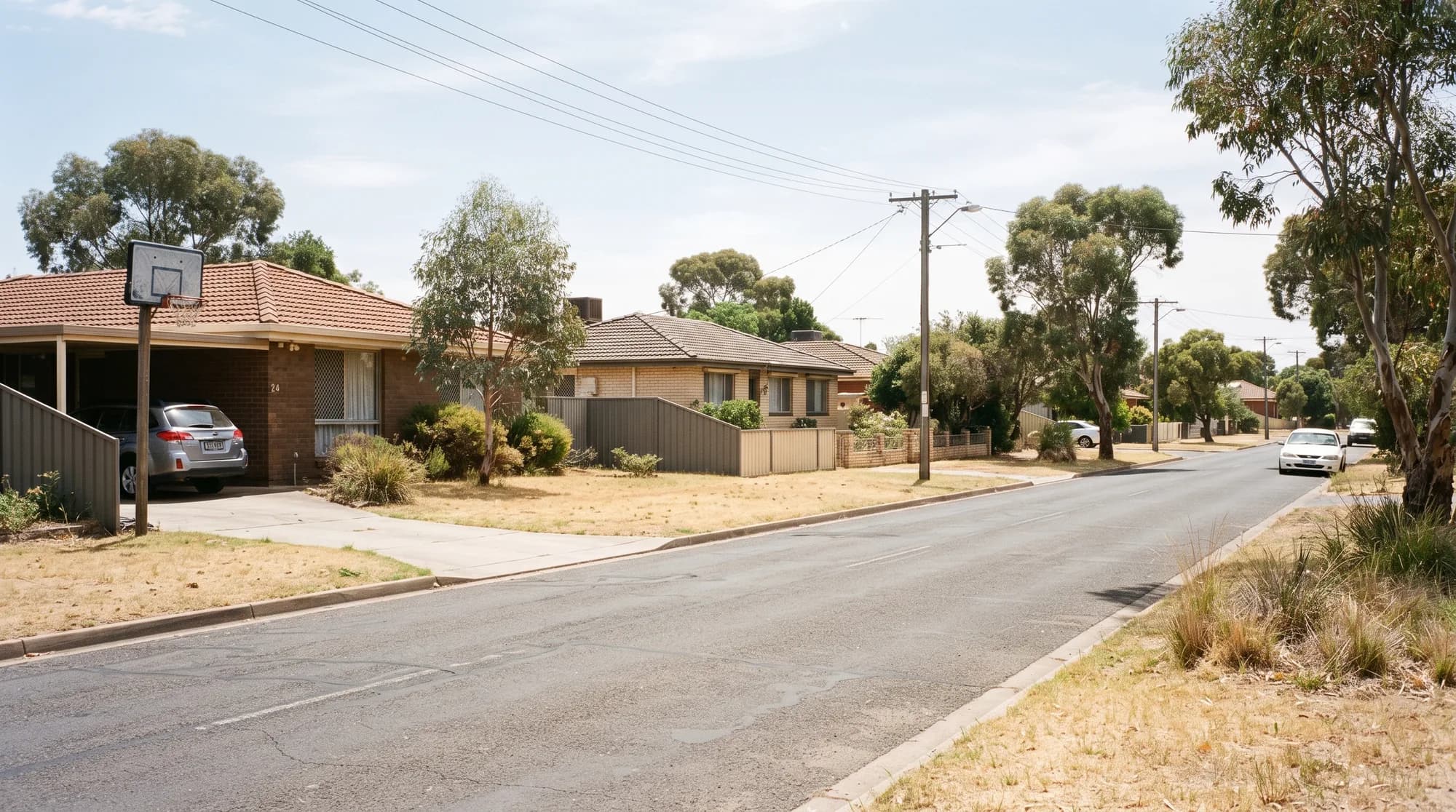
Morphett Vale is one of South Australia's largest suburbs by population and has a correspondingly dense dog population. Close-set housing with colorbond fencing produces the two problems I see most here: fence-line conflict between neighbouring dogs, and nuisance barking that ends up as a City of Onkaparinga complaint.
Local knowledge
Dog life in Morphett Vale
Morphett Vale is where I do more work than in any other single suburb, and it is a numbers thing: an enormous residential population, blocks packed close together, and a lot of families with dogs.
The dominant issue is the fence. Standard block sizes here mean your dog and the neighbour's dog are separated by a colorbond panel — close enough to hear each other breathe, and completely unable to see one another. That is about the worst possible arrangement for two aroused dogs. They can detect each other perfectly and resolve nothing, so they run the fence. Twice a day. For years.
What makes this more than a noise problem is what it teaches. A dog that has practised losing control at the sound of another dog thousands of times in its own yard does not leave that behaviour at the gate. It shows up on the lead, on the walk, at the park, and by then the owner is describing a reactive dog without ever connecting it to the fence.
So in Morphett Vale, more than anywhere, the first intervention is usually physical. Block the access. Screen the fence. Change the times the dog is out. Stop the rehearsal, then train. Trying to do it the other way round almost never works.
The second Morphett Vale pattern is barking complaints. Onkaparinga has a formal process, and when a Control (Barking Dog) Order is on the table there is a real clock running. The practical advice is always the same: change the environment today, keep a log, and talk to your neighbour. Councils respond well to owners who are visibly doing something.
Third is rescue dogs. This part of Adelaide adopts a lot of rescues, which is a good thing, and it means a steady stream of dogs arriving with unknown histories into busy family households. Those cases need a slower start than people expect — the first month should be about decompression, not obedience.
Where you can take a dog
Dog parks, beaches and reserves near Morphett Vale
The council-designated spots that actually matter for training — and which of them have a fence.
- Fenced dog parkWoodcroft
Woodcroft fenced dog park
One of the City of Onkaparinga's four fenced dog parks, with agility equipment and toilets. The closest enclosed space to Morphett Vale and the best local place to build a recall.
- Fenced dog parkHappy Valley
Minkarra Park fenced dog park
Corner of Manning Road and Flagstaff Hill Road. Fenced, with agility equipment, a separate small-dog area and toilets. Worth the short drive if your dog is better away from its own neighbourhood.
- On lead
Onkaparinga River Recreation Park
Dogs permitted on lead. Not to be confused with the adjoining Onkaparinga River National Park, where dogs are not permitted at all.
- No dogs
Onkaparinga River National Park
Dogs are not permitted. Two adjacent parks, nearly identical names, opposite rules — people get caught out constantly.
Taken from the councils’ own dog registers and current as at August 2026. Councils genuinely do add, fence and re-designate these areas, and seasonal beach hours change — check with your council before you rely on any of it, and the signage on the day beats everything.
Training locally
The fence is the case
Morphett Vale is where I do more work than in any other single suburb, and it is a numbers thing: one of South Australia's largest suburbs by population, blocks packed close together, and a great many families with dogs.
The dominant issue is the fence, and it turns up in cases that were not booked about the fence at all.
Here is the pattern I see over and over. Someone rings about a dog that will not come when called, or jumps all over visitors, or drags them down the street. We start the session and within twenty minutes it is obvious that the dog spends a good part of every day at high arousal running the fence line with the neighbours' dogs. That dog is not in a state where it can learn anything. Its baseline arousal is sitting far above the level where useful training happens, and the obedience problem the owner rang about is downstream of it.
Standard blocks here mean your dog and the neighbour's dog are separated by a single colorbond panel — close enough to hear each other breathe, completely unable to see one another. For two aroused dogs that is about the worst possible arrangement. They can detect each other perfectly and resolve nothing, so they run the fence. Twice a day. For years.
So in this suburb the work usually starts with the yard, whatever the booking said. Block the access, screen the panel, change the times the dog is outside. Bring the baseline down first and everything downstream — the recall, the greetings, the lead — gets dramatically easier. Trying it the other way round almost never works.
Worth knowing
Rescue dogs and the three-week surprise
This part of Adelaide adopts a lot of rescue dogs, which is a genuinely good thing, and it means a steady stream of dogs arriving with unknown histories into busy family households.
Those cases need a slower start than people expect, and the reason is worth understanding. The dog you bring home is not the dog you have adopted. For the first week or two you are meeting a version that is shut down, overwhelmed and running on adrenaline — often unnaturally quiet, which owners read as "such a calm dog". Then somewhere around week three the real dog surfaces, and that is when the phone rings.
Nothing has gone wrong. That is simply how it works. As a dog relaxes it starts having opinions, and behaviours that were suppressed under stress come online: guarding the couch, barking at the neighbours, reactivity on the walk that was not there in week one.
What matters is how you respond to it. Do not panic and start correcting hard — a newly settled dog is still forming its view of you, and coming down heavy at week three can undo a fortnight of trust in an afternoon. Do stay consistent, because consistency is reassuring to a dog rather than restrictive. And do get help early if something genuinely worrying appears, because resource guarding and reactivity are far more workable at week three than at month six.
Two practical Morphett Vale specifics. Use two points of attachment on walks for the first fortnight — a collar and a harness — because newly adopted dogs bolt and slip collars, and a dog that bolts here has main roads in several directions. And manage the fence line from day one rather than waiting to see, because a dog still working out where it lives will form that habit within a fortnight.
What I get called about
What comes up in Morphett Vale
- Fence-line fighting with the neighbour's dog
- Council barking complaints and Control (Barking Dog) Orders
- On-lead reactivity that started life as fence frustration
- Rescue dogs settling into busy family households
- Adolescent dogs in households where the rules have drifted
- Multiple dogs in one yard escalating each other
Around here
Around Morphett Vale
Where the training happens, and where things tend to go wrong.
Onkaparinga River Recreation Park
Dogs on lead. Not to be confused with the adjoining national park, where dogs are not permitted at all.
Local Onkaparinga reserves
Council reserves are broadly available for off-lead exercise away from playgrounds — check the council for current designations.
Woodcroft and Reynella walking loops
Quiet residential circuits, useful for structured on-lead work at controlled distances.
Most requested here
What I'm booked for in Morphett Vale
Dog Obedience Training
Your dog already knows "sit". The question is whether they do it when a magpie lands on the fence.
Learn moreBarking Dog Training
Barking is a symptom, not a diagnosis. Six different problems produce the same noise — and they need six different answers.
Learn moreReactive Dog Training
You have started walking at 6am so you do not meet anyone. That is not a walk, that is a covert operation.
Learn moreBehaviour Consultations
Some problems do not respond to more training. They respond to understanding what is actually driving them.
Learn moreSuburb-specific guides
Detailed Morphett Vale guides
Written for this suburb specifically, not templated.
Useful locally
Council and nearby suburbs
Morphett Vale sits inside City of Onkaparinga, whose rules cover dog registration, leash requirements and barking complaints.
Nearby
Other suburbs close by
City of Onkaparinga
Happy Valley
Newer estates, smaller yards, closer neighbours. Barking complaints land here more than almost anywhere.
Dog training in Happy ValleyCity of Onkaparinga
Noarlunga
The estuary, the Coast Park path and Colonnades. Great socialisation country if you use it deliberately.
Dog training in NoarlungaCity of Marion
Hallett Cove
The boardwalk is spectacular and genuinely narrow. A lunging dog there is a safety problem, not an embarrassment.
Dog training in Hallett CoveRead up
Reading for Morphett Vale dog owners
Free guides on the problems that come up most in this part of the south.
Adelaide Dog Life
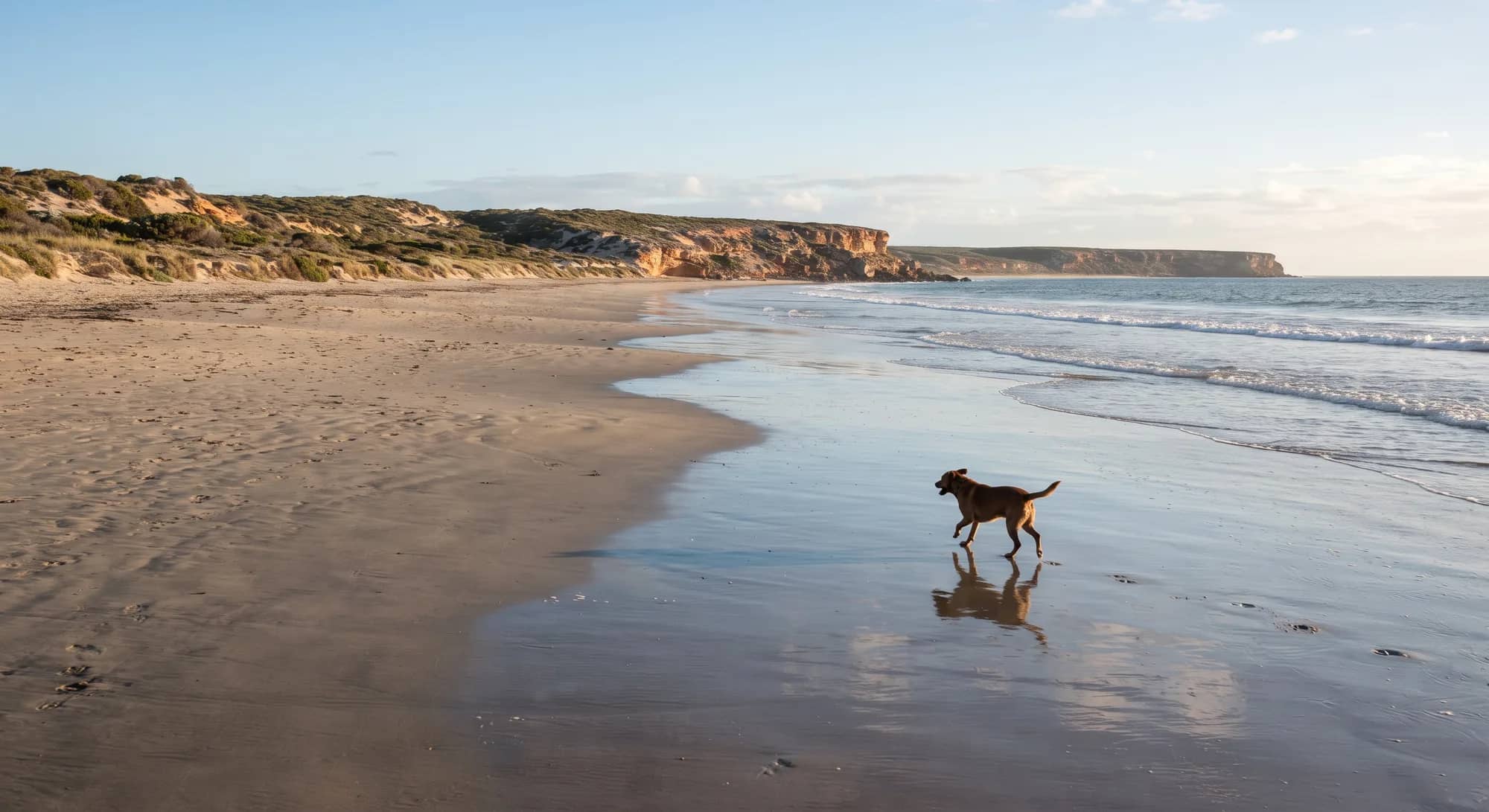
Off-Leash Dog Beaches: Southern Adelaide to Victor Harbor
From Glenelg to Victor Harbor, a run-down of the coast, how the off-leash hours generally work, and the two words in the legislation that catch people out.
Obedience & Training
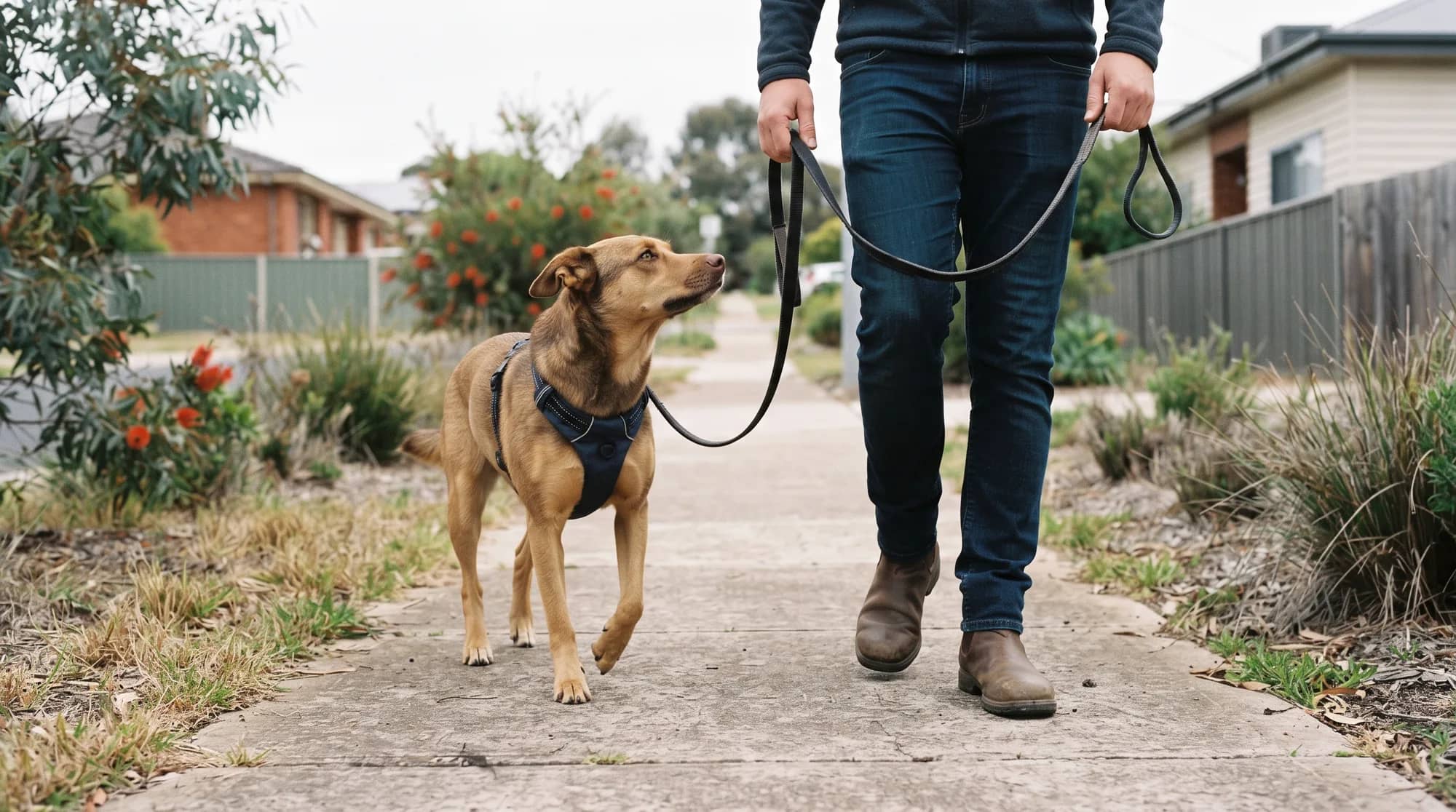
How to Stop Your Dog Pulling on the Lead
Your dog is not pulling because it is dominant, stubborn, or untrained. It is pulling because pulling works — and it has worked every single walk since the day you got it.
Behaviour Problems
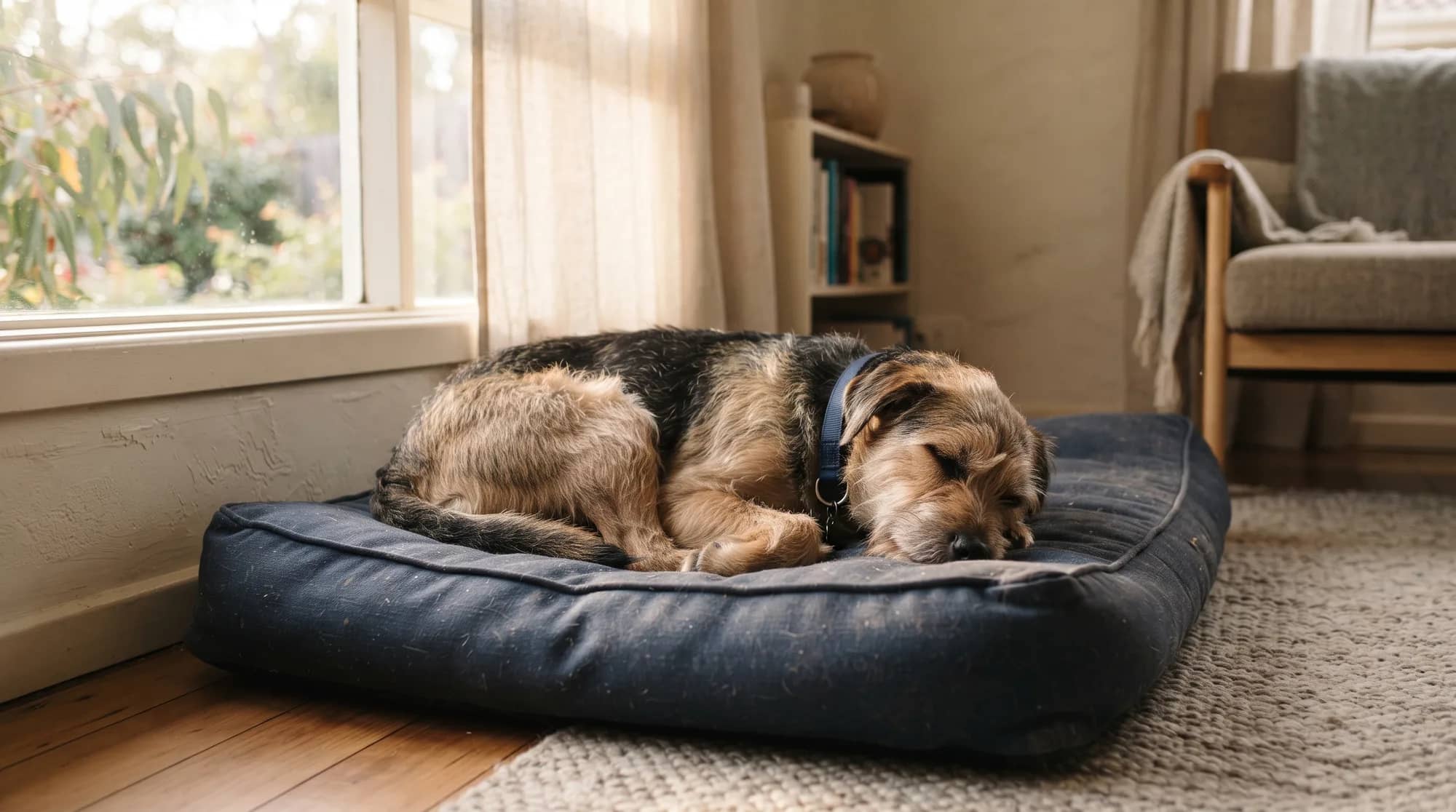
The First 30 Days With a Rescue Dog
The dog you bring home is not the dog you have adopted. It takes about three weeks for the real one to show up — and what you do in that window matters.
Questions
Dog training in Morphett Vale — questions
The dogs either side both bark at mine. Can that even be fixed?
We have just adopted a rescue. When should we start training?
Onkaparinga has sent me a letter about barking. How quickly can you come out?
Ready when you are
Dog training in Morphett Vale, starting this week.
Tell me what's going on and I'll tell you straight whether I can help — and roughly what it will take. No obligation, no pressure. Southern suburbs of Adelaide — CBD to Victor Harbor.
Send a quick enquiry
Four things and I’ll come back to you. If it is urgent, ring instead — that is always faster.