There is a moment every dog owner recognises. You call your dog. Your dog hears you — the ear twitches, you can see it register — and then it carries on with whatever it was doing.
That moment is not defiance. It is arithmetic. Your dog has weighed up what is on offer from you against what is on offer over there, and over there won.
The good news is that arithmetic is something you can change.
The four reasons recall fails
Almost every broken recall I see comes down to one of these.
1. "Come" has become background noise
You have said the word thousands of times. Most of those times, nothing happened — your dog didn't come, and there was no consequence either way. A word that predicts nothing eventually means nothing.
If your recall cue has been worn out like this, the fastest fix is to retire it and start again with a fresh word. "Here", a whistle, anything. The old word is not broken forever, but it carries a lot of baggage and a clean start is usually quicker than rehabilitating it.
2. Coming back reliably ends the fun
Think about what usually happens after a successful recall at the park. Your dog comes, you clip the lead on, and you go home.
Do that enough times and your dog draws the obvious conclusion: coming when called is how the good part stops. Dogs are not stupid. They will start delaying, then avoiding, then playing keep-away — which most owners read as naughtiness when it is actually a very sensible response to the pattern they have created.
The fix is easy and most people never do it: recall your dog, reward it, and then let it go again. Ten times for every once you actually leave. Now the cue predicts "something good and then back to what you were doing" rather than "it's over".
3. The dog gets told off when it arrives
This one is heartbreaking and extremely common. Your dog runs off, ignores you for five minutes, finally comes back — and you are furious, understandably, so your voice is sharp when it arrives.
Your dog does not connect that to the running off five minutes ago. It connects it to the thing it just did, which was coming back to you.
So no matter how long it took, no matter how angry you are: when your dog arrives, it gets a party. Every time. Swear at the sky afterwards if you need to.
4. It was never trained around anything difficult
A dog that comes when called in your kitchen has not learned recall. It has learned kitchen recall. The word has to be trained separately against increasing levels of competition, and most people skip straight from the kitchen to the beach.
Building it properly
Start where you cannot lose
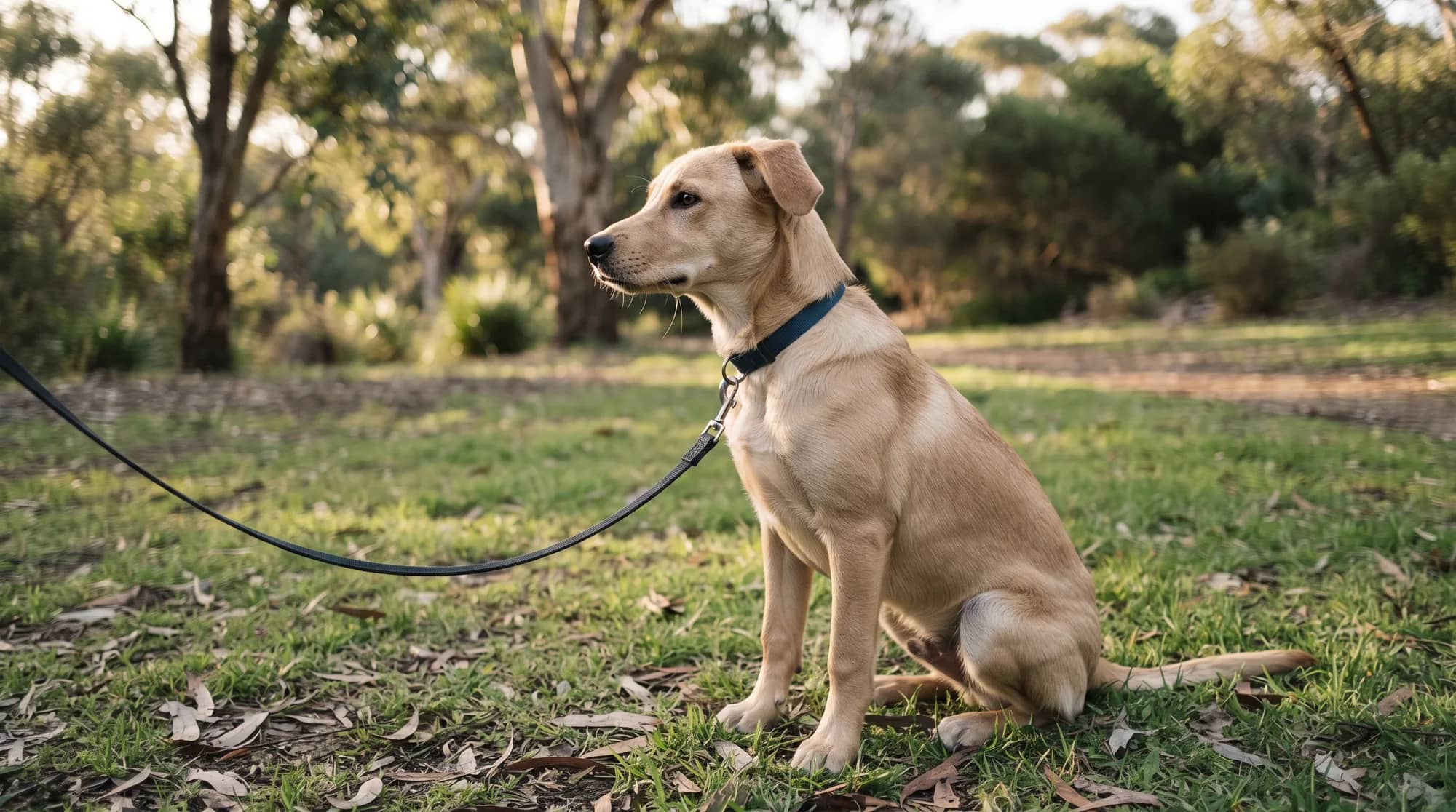
Kitchen, hallway, backyard. Nothing interesting happening. Say the new cue once, in a bright voice, and when your dog comes, pay it properly — not a dry biscuit, something worth crossing a room for.
Do twenty of these over a few days. You want the word to become a reflex before it ever gets tested.
Add a long line
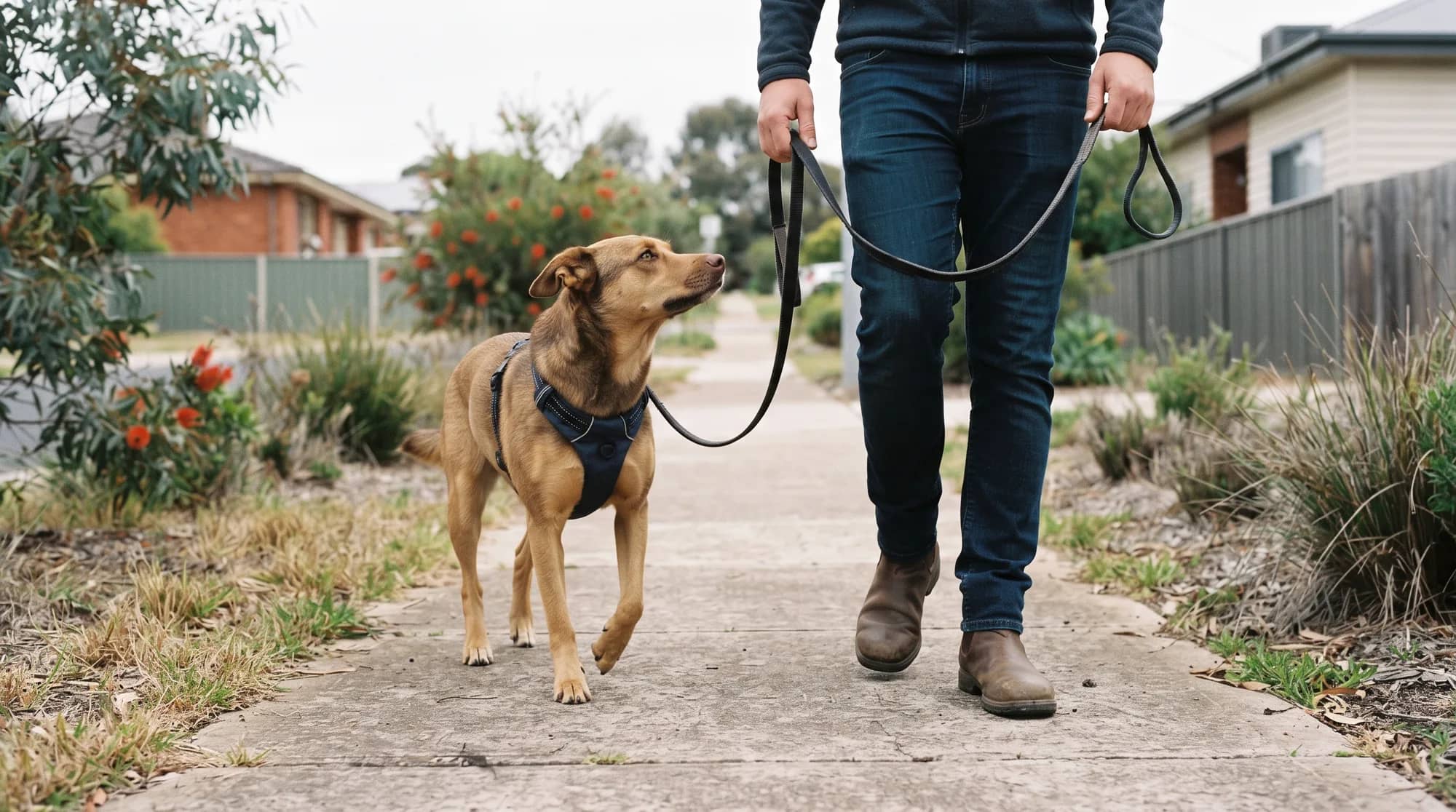
A five- to ten-metre training line clipped to a harness is the single most useful piece of equipment in recall training, and almost nobody uses one.
What it does is remove the option of failure. Your dog cannot ignore you and disappear, so it never gets to practise ignoring you and disappearing. You are not reeling your dog in like a fish — the line is a safety net, not a steering wheel. If your dog does not respond, you gently take up the slack, make yourself interesting, and help it succeed.
Use the line in progressively harder places: a quiet reserve, then a park at a quiet hour, then a park with other dogs at a distance.
Work the distraction ladder deliberately
Write down what competes with you, ranked. For most dogs in southern Adelaide it goes something like:
- A smell in the grass
- A person walking past
- A ball or toy
- Another dog at a distance
- Another dog up close, playing
- Birds
- A kangaroo or rabbit
Train at level one until it is boring, then level two. Do not jump. Every time you test your dog somewhere it fails, you have taught it that the cue is optional in that situation.
Pay properly, and vary it
A recall away from something genuinely good needs to be worth it. Roast chicken, not kibble. And vary the reward — sometimes food, sometimes a thrown ball, sometimes a genuine burst of enthusiasm and a release back to play. Unpredictable rewards are more motivating than predictable ones, which is the same principle that makes poker machines work.
The local bits
The beach is the exam, not the classroom
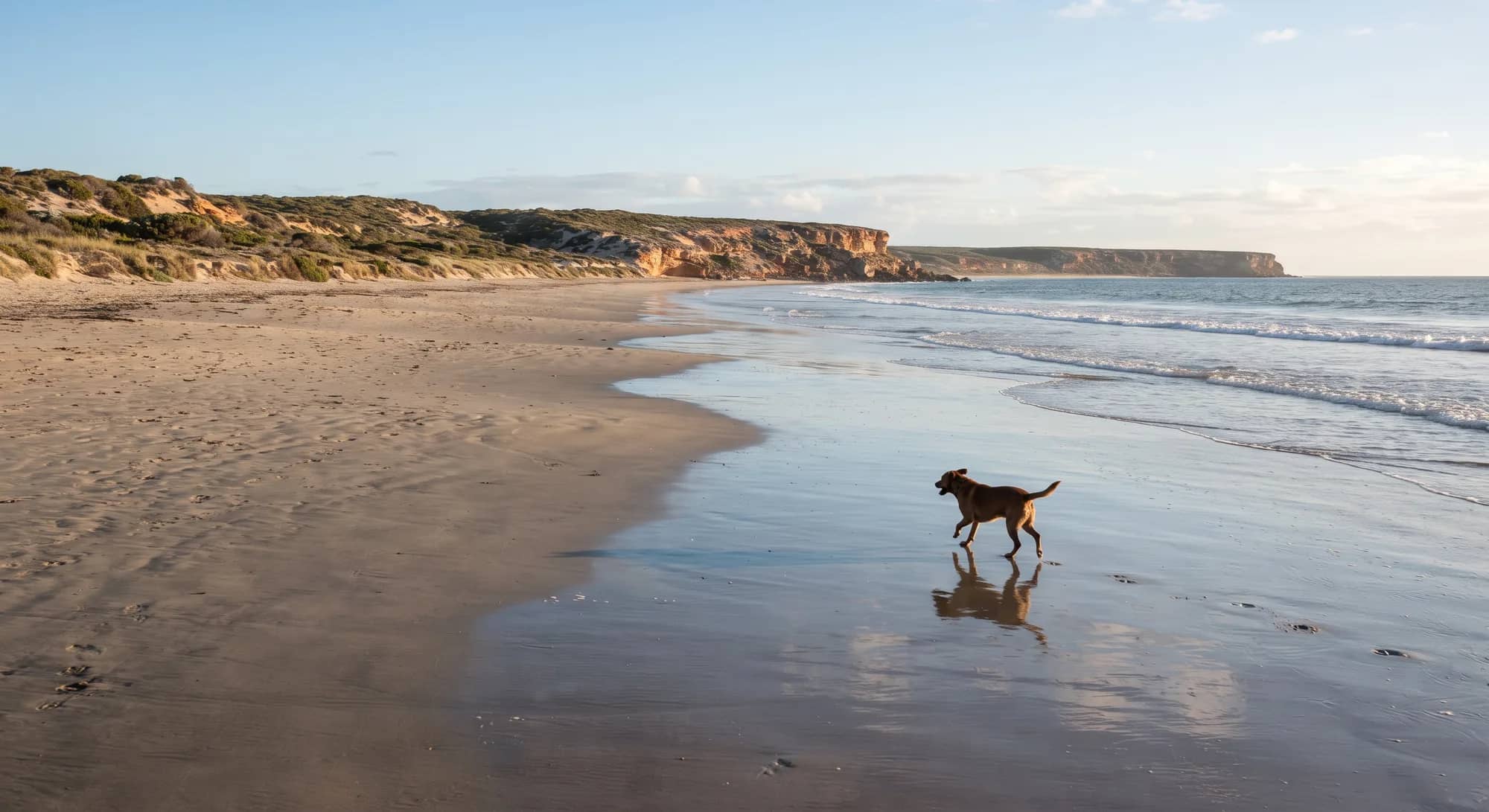
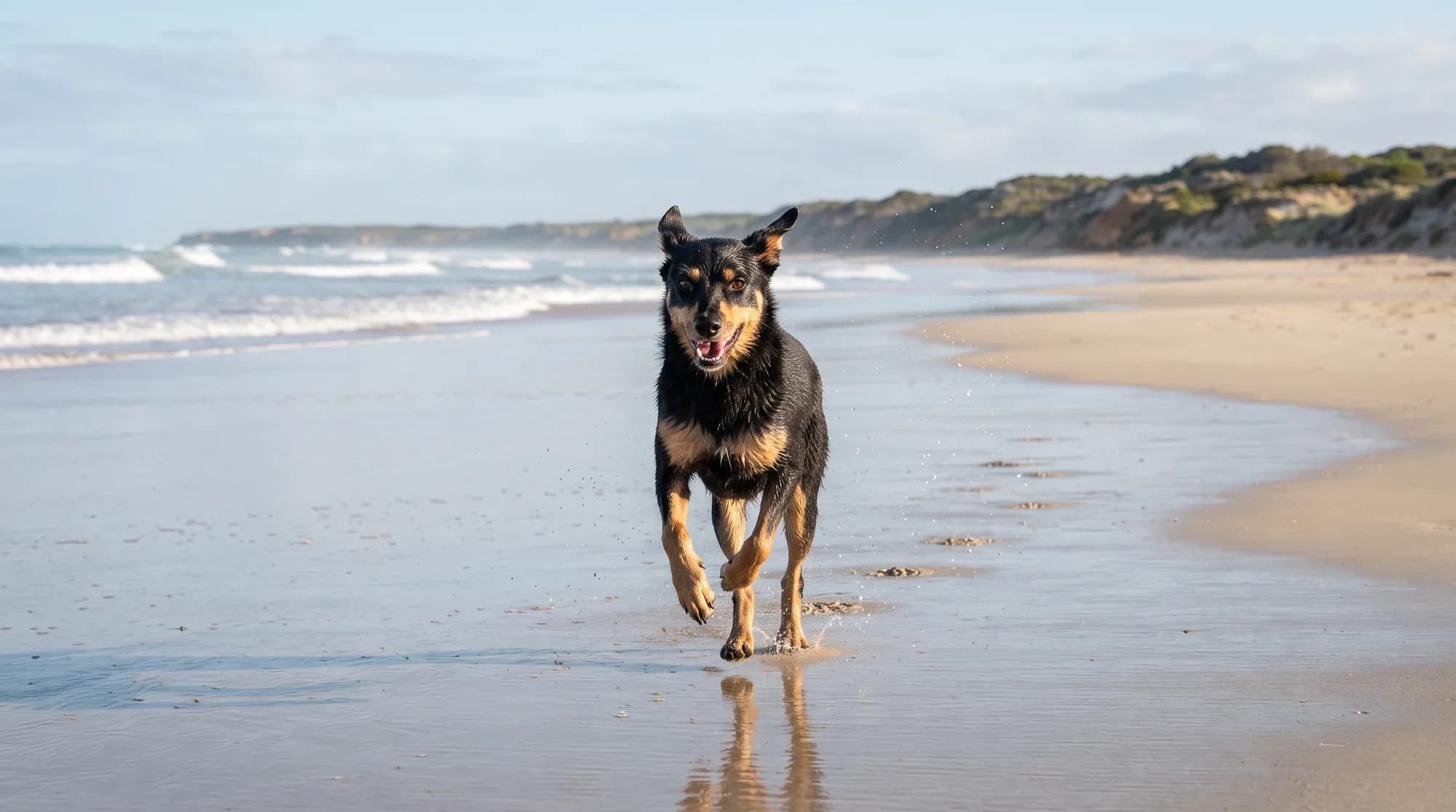
Aldinga, Moana, Brighton, Goolwa, Victor Harbor. Sand, salt, wind carrying your voice away, birds, other dogs, kids with food. A beach is the hardest recall environment your dog will ever face.
So do not practise there. Prove there.
Build the skill in the reserves first, take the long line to the beach for several weeks, and only drop it when your dog is responding first time, every time, with a seagull in view.
Worth knowing: on most Adelaide metropolitan beaches dogs may be off lead under effective control outside the middle of the day — commonly before 10am and after 8pm during daylight saving, with on-lead rules in between. Hours vary by council and change seasonally, so check yours. And note that "effective control" is a legal standard, not an aspiration. It means your dog responds to you.
Wildlife changes the maths
Around McLaren Vale, Willunga, the Fleurieu and the hills behind Aldinga, you are competing with roos, rabbits and stock. A dog in full chase is running on instinct, and no amount of chicken competes at that point.
That is why the ladder matters. If your dog has any prey drive, you need the recall genuinely automatic before the trigger appears — and you need to be watching the environment ahead of your dog, so you can recall early rather than after the chase has started.
For dogs on acreage with livestock nearby, containment comes first. Recall is not a substitute for a fence when the consequence of failure is a stock chase.
The Onkaparinga River trap
Dogs are permitted on lead in Onkaparinga River Recreation Park. Dogs are not permitted at all in Onkaparinga River National Park. Two adjacent parks, nearly identical names. People get caught out constantly. Check before you drive out.
The honest timeline
A recall that works in your yard: a few days.
A recall that works in a quiet reserve: two to three weeks.
A recall that holds at a busy beach with other dogs around: months, not weeks, and it is maintained rather than finished. Recall is a skill that decays if you stop paying it, which is why I tell people to keep rewarding it occasionally for the dog's whole life. It costs you a piece of cheese and it buys you a dog that comes back when a car is coming.
Anyone offering you a bombproof recall in an afternoon is describing a dog that has not yet met anything genuinely interesting.