
Service
When It Has Got Serious
If you are frightened of what your dog might do, you need someone who will tell you the truth rather than sell you a quick fix.
In short
Aggression in dogs is rarely about dominance. In most cases it is fear, pain, or over-arousal that has escalated because the quieter signals were missed or punished. Effective work starts with an honest assessment of risk, immediate management to keep everyone safe, a veterinary check for pain, and then behaviour modification that addresses the underlying emotion rather than suppressing the display.
Sound familiar?
Sound familiar?
- Growling, snapping or lunging at people or other dogs
- A bite has happened, or a near-miss that frightened you
- Guarding food, toys, beds or a particular family member
- Aggression that has appeared suddenly in an older dog
- You are managing the house around the dog and it is exhausting
- Someone has suggested rehoming or worse and you want another opinion
How it works
How it works
Safety and honesty first
Before anything else: what has actually happened, how close it came, who is at risk. I will not downplay it and I will not catastrophise it. You need an accurate picture to make good decisions.
Rule out pain
A meaningful proportion of sudden-onset aggression is a sore dog. Before we treat this as behaviour, I will want your vet to have ruled out the physical, particularly for any dog over about seven.
Management that actually holds
Gates, routines, muzzle conditioning if appropriate, changed patterns. This is not the training — it is what stops the situation getting worse while the training happens.
Work the underlying emotion
Structured, gradual, always under threshold. We change how your dog feels about the trigger. Suppressing the display without changing the feeling produces a dog that bites without warning.
Inside the process
What actually happens
Let me be direct about this one, because it matters more here than anywhere else on this site.
Aggression cases need honesty, not optimism. If you have a dog that has bitten, or come close, you do not need someone telling you it will be fine after one session. You need an accurate assessment of what you are dealing with, a plan that keeps everyone safe today, and a realistic view of where this can get to.
Almost all aggression is fear, pain or frustration that escalated. Dogs have a whole vocabulary before they get to teeth — turning away, lip licking, freezing, whale eye, a stiff body, a growl. When those get ignored, or worse, punished, the dog learns the quiet signals do not work. So it skips them. That is where "he bit with no warning" comes from. There was a warning. It was trained out.
So the first job is history and risk. What happened, in what context, how many times, how much damage, how quickly did the dog recover afterwards. These are not comfortable questions but they are the ones that determine everything that follows.
The second job is pain. This gets skipped constantly and it should not. Aggression that has appeared suddenly, or in a dog over about seven, or that shows up around handling and touch, deserves a proper veterinary workup before anyone calls it a behaviour problem. Sore hips, dental pain, ear infections and thyroid issues all show up as behaviour change. I would rather send you to your vet and be wrong than train around a dog that hurts.
Third is management, and this is where the real early progress lives. Every rehearsal of aggression makes it more likely next time, so the priority is to stop the reps: gates, separation, changed routines, muzzle conditioning done properly and positively where it is appropriate. A well-conditioned muzzle is not a punishment or an admission of failure — it is what lets a dog go out and have a life while the work happens.
Only then does behaviour modification start, and it works slowly and under threshold. We change how your dog feels about the thing, in increments small enough that your dog never has to escalate.
What you actually get
What a aggressive dog training session actually involves
- Where
- Your home, with safety arranged in advance
- Format
- One-on-one, history-led, observation before anything else
- Before we start
- A full account of what has happened, including any bite
- How long
- One hour, like everything else — the difference is how many sessions it takes
What’s included
- An honest risk assessment based on what has actually happened, not on reassurance
- A full history: context, frequency, damage, and how fast your dog recovers afterwards
- Careful observation from a safe distance — no deliberate provocation
- A veterinary referral where pain or a medical cause is plausible
- Immediate management so nothing escalates while we work: gates, routines, changed patterns
- Muzzle conditioning guidance where appropriate, done positively over weeks rather than slapped on
- Structured, under-threshold work on the underlying emotion
- A realistic prognosis including what will need managing long term
- Follow-up support, and referral onward if that is what your dog needs
What’s not included
- Confrontation, alpha rolls or "showing them who is boss" — these reliably make aggression worse
- Punishing growls. A growl is a warning and removing it produces a dog that bites without one
- Any guarantee. On an aggression case a guarantee is a sales tactic, not a clinical judgement
- Legal advice about control orders or dangerous-dog declarations — that is your council
What I need from you
- The complete history, including every bite and near-bite. This is not optional
- A vet check, particularly for a dog over about seven or where this appeared suddenly
- Safety arrangements agreed before I arrive — I will tell you what I need
- Commitment to the management plan even though it is inconvenient
- Realism about the timeline, and about the possibility that some situations will always need managing
After the session
What happens once I leave
Aggression cases need the most structured follow-up of anything I do, because progress is slow, hard to see day to day, and easy to misread.
The first session leads with safety and management: who is responsible for which gate, what happens when visitors arrive, what the walking arrangement is, and what to do if something goes wrong. That is not training. It is the thing that stops the situation deteriorating while training happens, and it is why it comes before anything else.
What to track, because it is not obvious: how far away the trigger can be before your dog responds, how intense the response is, and — most importantly — how long your dog takes to come back down. Recovery time is the honest measure of whether the underlying state is changing, and it improves before the visible reaction does.
Follow-up sessions are strongly recommended here rather than optional. Aggression work involves judgement calls about when to progress, and getting that wrong in either direction costs you — too fast and you set the case back, too slow and you stall for months.
I will also be clear when a case needs someone else. If the risk profile warrants a veterinary behaviourist, or if what you need is a conversation with your vet about medication, I will tell you rather than keep taking bookings.
The difference
Why this works where other things haven't
The usual approach
- Confrontation and "showing them who is boss"
- Punishing growls until the dog stops warning
- Aversive tools that add fear to a fear problem
- Promising a complete fix before meeting the dog
- Skipping the veterinary check entirely
How I work
- Honest risk assessment before any promises
- Keep the warning signals — they are keeping you safe
- Rule out pain and medical causes first
- Management in place from day one
- A prognosis you can actually plan around, including the limits
What changes
What changes
- A clear, honest read on what you are actually dealing with
- Immediate management so nothing escalates while we work
- The triggers identified and ranked instead of guessed at
- A household that can function without constant vigilance
- A realistic prognosis — including the hard parts
Expected outcomes
What you'll notice, and roughly when
Progress in aggression cases is measured in things that do not happen, which makes it hard to see day to day. The markers worth tracking are: how far away the trigger can be before your dog responds, how intense the response is, and — most importantly — how fast your dog comes back down afterwards. Recovery time is the honest measure of whether the underlying state is changing.
Early on, the biggest change is usually that you stop living on alert. Once the management is in place and the household is arranged so the dangerous moments simply do not arise, everyone's stress drops — including the dog's. Owners often say this is when they started sleeping properly again.
Then the thresholds start moving. The visitor can come to the door. The dog can be in the room. Someone can walk past the food bowl. These are unglamorous milestones that represent an enormous amount of work.
Now the part you deserve to hear straight. Not every aggression case resolves to a dog you can take anywhere. Some resolve completely. Others reach a good, safe, well-managed life where certain situations are simply avoided, and that is a legitimate and humane outcome — a dog that is happy within a life that is set up for it. And in a small number of cases, where the risk to people is serious and the prognosis is poor, the honest conversation is a harder one. I will have that conversation with you if it is the right one, alongside your vet. I will not pretend otherwise to keep the booking.
What I can commit to is this: an honest assessment, a plan that prioritises safety, and no promises I cannot back up.
Being straight with you
What this won't do
This is the service where I am most likely to tell you something you do not want to hear, so here it is up front.
Not every case resolves to a dog you can take anywhere. Some do. Others reach a good, safe, well-managed life where certain situations are simply avoided — and that is a genuine, humane outcome for a dog that is content within it. A small number, where the risk to people is serious and the prognosis poor, warrant a much harder conversation, and I will have that with you alongside your vet rather than pretend otherwise to keep the booking.
I cannot assess your dog from a website or a phone call. Anyone who tells you over the phone that your dog is fine, or that they can fix it in one session, is guessing.
Legal matters are not mine. Dog control in South Australia sits under the Dog and Cat Management Act, administered by your council. If a bite has occurred involving a person or another animal, get advice from your council directly. I can help with the behaviour; I am not the right source for your legal position.
And I will not take a case I do not think I can help with. Referring you on costs me a booking and saves you months. That trade is not close.
Who this is for
Is this the right fit?
If you recognise yourself in this list, we should talk.
- Dogs showing aggression towards people or other dogs
- Resource guarding that is escalating
- Households where a bite or near-bite has happened
- Owners who have been told to give up and want a proper assessment
- Anyone who needs a straight answer more than a sales pitch
Suburb-specific
Aggressive Dog Training in your suburb
Local guides for the suburbs where this comes up most.
Where I work
Aggressive Dog Training across southern Adelaide
I travel in-home from the Adelaide CBD south through to Victor Harbor.
 27 suburbs
Adelaide's Inner South
Small blocks, shared fences and footpaths full of people. The inner south asks a lot of a dog.
Dog training in Inner South 26 suburbs
The Southern Beaches
Beach walks, esplanade crowds and off-lead hours that catch people out. Recall matters more here than anywhere.
Dog training in Southern Beaches 35 suburbs
Adelaide's Southern Suburbs
The heartland. Close-set housing, shared fences, and more council barking complaints than anywhere else I work.
Dog training in Southern Suburbs 22 suburbs
The Southern Vales
Vines, acreage and one of the best dog beaches in the state. Different geography, different problems.
Dog training in Southern Vales 25 suburbs
The Fleurieu & Victor Harbor
Hardest part of the state to find proper behaviour help. That is exactly why I come down here.
Dog training in FleurieuReal owners
Owners I've worked with on aggressive dog training
After just 1 session with The Dog Obedience Guy I could already see improvement with Sammi. Today I walked both dogs, side by side with ease continuing the strategies I learnt. Thanks, one very happy customer
Have just finished our last session and I was given excellent help and ideas. Turns out it wasn't Ollie (it was me) 🤣 Thank you for all the help. Ollie loved it. Would definitely recommend. Thanks Faz
Often comes up alongside
Related services
These are the ones people working on this most often need to look at too.
Reactive Dog Training
You have started walking at 6am so you do not meet anyone. That is not a walk, that is a covert operation.
Learn moreBehaviour Consultations
Some problems do not respond to more training. They respond to understanding what is actually driving them.
Learn moreBarking Dog Training
Barking is a symptom, not a diagnosis. Six different problems produce the same noise — and they need six different answers.
Learn moreRead more
Behaviour Problems
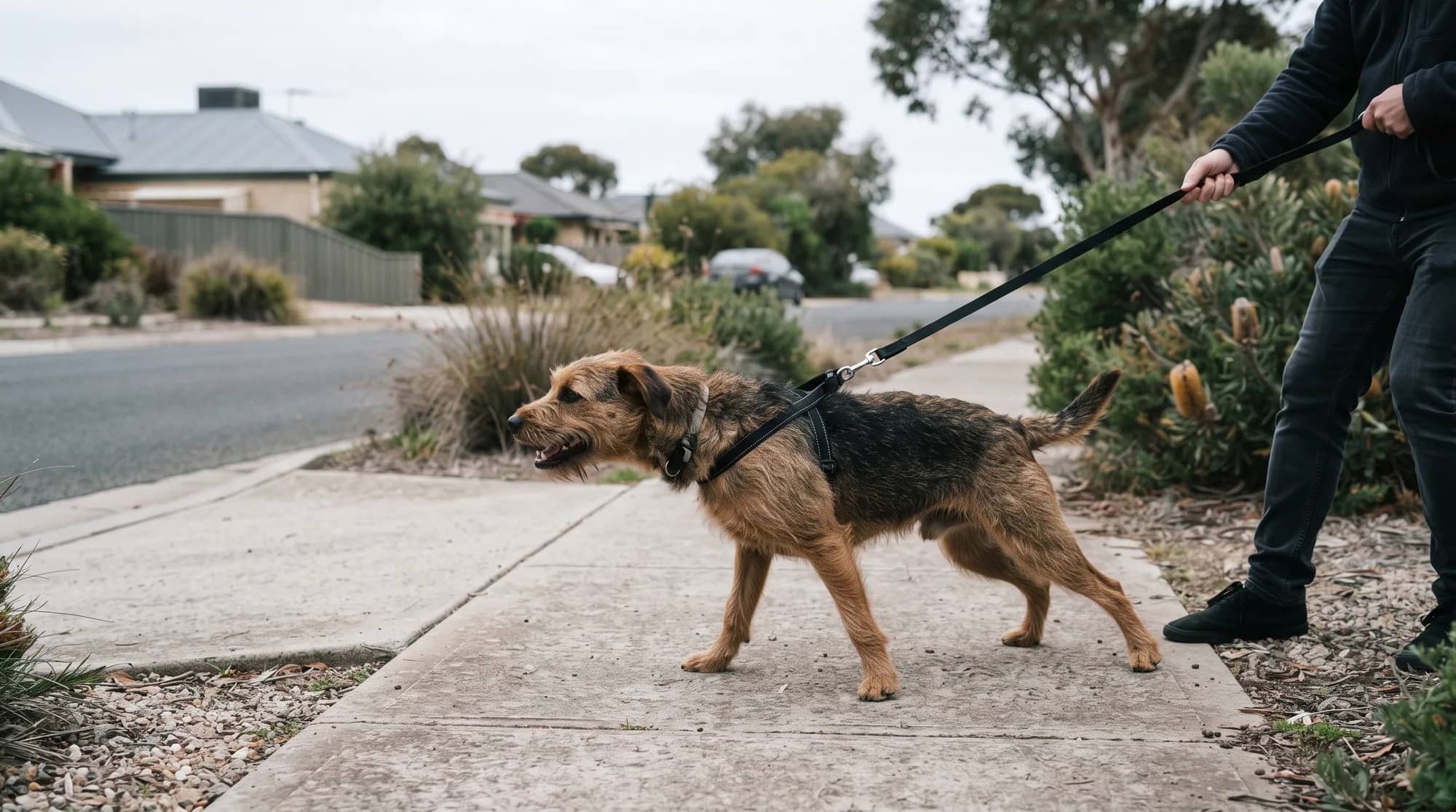
Is My Dog Reactive or Aggressive? How to Tell the Difference
They look almost identical from the other end of the lead. They are not the same problem, and treating one like the other is why so much training fails.
Behaviour Problems
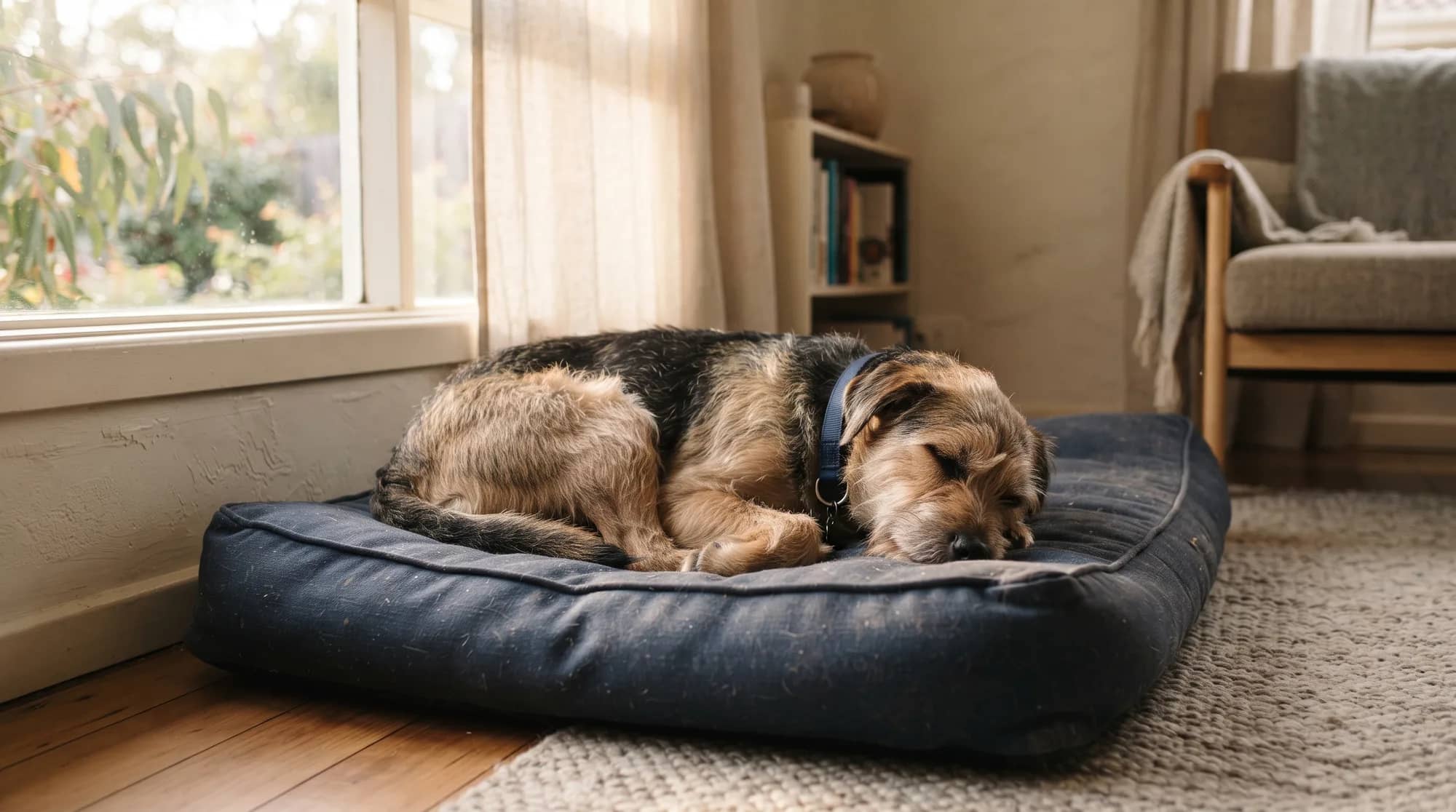
The First 30 Days With a Rescue Dog
The dog you bring home is not the dog you have adopted. It takes about three weeks for the real one to show up — and what you do in that window matters.
Behaviour Problems
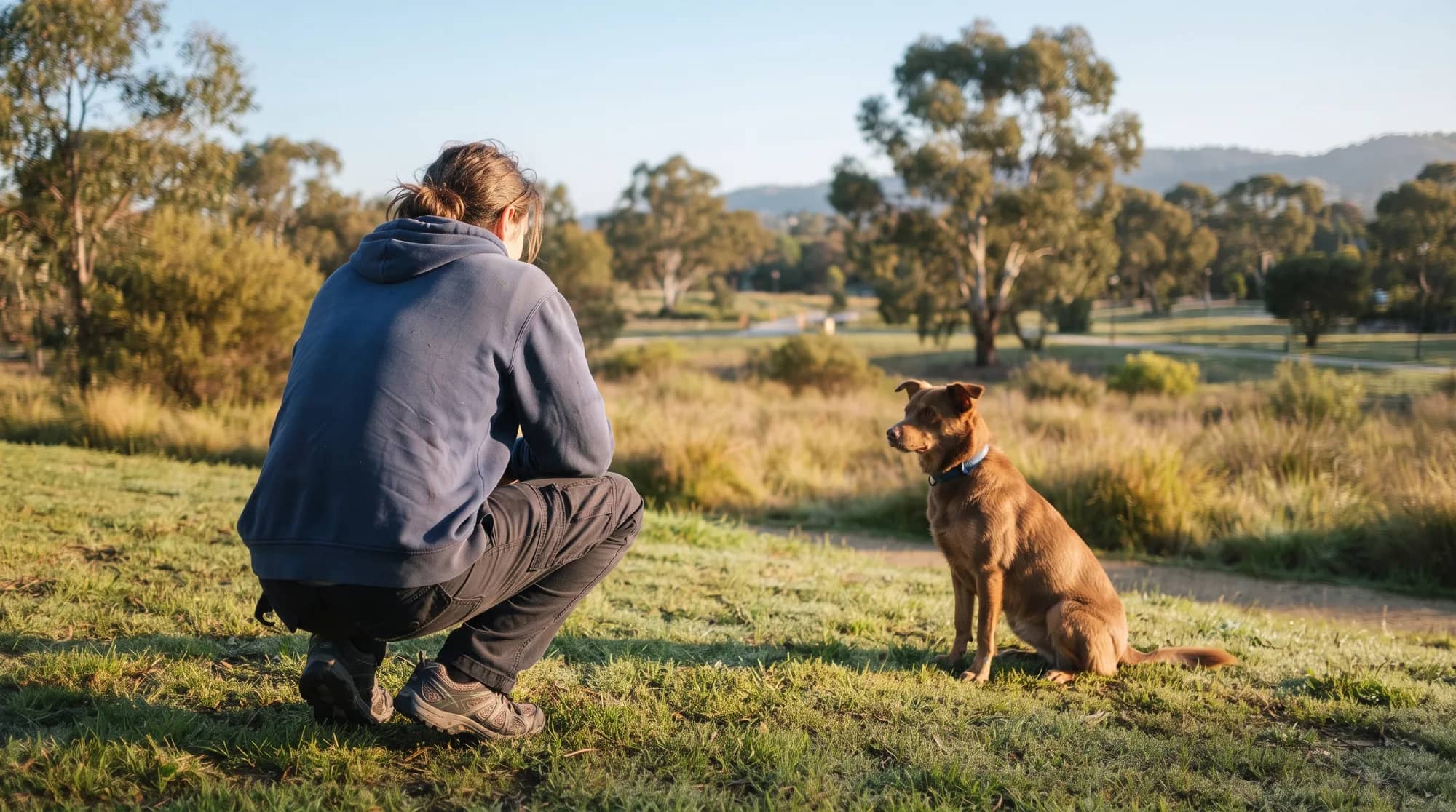
Dog Behaviourist or Dog Trainer? Which One Do You Need?
Neither title is protected in Australia. Anyone can use either. Here is what the words actually mean and how to work out which one your dog needs.
Local pages
Aggressive Dog Training near you
Same service, written for the suburb — the council, the parks and the problems that come up there.
Suburbs
Suburbs where this comes up most
Each has its own page with the council, the parks and the problems specific to it.
Read up
Free guides on aggressive dog training
Written for owners in southern Adelaide. If one of these sorts your problem out and you never ring me, that is a good outcome.
Questions
Aggressive Dog Training — your questions
Is my dog dangerous?
Should I get a muzzle?
My dog only does it to one person. Why?
Do I have to tell you if my dog has bitten?
What are my legal obligations in South Australia?
Ready when you are
Let's sort your dog out.
Tell me what's going on and I'll tell you straight whether I can help — and roughly what it will take. No obligation, no pressure. Southern suburbs of Adelaide — CBD to Victor Harbor.
Send a quick enquiry
Four things and I’ll come back to you. If it is urgent, ring instead — that is always faster.