
Reactive Dog Training · Seaford
Reactive Dog Training in Seaford
You have started walking at 6am so you do not meet anyone. That is not a walk, that is a covert operation.
In short
Reactivity in Seaford is made significantly worse by the estate layout. Winding streets, tight corners, narrow footpaths and fences built to the boundary mean triggers appear at close range with no warning — so a reactive dog gets a daily diet of surprise encounters at exactly the distance it cannot cope with. Route planning is usually the fastest first intervention here.
Why Seaford
What makes this different in Seaford
I want to make a case that will save some Seaford owners a lot of grief: your dog's reactivity is partly a town-planning problem.
Modern estates are designed for density and for slowing cars down. Winding streets, short blocks, tight corners, narrow verges, fences right on the boundary line. Every one of those features reduces sightlines. And sightlines are the entire currency of reactivity work.
Think about what that means on a walk. You round a corner. There is a dog at four metres. Your dog has had no warning, no time to disengage, no distance to work with. It goes off. You go home. Tomorrow, same walk, same corners, and it happens two or three more times.
That is not training — that is rehearsal. And a dog rehearsing an explosion three times a day, every day, gets very good at exploding. This is how a dog that was mildly uneasy at eight months becomes properly reactive by fourteen.
So in Seaford the first intervention is usually free and does not involve the dog at all: change the route. In any estate there is almost always a better circuit — a reserve edge with open ground on one side, a longer straight where you can see two hundred metres, a wider road with a verge you can step onto. Find those, use them exclusively while the threshold work is happening, and the number of failed encounters drops close to zero overnight.
Then the actual training gets somewhere, because your dog is finally getting a run of successes instead of a run of ambushes. Once the threshold has genuinely come down, the tight corners stop mattering — but doing it in the other order almost never works.
The other Seaford factor is that a lot of these are first-time owners, which means the reactivity has often been building for months while the owner worked through a lot of contradictory internet advice. That is not a criticism. It just means part of the job is untangling what has already been tried.
Local factors
What sets dogs off in Seaford
The specifics of this suburb, and why they matter for reactive dog training.
- Blind corners on winding estate streets
- Narrow footpaths with no verge to step onto
- Fences built to the boundary, blocking every sightline
- High dog density in a young, family-heavy population
- Short blocks meaning frequent corners on every walk
In practice
Route planning: the free intervention that works in week one
Before we touch the dog, we redraw your walk. In Seaford that is usually worth more in the first fortnight than anything else on this page.
The estate layout is working against you. Winding streets, short blocks, tight corners, narrow verges and fences built to the boundary line — every one of those reduces sightlines, and sightlines are the entire currency of reactivity work. You round a corner, there is a dog at four metres, and your dog has had no warning and no room. It goes off. That happens two or three times a walk, every walk.
That is not training. That is rehearsal, and a dog rehearsing three explosions a day gets very good at exploding.
So we map a better circuit. In every estate there are one or two, and they share the same features: a reserve edge with open ground on one side, a longer straight where you can see two hundred metres, a wider road with a verge you can actually step onto. The Seaford Rise and Seaford Meadows reserves are usually the anchor points. Sometimes the answer is simply walking the same streets in the opposite direction, or half an hour earlier.
Use that route exclusively while the threshold work happens and the failed encounters drop close to zero overnight. Then the training has room to work, because your dog is finally stringing together successes instead of ambushes.
Once the threshold has genuinely come down, the tight corners stop mattering and you get your normal walks back. But in that order.
Locally
Seaford Beach as the pressure valve
The other Seaford-specific asset is the coast, and for a reactive dog it does something the streets cannot.
Seaford Beach is a designated off-lead area, and Moana is minutes south. What matters for reactivity is not the off-lead status but the geometry: on open sand you can create fifty metres of distance in any direction, instantly, without asking anyone's permission. That is impossible on an estate footpath and it is exactly the condition threshold work needs.
So for a lot of Seaford reactive cases the beach becomes the training ground and the streets become management. You do the real work where you have room, and you keep the walks short, quiet and uneventful until the dog is ready for them.
Two cautions. Moana has vehicle access on parts of the beach — a reactive dog on a long line near moving cars is a different risk calculation, so know where the access points are. And a beach is not automatically easy: in summer, off-lead dogs will approach you whether you want them to or not, and for a reactive dog an uncontrolled approach at speed can undo a fortnight. Go early, go in the off-season, and be prepared to walk away from a busy stretch.
If you need a fence while you rebuild, Dinton Farm Reserve at Huntfield Heights is the nearest enclosed park. For a dog that cannot yet cope with the unpredictable, an enclosed space you can leave when it gets busy is worth the short drive.
Sound familiar?
What I'm called about in Seaford
- Lunging, barking or screaming at other dogs on lead
- Absolutely fine off lead, a nightmare on it
- Reacts to bikes, skateboards, prams, joggers, cars
- Fence-fighting with the neighbour's dog
- You have changed your walking times to avoid everyone
- Your arm and your nerves are both shot
How it works
How it works
Work out what kind of reactivity it is
Fear, frustration and over-arousal look almost identical on the end of a lead and need genuinely different approaches. Getting this wrong is why a lot of reactivity training fails.
Lower the baseline at home
Reactive dogs are usually already wound up before they leave the house. If your dog is at seven out of ten in the lounge room, the trigger only has to add three. We start indoors.
Find the threshold
The distance at which your dog notices a trigger but can still think. That distance is where all the useful work happens — and it is almost always further away than owners expect.
Rebuild it on your street
Your actual walking route, your actual triggers. We close the distance in stages, on a schedule you can follow, with a clear rule for what to do when it goes wrong.
Related
The full service page, the suburb guide, and the wider area.
Read up
Free guides on this
Written for owners in this part of the south. If one of these fixes it and you never ring me, that is a good outcome.
Adelaide Dog Life
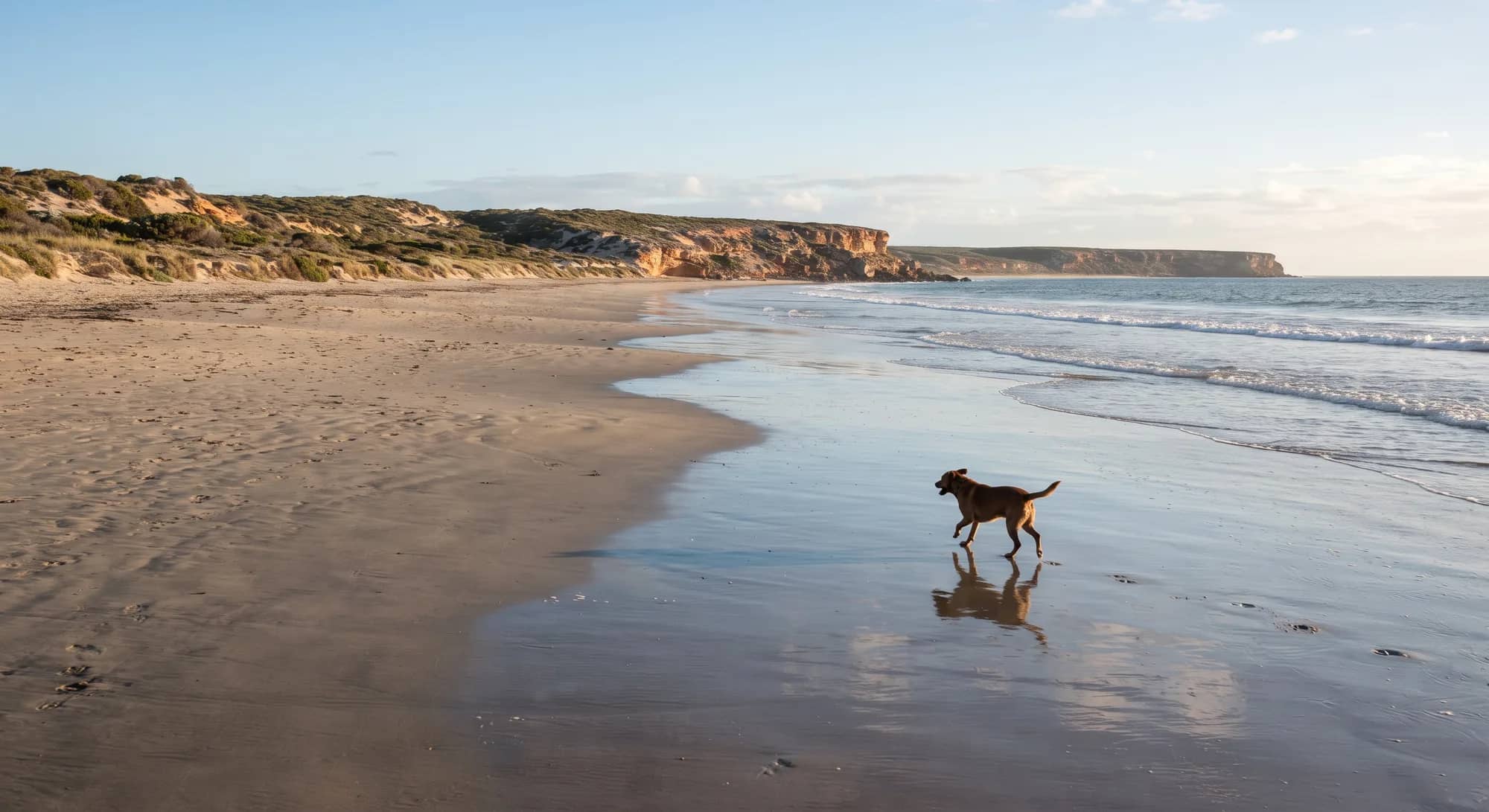
Off-Leash Dog Beaches: Southern Adelaide to Victor Harbor
From Glenelg to Victor Harbor, a run-down of the coast, how the off-leash hours generally work, and the two words in the legislation that catch people out.
Obedience & Training
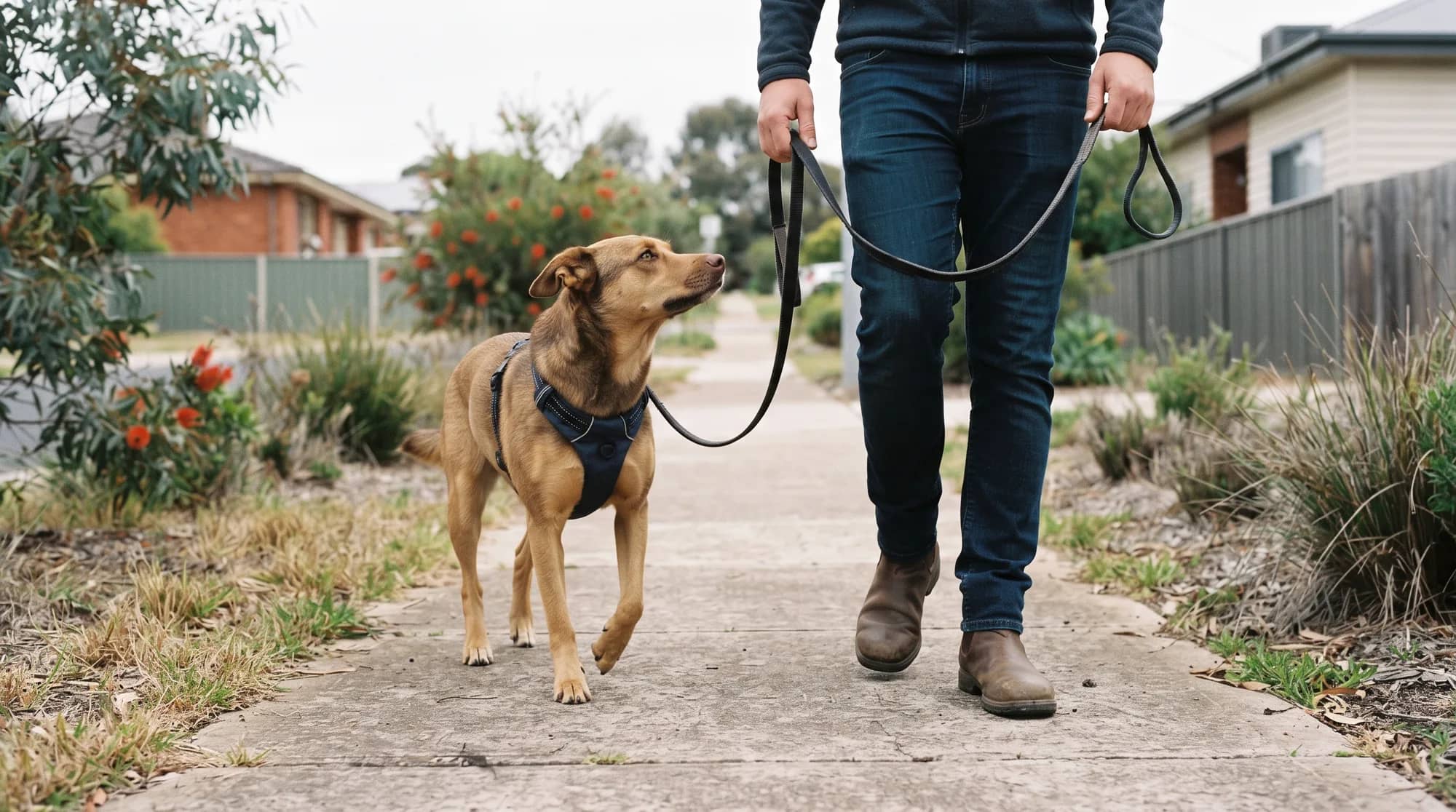
How to Stop Your Dog Pulling on the Lead
Your dog is not pulling because it is dominant, stubborn, or untrained. It is pulling because pulling works — and it has worked every single walk since the day you got it.
Puppy Training
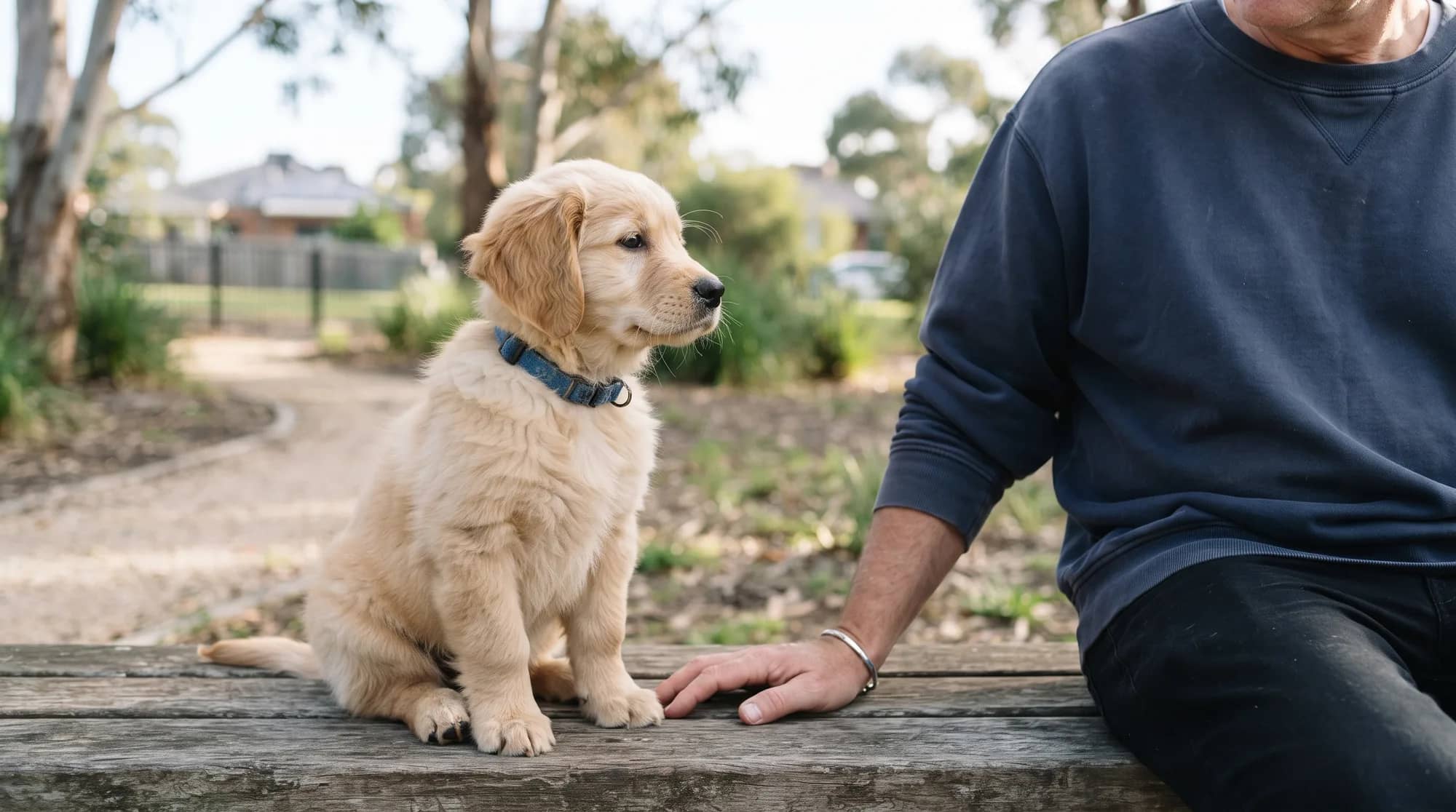
When Should Puppy Training Actually Start?
The most valuable training window in your dog's entire life closes at around sixteen weeks. Most people start using it at six months.
Questions
Reactive Dog Training in Seaford — questions
Is changing my walking route really going to help that much?
What if there is genuinely nowhere better to walk?
Is my dog reactive or aggressive?
My dog is perfect off lead but awful on it. Why?
Will a no-pull harness or head halter fix it?
Ready when you are
Dog training in Seaford, starting this week.
Tell me what's going on and I'll tell you straight whether I can help — and roughly what it will take. No obligation, no pressure. Southern suburbs of Adelaide — CBD to Victor Harbor.
Send a quick enquiry
Four things and I’ll come back to you. If it is urgent, ring instead — that is always faster.