
Adelaide's Southern Suburbs
Dog Training & Behaviour in Seaford
Seaford, Seaford Rise, Seaford Meadows, Seaford Heights and Moana.
In short
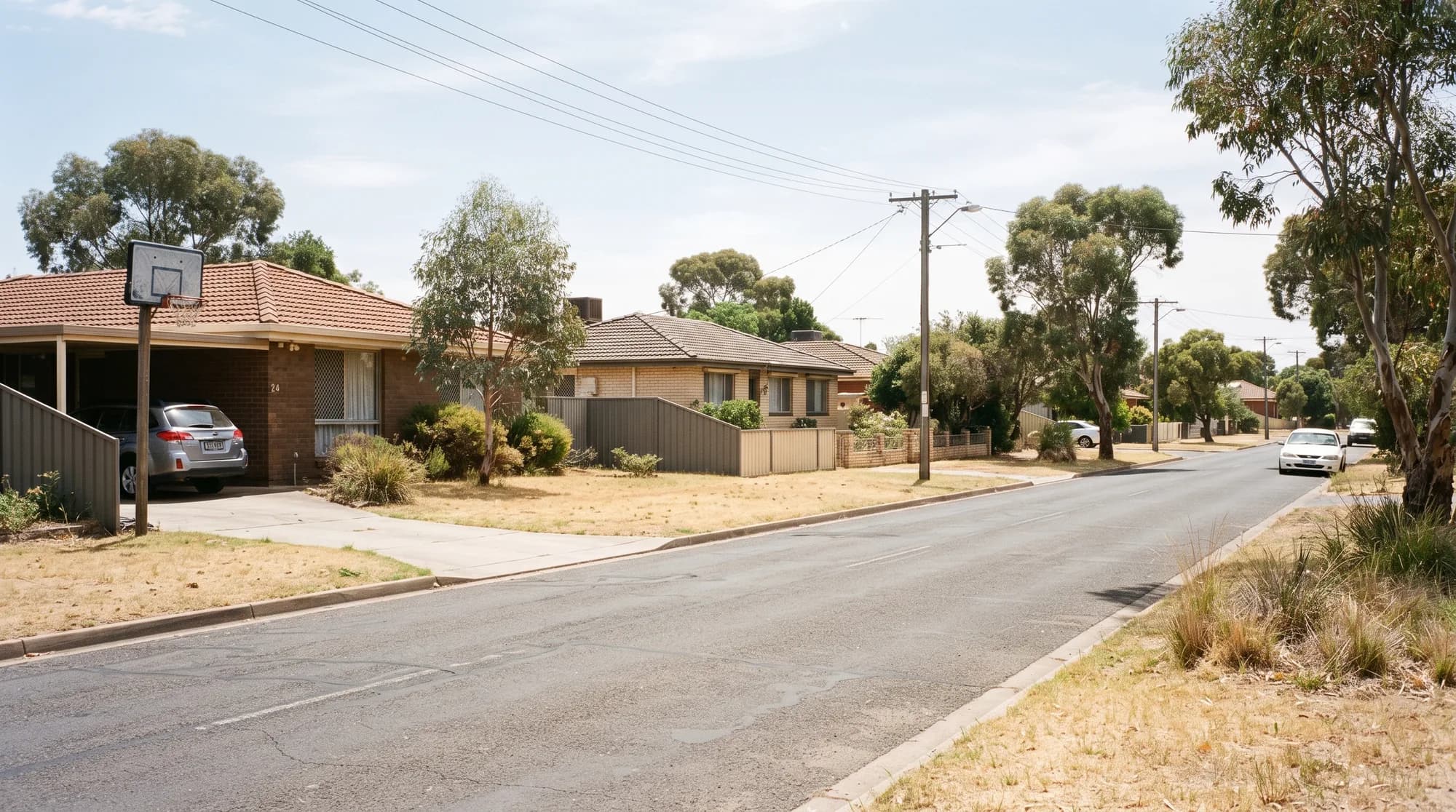
Seaford and the Seaford Rise, Meadows and Heights estates are among the fastest-growing residential areas in southern Adelaide, with a high proportion of young families and first-time dog owners. The estate layout — narrow footpaths, tight corners, high fences to the boundary — creates a specific reactivity problem: triggers appear at close range with no warning.
Local knowledge
Dog life in Seaford
Seaford has a reactivity problem that is genuinely a design problem.
Modern estate layouts are built for density: winding streets, tight corners, narrow footpaths, and fences that run right to the property line. What that means for a dog on a lead is that you round a corner and there is another dog at four metres. No warning, no sightline, no time to create distance.
For a dog with any threshold at all, that is a losing position before you have done anything. And it happens every walk, several times, which means the dog is getting a steady diet of surprise encounters at exactly the distance it cannot cope with. That is how a mildly uneasy dog becomes a properly reactive one over six months.
The practical answer is route planning first, training second. There are usually one or two circuits through any estate with better sightlines — wider verges, longer straights, a reserve edge instead of a footpath. Finding those and using them while the threshold work happens changes everything, and it costs nothing.
Seaford also has a lot of first-time dog owners. The estates skew young and family-heavy, and there are a great many households where this is the first dog anyone has had since childhood. That is not a criticism — it just means a lot of my Seaford work is foundational, and a lot of it is about giving people permission to stop taking advice from six contradictory sources on the internet.
Beach access at Moana and the southern end of the Coast Park is good, and it is a genuinely useful pressure valve for estate dogs who are getting a lot of tight-quarters walking. Check Onkaparinga's current beach rules for off-lead times.
Where you can take a dog
Dog parks, beaches and reserves near Seaford
The council-designated spots that actually matter for training — and which of them have a fence.
- Off-lead beach
Seaford Beach off-lead area
A designated City of Onkaparinga off-lead beach, and the pressure valve this suburb badly needs. Open space for a dog whose walks are otherwise all tight footpaths.
- Off-lead beachMoana
Moana Beach off-lead area
Wide, open and just south. Note there is vehicle access on parts of this beach, which matters a great deal if your recall is not yet reliable.
- Fenced dog parkHuntfield Heights
Dinton Farm Reserve fenced dog park
The nearest fenced dog park, with a small-dog area. Worth the short drive while you are building a recall you can actually trust on sand.
- On lead
Seaford Rise and Meadows reserves
Local reserves with far better sightlines than the estate streets. Where I would do most early threshold work in this suburb.
Taken from the councils’ own dog registers and current as at August 2026. Councils genuinely do add, fence and re-designate these areas, and seasonal beach hours change — check with your council before you rely on any of it, and the signage on the day beats everything.
Training locally
Your dog’s reactivity is partly a town-planning problem
That sounds like an excuse. It is not — it is the most useful thing I can tell a Seaford owner, because it points at a fix that costs nothing and works in week one.
Modern estates are designed for density and for slowing cars down. Winding streets, short blocks, tight corners, narrow verges, and fences built right to the boundary line. Every one of those features reduces sightlines, and sightlines are the entire currency of reactivity work.
Think about what that means on a walk. You round a corner. There is a dog at four metres. Your dog has had no warning, no time to disengage and no distance to work with. It goes off. You go home feeling like a failure. Tomorrow, same walk, same corners, and it happens two or three more times.
That is not training — that is rehearsal. A dog rehearsing an explosion three times a day gets very good at exploding, and this is precisely how a dog that was mildly uneasy at eight months becomes properly reactive by fourteen.
So the first intervention here is free and does not involve the dog at all: change the route. In any estate there is almost always a better circuit — a reserve edge with open ground on one side, a longer straight where you can see two hundred metres, a wider road with a verge you can step onto. The Seaford Rise and Seaford Meadows reserves are the obvious candidates. Find those, use them exclusively while the threshold work happens, and the number of failed encounters drops close to zero overnight.
Then the actual training gets somewhere, because your dog is finally getting a run of successes instead of a run of ambushes. Once the threshold has genuinely come down, the tight corners stop mattering — but doing it in that order is what makes it work.
Worth knowing
First dogs, and the beach that saves them
Seaford and the Rise, Meadows and Heights estates are among the fastest-growing residential areas in southern Adelaide, and the demographic shows up in the caseload. A great many households here are doing their first dog since childhood.
That is not a criticism and it comes with a specific difficulty: the sheer volume of confidently stated, mutually incompatible advice available online. I spend a real share of Seaford sessions untangling what has already been tried — a bit of one method, a bit of another, a tool someone recommended at the park — and the dog has quite reasonably concluded that nothing means anything. Consistency beats method choice more often than people expect. Pick one approach and run it long enough to see whether it works.
The other Seaford reality is that the walking environment is relentlessly tight. Estate footpaths, close fences, corners every eighty metres. A dog whose entire outdoor life is that is not getting much of a life, and a fair amount of what presents as behaviour problems here is simply a dog with nowhere to properly stretch out.
Which is why the beach matters more in this suburb than in most. Seaford Beach is a designated off-lead area and Moana is minutes south, and either one gives your dog something the streets cannot: room. Even on lead, even on a long line, a beach walk does more for a wound-up estate dog than three laps of the block.
One caution on Moana — there is vehicle access on parts of that beach. A dog with a mediocre recall and a car on the sand is a genuinely bad combination, so build the recall on a long line before you trust it there.
What I get called about
What comes up in Seaford
- Reactivity triggered by close-range surprise encounters on estate footpaths
- First-time owners getting contradictory advice and no consistency
- Fence-line barking where boundaries run right to the property line
- Puppies from the estate's many new-family households
- Dogs with no route options that avoid the tight corners
Around here
Around Seaford
Where the training happens, and where things tend to go wrong.
Moana Beach
The local pressure valve — genuine open space for a dog whose walks are otherwise all tight footpaths. Check current off-lead times.
Seaford Rise and Meadows reserves
Local reserves with better sightlines than the streets. Where I would do most early training work here.
The southern Coast Park path
Linear and shared, with the usual passing-room challenge for reactive dogs.
Most requested here
What I'm booked for in Seaford
Reactive Dog Training
You have started walking at 6am so you do not meet anyone. That is not a walk, that is a covert operation.
Learn morePuppy Training
Everything your puppy learns in the next twelve weeks, they will believe for the rest of their life. Worth getting right.
Learn moreDog Obedience Training
Your dog already knows "sit". The question is whether they do it when a magpie lands on the fence.
Learn moreIn-Home Dog Training
Your dog does not misbehave in a training hall. It misbehaves at your front door. So that is where we work.
Learn moreSuburb-specific guides
Detailed Seaford guides
Written for this suburb specifically, not templated.
Useful locally
Council and nearby suburbs
Seaford sits inside City of Onkaparinga, whose rules cover dog registration, leash requirements and barking complaints.
Nearby
Other suburbs close by
City of Onkaparinga
Noarlunga
The estuary, the Coast Park path and Colonnades. Great socialisation country if you use it deliberately.
Dog training in NoarlungaCity of Onkaparinga
Aldinga Beach
One of the best dog beaches in the state — and a completely different place in January than in June.
Dog training in Aldinga BeachRead up
Reading for Seaford dog owners
Free guides on the problems that come up most in this part of the south.
Adelaide Dog Life
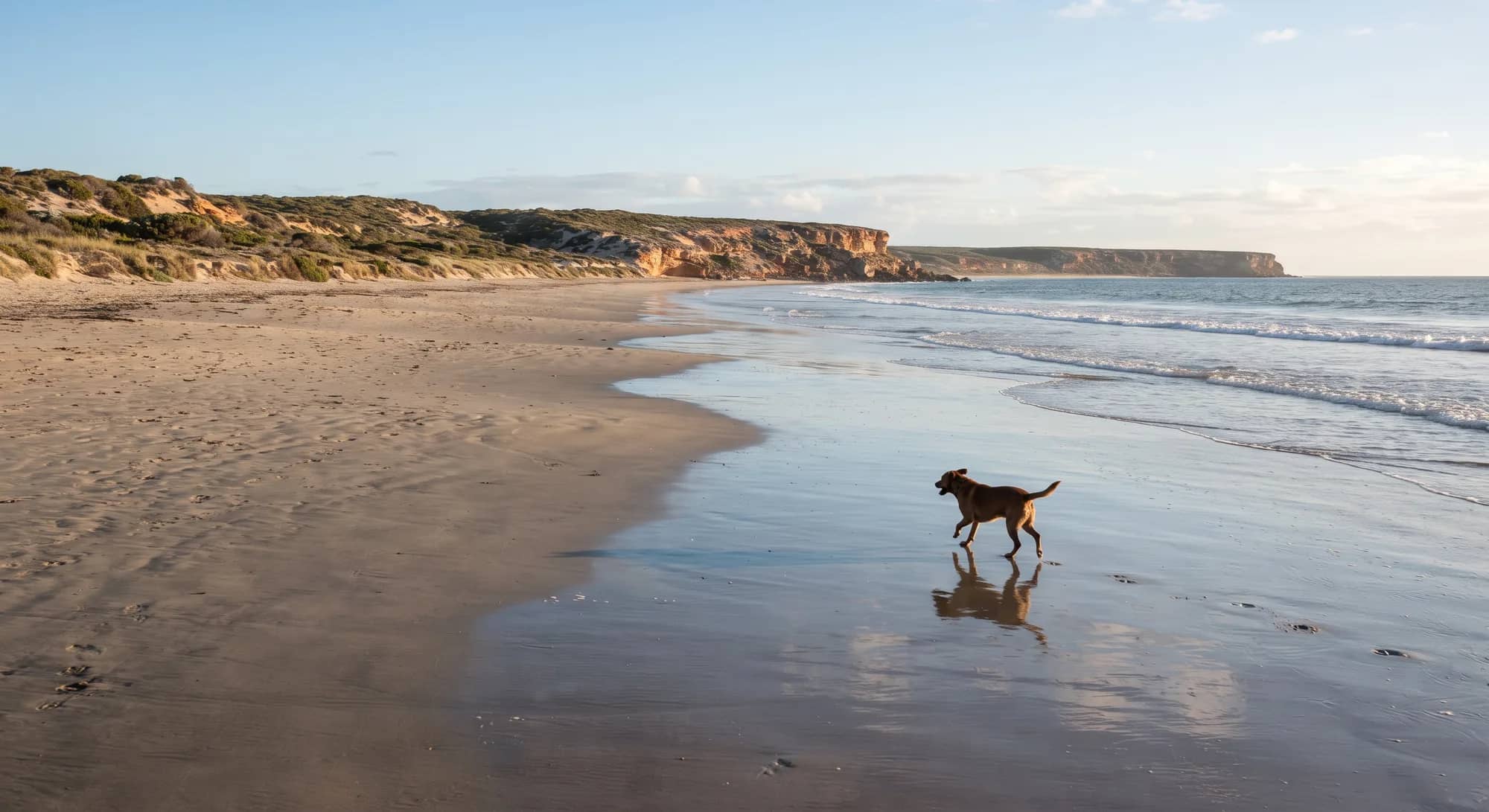
Off-Leash Dog Beaches: Southern Adelaide to Victor Harbor
From Glenelg to Victor Harbor, a run-down of the coast, how the off-leash hours generally work, and the two words in the legislation that catch people out.
Obedience & Training
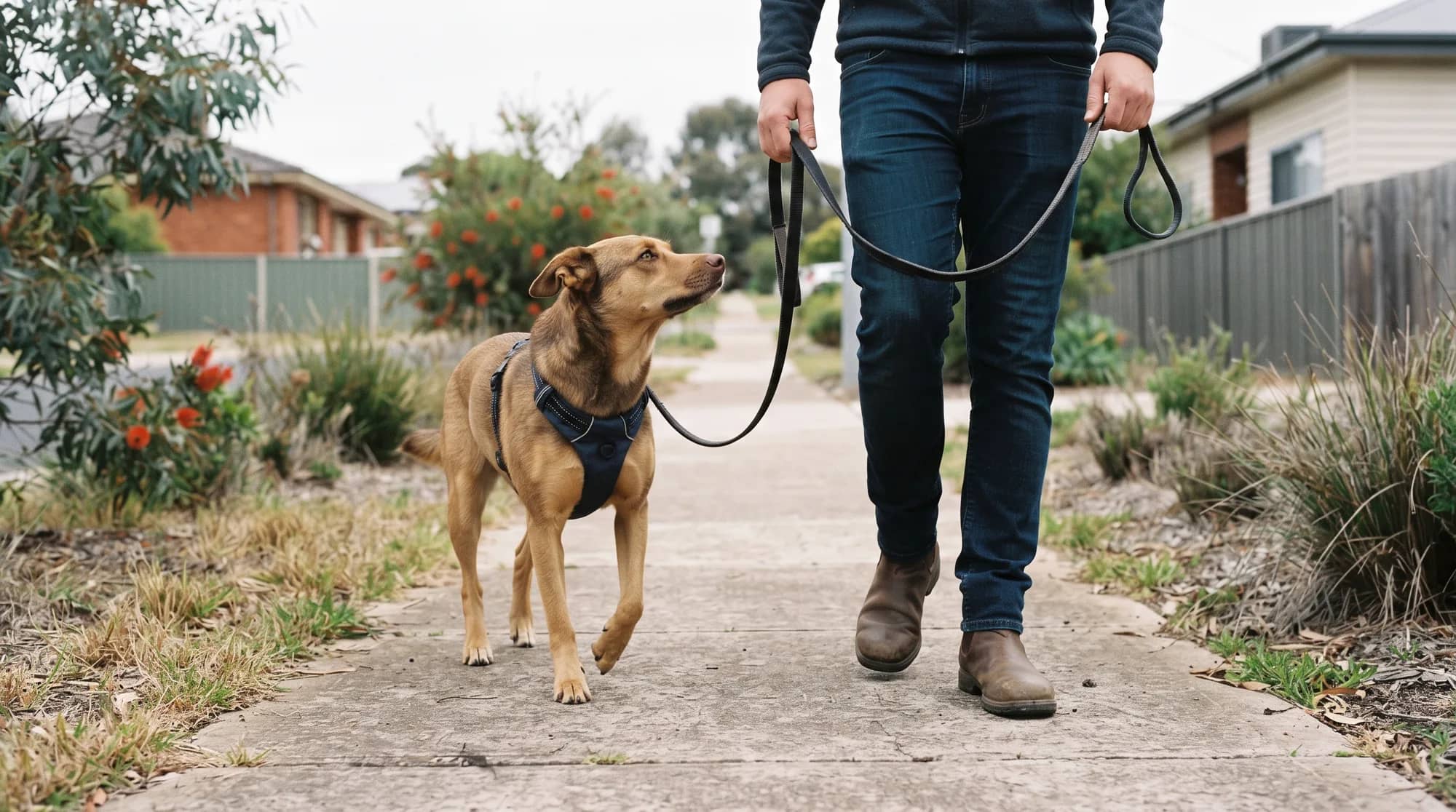
How to Stop Your Dog Pulling on the Lead
Your dog is not pulling because it is dominant, stubborn, or untrained. It is pulling because pulling works — and it has worked every single walk since the day you got it.
Puppy Training
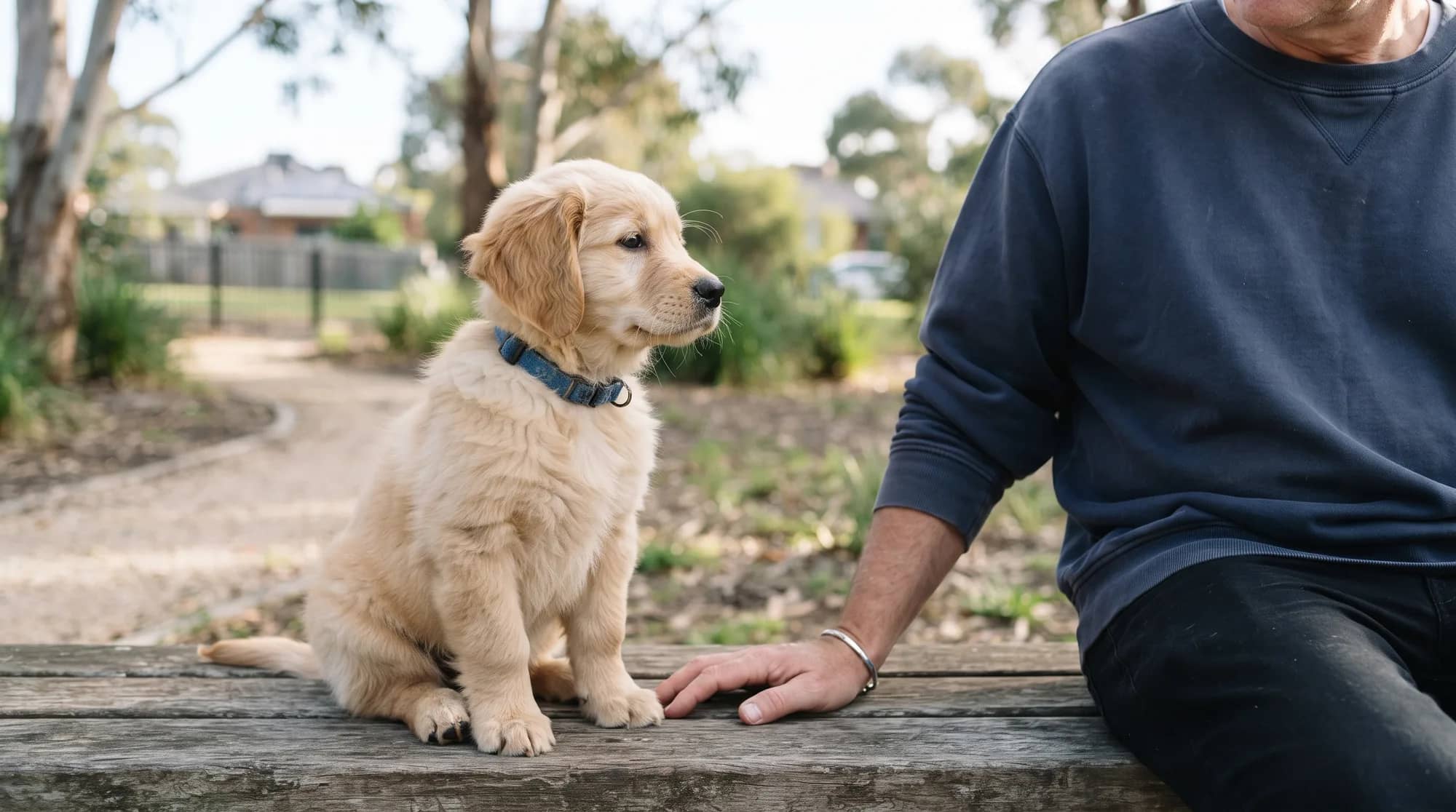
When Should Puppy Training Actually Start?
The most valuable training window in your dog's entire life closes at around sixteen weeks. Most people start using it at six months.
Questions
Dog training in Seaford — questions
Every walk we get ambushed by a dog around a corner. What do I do?
This is our first dog and we are getting completely contradictory advice. Where do we start?
Ready when you are
Dog training in Seaford, starting this week.
Tell me what's going on and I'll tell you straight whether I can help — and roughly what it will take. No obligation, no pressure. Southern suburbs of Adelaide — CBD to Victor Harbor.
Send a quick enquiry
Four things and I’ll come back to you. If it is urgent, ring instead — that is always faster.