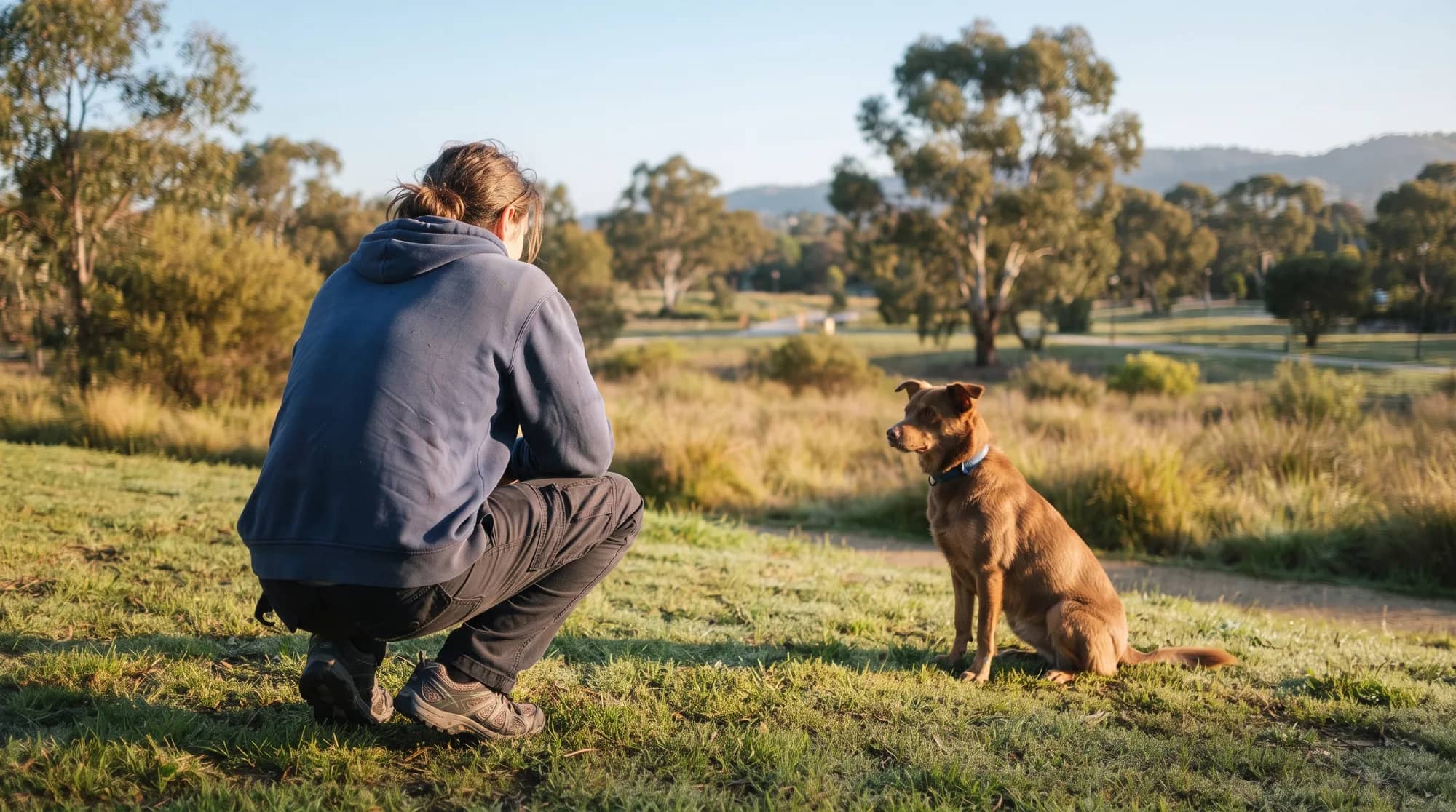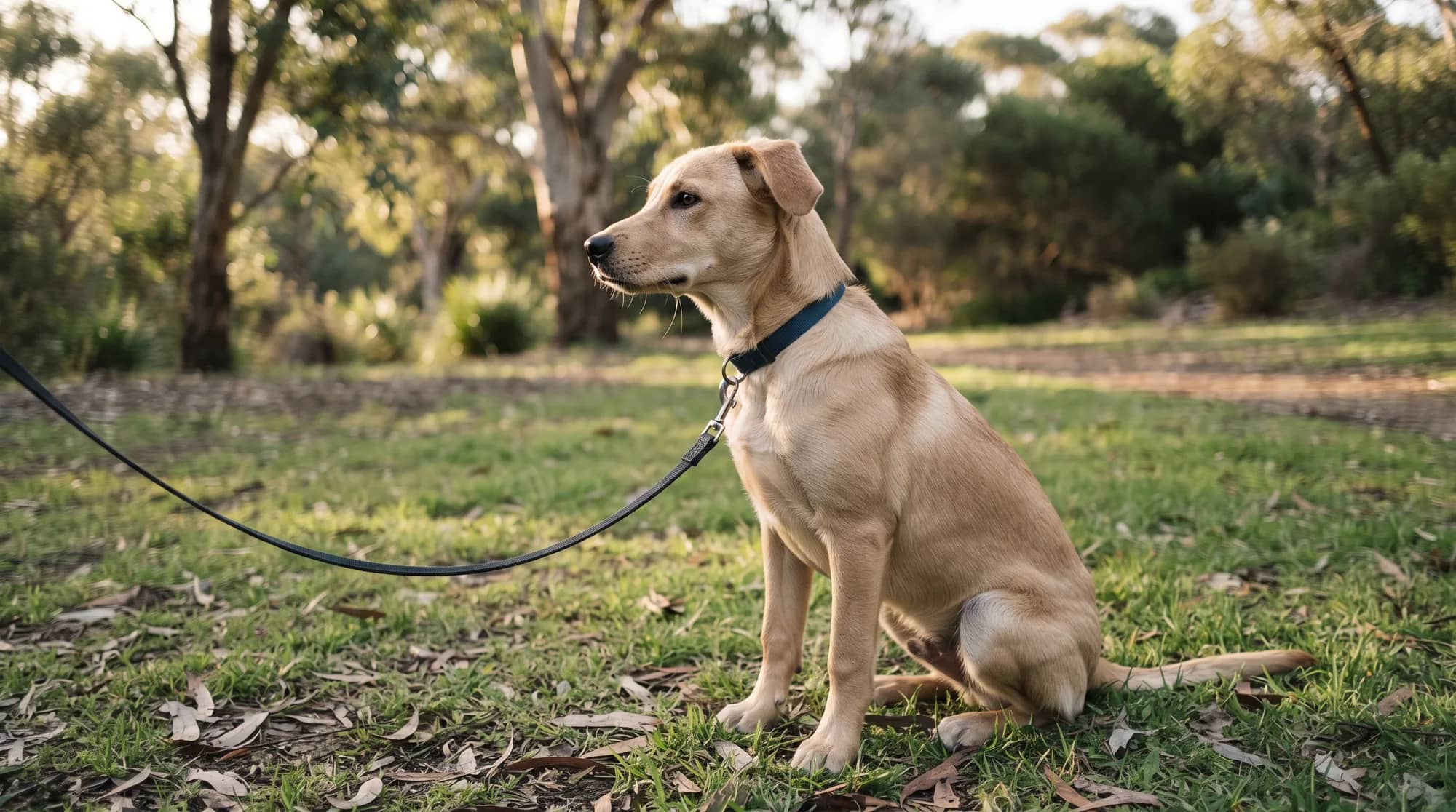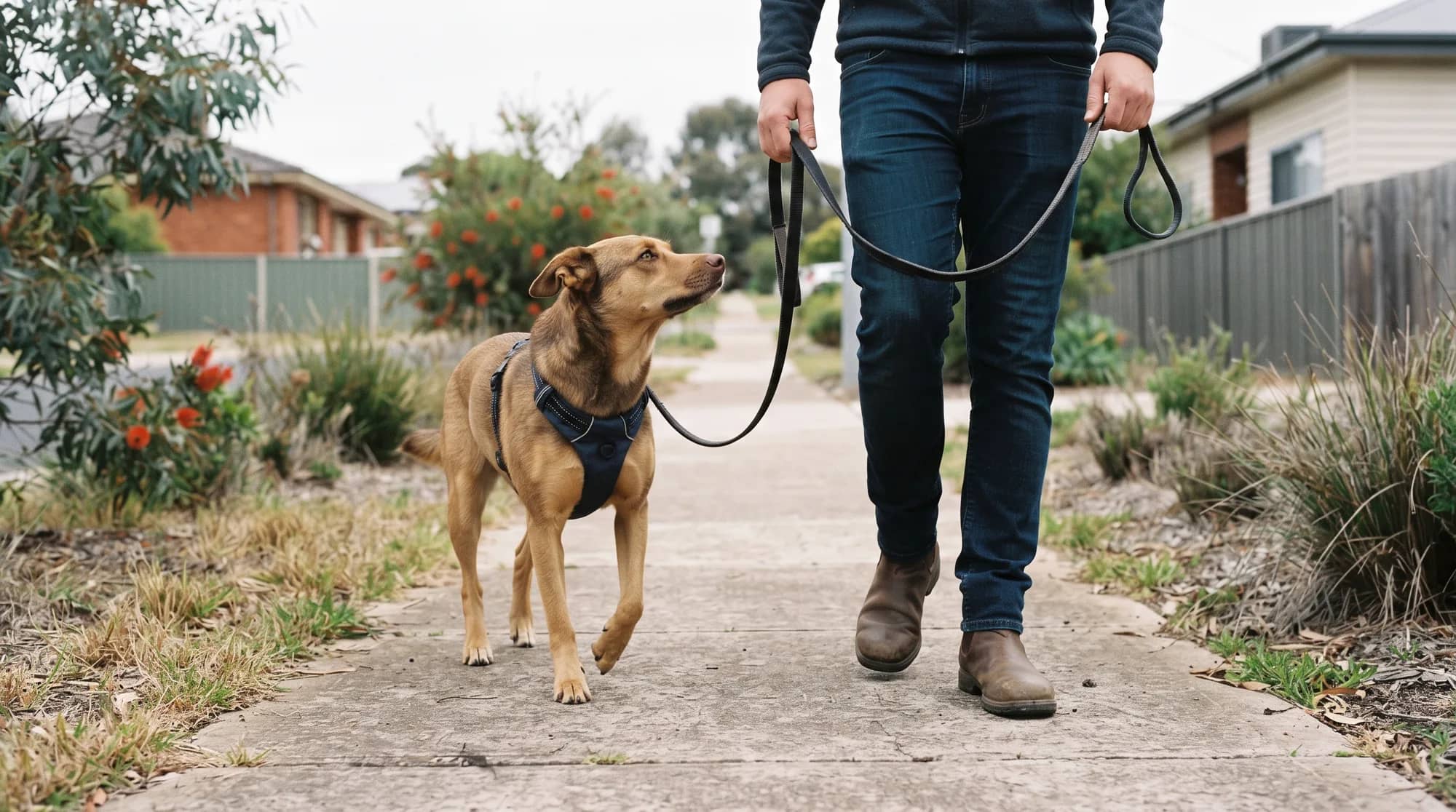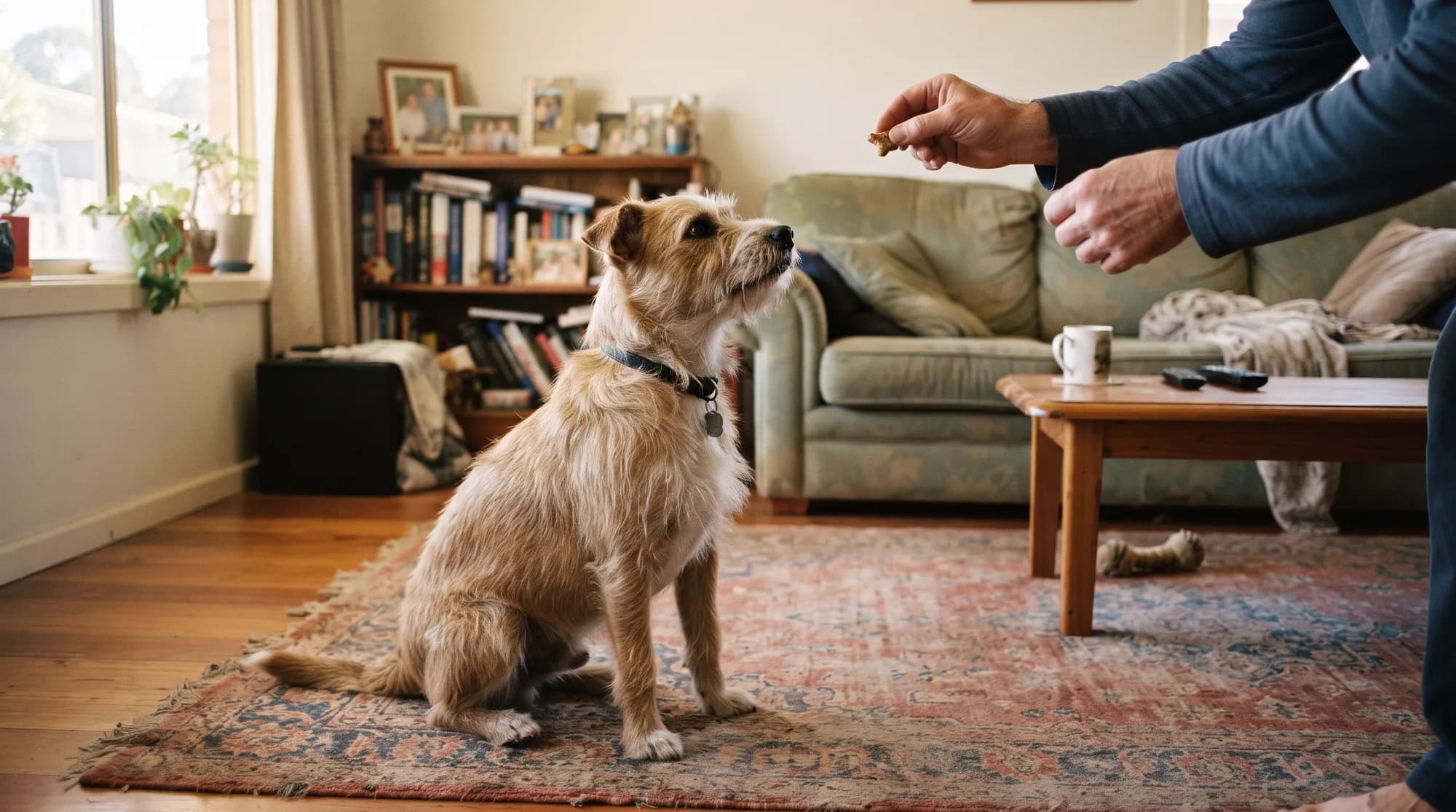
I do in-home training. So you would reasonably expect this article to conclude that group classes are a waste of money.
They are not. There are things a good class does that I cannot, and I have sent plenty of people to one. What follows is the honest version, because the two formats are genuinely good at different jobs and picking the wrong one is how people end up spending money twice.
What a group class is actually for
A good obedience class — and there are several long-established clubs across the southern suburbs and the Fleurieu — gives you three things that are genuinely hard to get elsewhere.
Proofing around other dogs. Working your dog while eleven other dogs are working nearby is a real skill, and it is not something you can manufacture at home. If your goal is a dog that can hold it together in a busy environment, that repeated controlled exposure is valuable.
Structured socialisation for puppies. Supervised puppy play with age-matched puppies, run by someone who steps in when it gets too much, is worth doing. Random dog-park encounters are not the same thing and can do real damage.
Community and accountability. You turn up every Sunday because you said you would. You meet other owners going through the same thing. For a lot of people, that structure is the difference between doing the homework and not.
And it is cheaper. Most clubs are volunteer-run and non-profit. A term of classes costs a fraction of a private session. If budget is the binding constraint, a club is a genuinely good option and I would rather you did that than nothing.
What a class cannot do
It cannot see your house.
This is the whole thing, really. Your dog does not have a problem in a hall. It has a problem at your front door when the postie comes, at the fence line where the neighbour's dog is, in the hallway when your kids' friends arrive, on the specific corner of your street where the other dog always appears.
An instructor in a hall cannot see any of that. They can only work with what they can observe, and what they can observe is your dog in a field with fifteen other dogs — which is a situation your dog will encounter approximately never again.
Dogs generalise badly. This is the technical reason class training so often "doesn't stick". To your dog, "sit" on a rubber mat in a hall and "sit" at your own front door with someone knocking are two different problems in two different contexts. Humans assume the skill transfers automatically. It does not — transfer has to be trained, and that step is usually where the process stops.
Usually only one person attends. So one member of your household learns the technique and then tries to relay it to everyone else. Meanwhile the dog is getting one set of rules from that person and a different set from everyone else, and it very sensibly concludes that the rules depend on who is in the room.
A reactive or fearful dog often cannot cope. A dog that goes over threshold at the sight of another dog at twenty metres is not learning anything in a hall full of dogs. It is spending an hour in a stress state. Some clubs run separate classes for this, which is excellent; many do not, and owners of reactive dogs often come away feeling like they failed a test they were never able to sit.
What in-home does
We work in the context that matters. The actual doorbell. The actual fence. The actual walk route with the actual triggers. Nothing has to transfer, because it never left.
Everyone is there. In one conversation, in your lounge room, the whole household agrees the rules. This is boring, it is not what people book for, and it is frequently the single biggest lever in the entire case.
I can see what you cannot. Where the dog sleeps, where it positions itself, what it has quietly appointed itself to manage, who cracks first when it whines, which of six small household habits is quietly training the opposite of what you want. Two hours of an outside pair of eyes in your house is worth a term of classes for this alone.
It is your schedule. Evenings, weekends, no fixed weekly commitment, no drive across town with a dog that hates the car.
It scales to hard cases. Aggression, serious reactivity, separation anxiety, resource guarding — these need one-on-one attention and a plan built around your specific dog. They cannot be done in a group.
What in-home costs
More, and it would be dishonest to pretend otherwise.
I charge a flat $110 an hour, whatever the problem is. A club term is usually well under a hundred dollars in total, so a class is still the cheaper option — what you are buying with the private session is undivided attention in the place the problem actually happens.
What you are paying for is specificity — an hour of undivided attention on your dog, in your house, on the one thing that is actually causing you grief. Whether that is worth it depends entirely on what you are trying to fix.
So which one
Here is roughly how I would decide.
A class is probably right if: you have a young puppy and want structured socialisation; your dog is basically fine and you want to sharpen it up; budget is tight; you like the social side and would benefit from the accountability; your goal is proofing around other dogs.
In-home is probably right if: the problem is location-specific (the door, the fence, your street); you have already done a class and nothing changed at home; multiple people in the household are giving different instructions; your dog cannot cope in a group; you have a behaviour problem rather than a training gap — reactivity, aggression, anxiety, guarding; or you simply cannot commit to a fixed weekly slot.
Both is often the best answer. In-home to sort out the household, the routine and the specific problems, then a class for structured work around other dogs. They are not competitors. I have recommended this combination plenty of times.
The question that actually decides it
Ask yourself where the problem happens.
If the honest answer is "everywhere, my dog just doesn't know sit" — a class will do fine.
If the honest answer is "at my front door", "at the fence", "on Seaford Road at 8am", or "when I leave the house" — no amount of hall training is going to touch it, because the problem is not in the hall.
That is the whole decision, really.
One more thing
Whichever you choose: if a trainer or an instructor tells you your dog is being dominant, that you need to establish yourself as pack leader through physical confrontation, or that the answer to a frightened dog is to push it through the fear — leave.
That framing has been out of date for a long time, and in fear- and aggression-based cases it makes things measurably worse. There are good trainers and good clubs across the southern suburbs. You do not have to settle for that one.