The dog you bring home from the shelter is not the dog you have adopted.
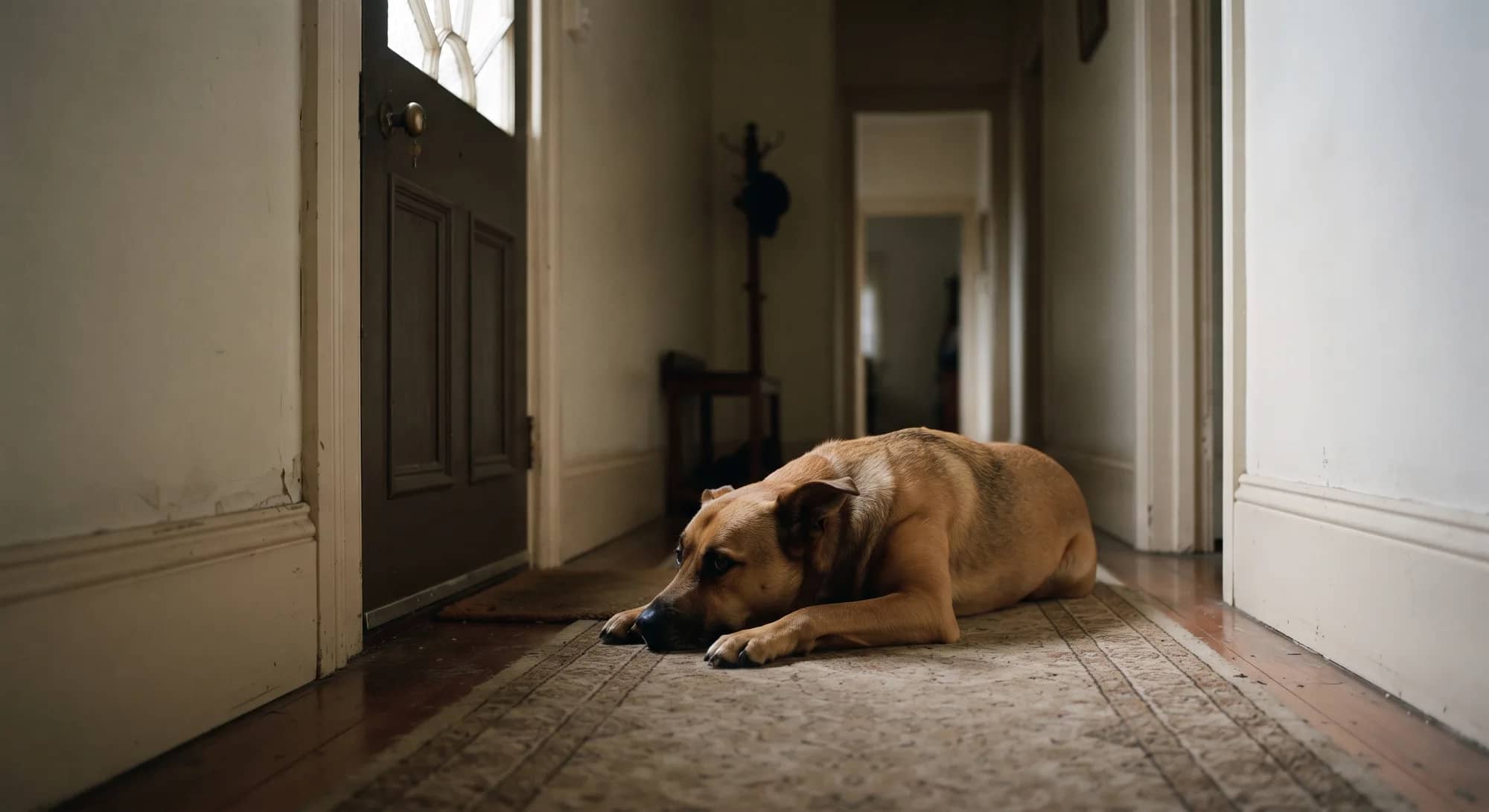
For the first week or two you are meeting a version of your dog that is shut down, overwhelmed, and running on adrenaline. It might be unnaturally quiet. It might be clingy, or standoffish, or asleep for twenty hours a day. Whatever it is doing, it is almost certainly not what it will be doing in a month.
Then somewhere around week three, the real dog shows up. And that is when most people ring a trainer, convinced something has gone wrong.
Nothing has gone wrong. This is just how it works.
The three-day, three-week, three-month idea
You will see this framing around rescue circles. It is a rule of thumb rather than a law, but it is a genuinely useful one.
The first three days: decompression. Your dog is overwhelmed. Everything is unfamiliar — the smells, the sounds, the people, the floor surfaces. Many dogs are quiet and withdrawn in this phase, which owners often read as "such a calm dog". Some are the opposite: pacing, panting, unable to settle.
The first three weeks: settling. Your dog starts to learn the routine. It works out where the food comes from, when the walks happen, where it sleeps. As it relaxes, the real personality begins to surface — and so do the behaviours that were suppressed under stress. This is when the barking starts, or the resource guarding appears, or the dog that "was fine with the cat" turns out not to be.
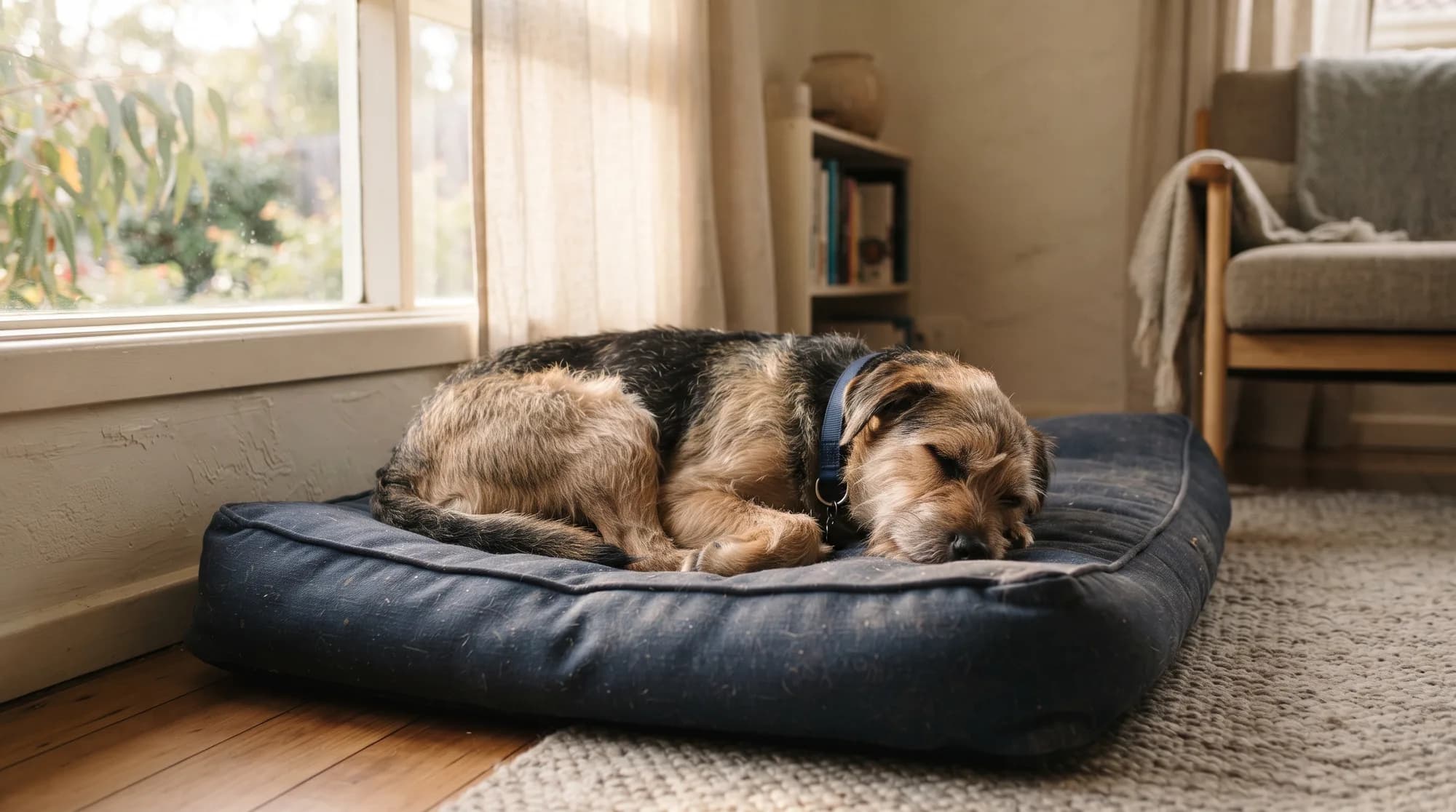
The first three months: integration. Your dog genuinely believes this is home. Bonds are properly formed. What you see now is close to the dog you actually have.
The important implication: do not make firm judgements about your dog's temperament in the first fortnight. Both the good and the bad readings are unreliable.
The first 48 hours
Less is more. Almost everything people want to do in the first two days is counterproductive.
Keep it quiet. No visitors. No meeting the extended family. No trip to the dog park to make friends. Your dog has just had the biggest upheaval of its life and needs boredom, not stimulation.
Give it a den. A crate with the door open, a bed in a quiet corner, a laundry — somewhere it can retreat to that nobody follows it into. Kids especially need to understand that this space is off limits.
Do not force interaction. Let your dog approach you. Sit on the floor, read a book, ignore it. A dog that chooses to come to you is forming a very different relationship from one that is repeatedly reached for.
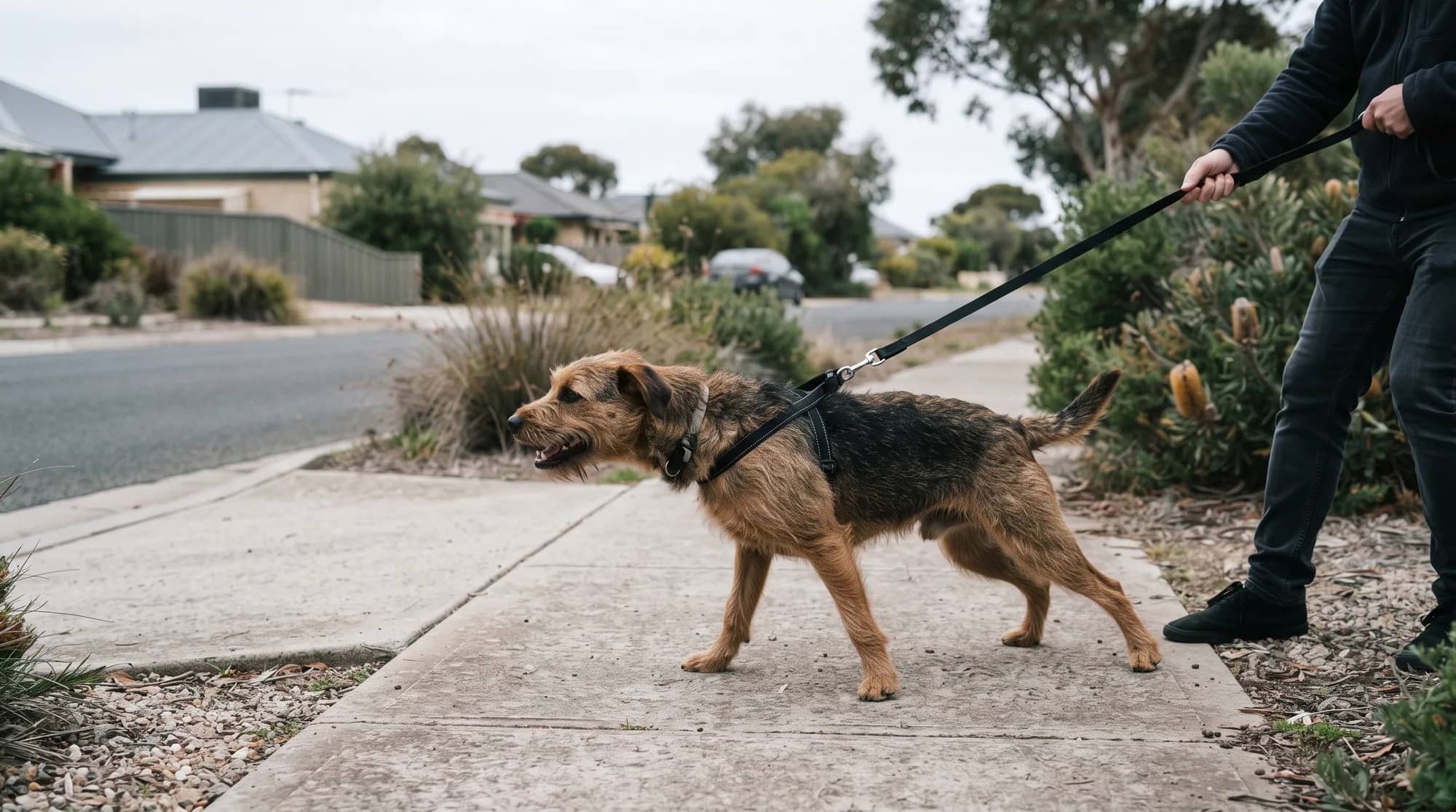
Two leads on walks. A collar and a harness, with two attachment points, for at least the first fortnight. Newly adopted dogs bolt. They slip collars, they back out of harnesses, and a dog that bolts in an unfamiliar suburb has no idea how to get home. This is the single most preventable disaster in rescue adoption.
Keep them contained. Check your fences before the dog arrives, not after. Gates latched. Front door managed.
The first fortnight
Routine over training. Same times for food, walks, sleep, and toileting. Predictability is what lowers a stressed animal's baseline, and it does more in week one than any obedience work.
Hold off on formal training. Start the household rules and the management immediately — where the dog sleeps, what furniture is allowed, how it is greeted. But do not launch into sit-stay-heel sessions. A dog that is not yet regulated is not learning efficiently, and you will just be frustrated with each other.
Toileting from scratch. Assume your dog is not house-trained, whatever you were told. Different surfaces, different routine, different signals. Take it out frequently, go with it, pay it. It usually clicks within days if you treat it as new rather than assuming.
Vet visit early. Partly for a health check, partly because pain is behind a great deal of behaviour, and a rescue dog's history is usually incomplete. Dental disease and untreated injuries are common and both affect temperament.
Introductions slowly. Existing dogs meet on neutral ground, on lead, parallel walking before any face-to-face. Cats behind a barrier first, for as long as it takes. Kids sit down and let the dog come to them.
Week three, when it gets harder
This is the part nobody warns you about, and it is why so many adoptions come unstuck at the one-month mark.
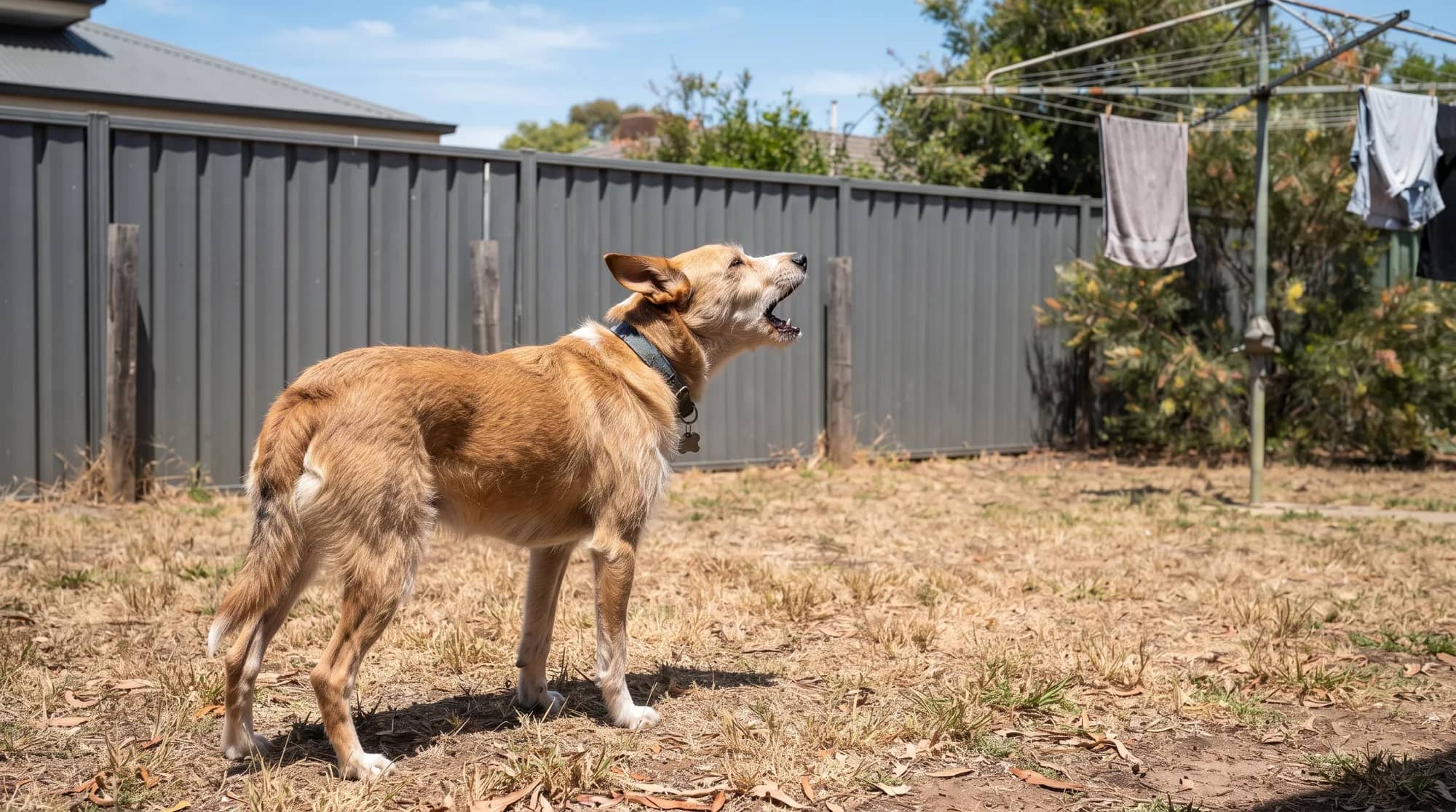
As your dog relaxes, it starts to have opinions. It might start guarding the couch. It might bark at the neighbours. It might become reactive on walks in a way it was not in week one. It might test the rules it accepted quietly for a fortnight.
This is not the dog "showing its true colours" in the ominous sense. It is a dog that has stopped being frightened enough to suppress everything, which is genuine progress even though it does not feel like it.
What matters is how you respond.
Do not panic and start correcting hard. A newly settled dog is still forming its view of you. Coming down heavy at week three can undo a fortnight of trust-building in an afternoon.
Do be consistent. The rules were the rules in week one and they are the rules now. Consistency is reassuring to a dog, not restrictive.
Do get help early if something serious appears. Resource guarding, growling at family members, or aggression towards other dogs are far more workable at week three than at month six, because the behaviour has less practice behind it.
The specific rescue issues
Resource guarding is over-represented in rescue dogs for obvious reasons — many have genuinely had to compete for food. It responds well to work, and it responds terribly to confrontation. Do not take things off your dog to "show it who's boss". Trade instead: something better in exchange, every time, until your dog's response to you approaching its bowl is happy anticipation rather than tension.
Separation issues are common in dogs that have been rehomed more than once. Start alone-time training from day one, in tiny increments, before there is a problem — not after.
Unknown triggers are the reality of an incomplete history. Your dog may be fine with everything for three weeks and then completely lose it at a man in a hat. That is information, not a catastrophe. Note it, avoid it for now, and work on it deliberately later.
Fear of specific things — brooms, hi-vis, particular sounds — often points at something in the history. You will never know what. You do not need to. The plan is the same either way: distance, patience, positive association.
Around here
The southern suburbs adopt a lot of rescues, and there are a couple of local patterns worth knowing.
If you are in Morphett Vale, Seaford, Happy Valley or the surrounding estates, the fence line is where new rescue dogs most commonly find their first problem. A dog that is still working out where it lives, meeting an unknown dog through a colorbond fence twice a day, forms a habit remarkably quickly. Manage that from day one rather than waiting to see.
If you are on acreage in the Vales or the Fleurieu, containment before anything else. A newly adopted dog with an unknown recall on an unfenced property is a serious risk, and roos and livestock make it worse. Long line, always, until you have built a recall you can actually trust.
The thing worth holding onto
Three months feels like a long time when week three is hard.
But most rescue dogs settle into something completely unrecognisable from the animal that came out of the shelter — and the ones that take longest to unfold are frequently the ones that end up being the best dogs.
Give it time, keep the routine steady, and get help early if something genuinely worrying appears. Most of what shows up in the first month is normal, temporary, and fixable.