Here is the thing nobody tells you when you start googling: in Australia, neither "dog trainer" nor "dog behaviourist" is a protected title.
Anyone can call themselves either. There is no register you have to be on, no minimum qualification, no licence. Someone who finished a two-day online course and someone with fifteen years of full-time practice can use exactly the same words on exactly the same kind of website.
That is not a reason to despair. It is a reason to know what the words are supposed to mean, and what to ask.
What the words are meant to distinguish
The useful distinction is not about status. It is about what the work is actually doing.
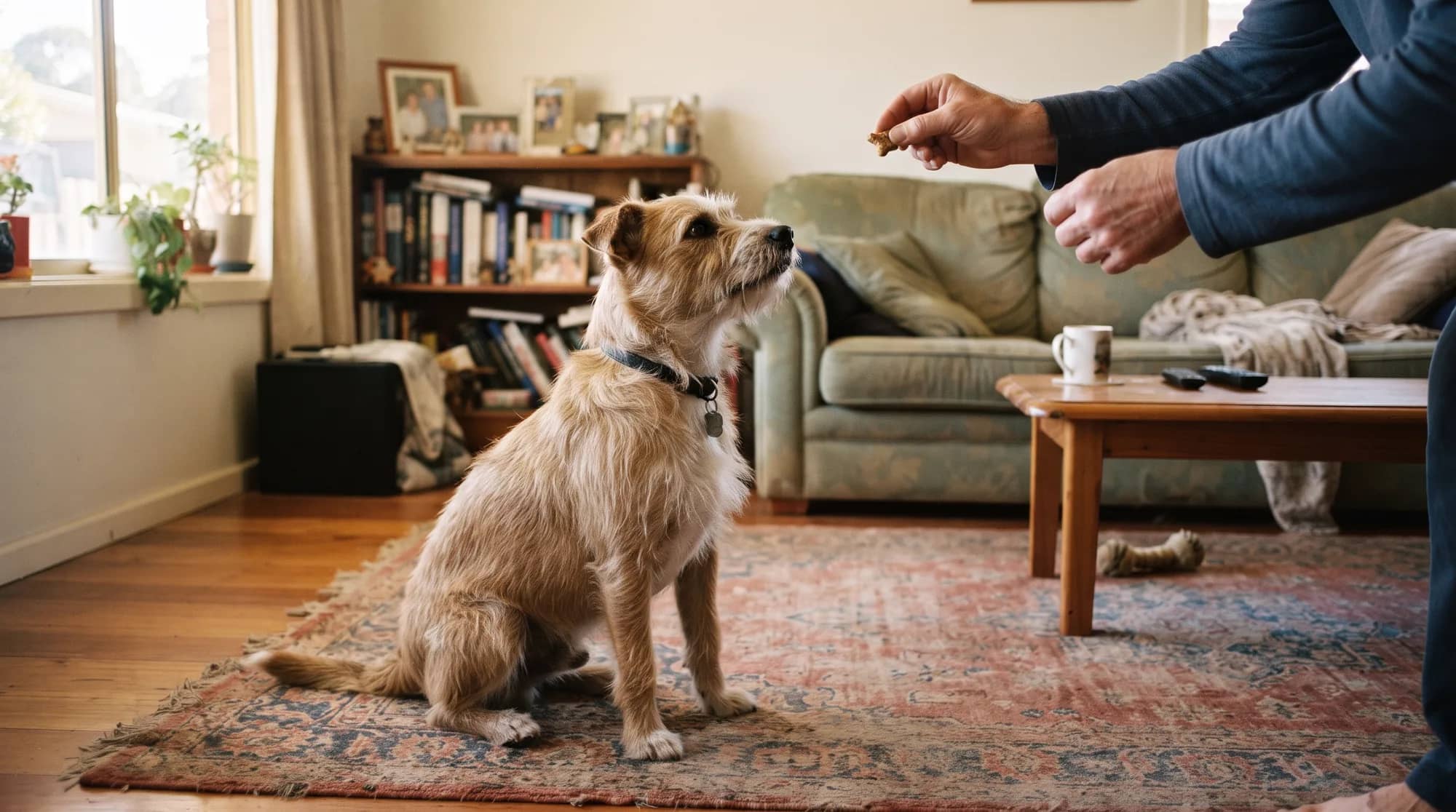
Training teaches a dog what to do. Sit, drop, stay, heel, come, settle, go to your bed, don't jump on the visitors. You are building skills and habits. The dog is broadly happy; it just does not know what you want, or has learned that something else works better.
Behaviour work changes how a dog feels. Fear, anxiety, arousal, aggression, guarding, panic. You are not installing a skill — you are changing an emotional response that is driving the behaviour.
The clearest way to see the difference: a dog that will not sit needs training. A dog that is terrified of men in hats needs behaviour work. You can teach the frightened dog a beautiful sit, and it will still be frightened of men in hats.
That is why so much money gets wasted. People take a fearful or reactive dog to obedience classes, the dog learns obedience, and the actual problem is exactly where it was.
Where the third tier sits
There is one credential in Australia that does mean something specific.
A veterinary behaviourist is a registered veterinarian with specialist postgraduate qualifications in behavioural medicine. That is a genuine specialty with a formal pathway, and it is legally protected in the way "vet" is.
What they can do that nobody else can: diagnose medical contributors, prescribe medication, and work at the intersection of physical health and behaviour. For severe anxiety, compulsive behaviours, or serious aggression, that combination matters enormously.
They are also relatively few, and there is usually a waiting list.
So the honest hierarchy is: trainers and behaviour practitioners handle the large majority of cases; veterinary behaviourists handle the medically complex end; and a good trainer should tell you when you are in the second category.
What you probably need
Training, if the problem is:
- Pulling on the lead
- Not coming when called
- Jumping on people
- Counter-surfing, door-dashing, stealing
- Not settling when asked
- Puppy basics — biting, toileting, general chaos
- A dog that knows the commands at home but not anywhere else
Behaviour work, if the problem is:
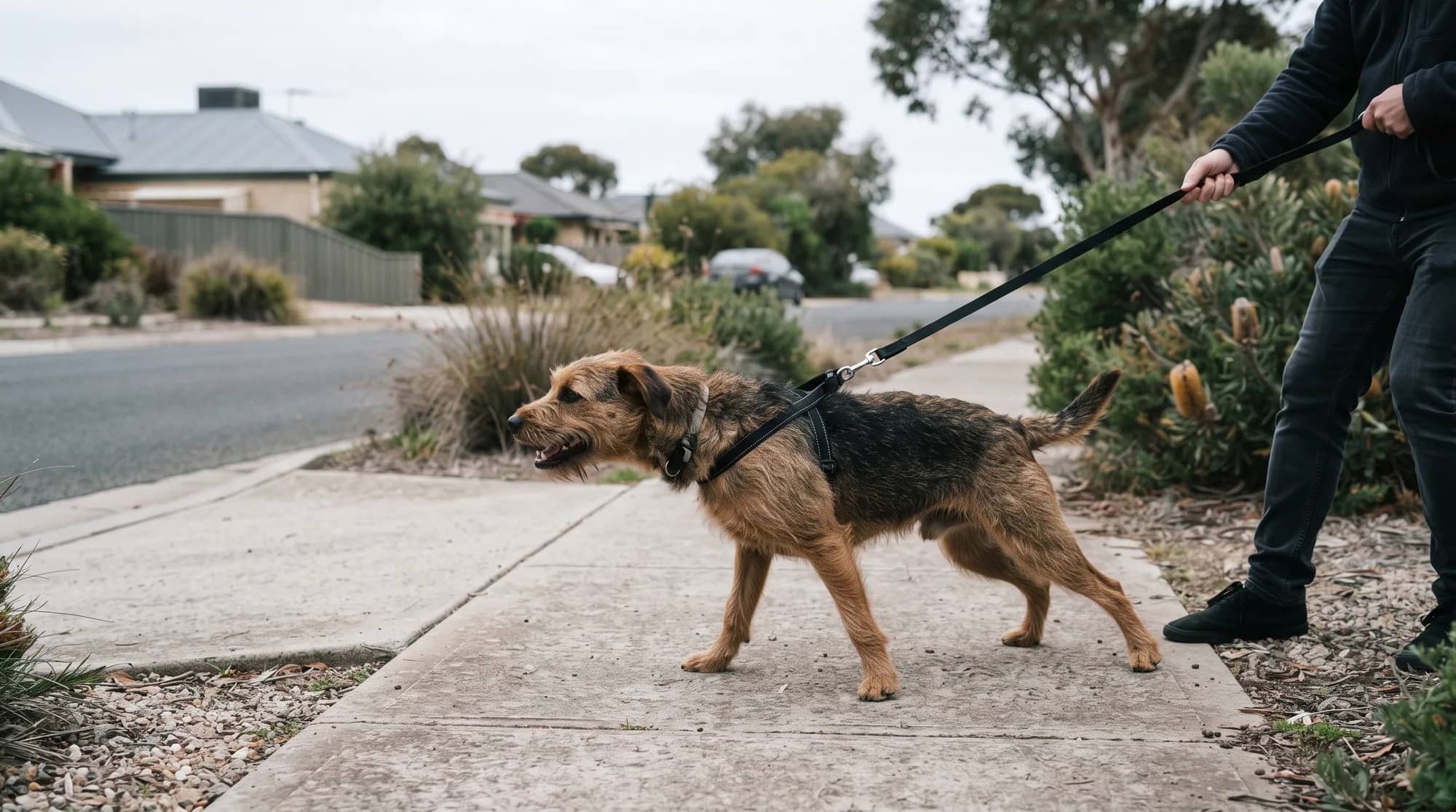
- Reactivity — barking and lunging at dogs, people, bikes
- Aggression of any kind
- Resource guarding — food, toys, beds, people
- Separation anxiety and panic
- Fear of specific things, or generalised fearfulness
- Compulsive behaviours — spinning, shadow chasing, flank sucking
- A sudden change in behaviour with no obvious cause
Your vet first, if:
- The change came on suddenly
- Your dog is over about seven
- There is any sensitivity to being touched in a particular place
- The dog is toileting indoors after being reliable
- Anything about it just seems physically off
Pain is behind a genuinely surprising proportion of behaviour cases and it is chronically under-diagnosed. No amount of training fixes a sore dog, and starting there will save you money as well as time.
Overlap is normal
Most real cases are both.
A reactive dog needs the emotional work — that is the actual problem — and it also needs functional lead skills, because you cannot do threshold work with a dog that is dragging you sideways. A dog with separation anxiety needs the panic addressed and also needs to have learned to settle on a mat.
So do not get too precious about the category. What matters is that whoever you hire correctly identifies which part of the problem is which, and does not try to drill obedience at an emotional problem.
What to actually ask
Since the titles do not guarantee anything, the questions do the work.
"What do you think is driving this behaviour?" — the single best question. You want an answer about the dog's emotional state and its learning history. If the answer is "he's being dominant" or "he's trying to be pack leader", that framing has been out of date for decades and it is a genuine red flag.
"What happens if my dog gets it wrong?" — this tells you what tools are in play. You are entitled to a clear, specific answer, not a vague one. Be wary of euphemisms like "pressure", "correction", "communication" or "balanced" if they cannot be turned into a concrete description.
"Have you handled this specific problem before?" — separation anxiety and aggression in particular are specialised. General obedience experience does not transfer automatically.
"When would you refer me to a vet?" — a good answer here tells you a lot. Anyone who says they have never needed to is either very inexperienced or not paying attention.
"What does success look like, and how long?" — you want a realistic answer with caveats, not a guarantee. Anyone promising a fixed outcome on an aggression case before meeting your dog is selling something.
Red flags
- Guarantees. Especially on aggression or anxiety.
- Dominance and pack-leader framing. Outdated, and in fear cases actively harmful.
- Being told to punish a growl. This removes the warning, not the feeling.
- "One session and it'll be fixed" on a behaviour case.
- Refusing to explain their methods in plain, concrete language.
- Never referring to vets. Behaviour and health are entangled; anyone working in this space should be sending people to vets regularly.
- Pressure to buy a large package before they have assessed your dog.
Green flags
- Asks a lot of questions before offering an opinion
- Wants to see your dog in your own environment
- Talks about your dog's emotional state, not just the behaviour
- Is comfortable saying "I don't know" or "that's outside what I do"
- Refers to vets and veterinary behaviourists when appropriate
- Gives you one thing to work on at a time, not a list of twenty
- Tells you honestly what will need managing long-term rather than promising a cure
What I do
For transparency, since this article is on my site.
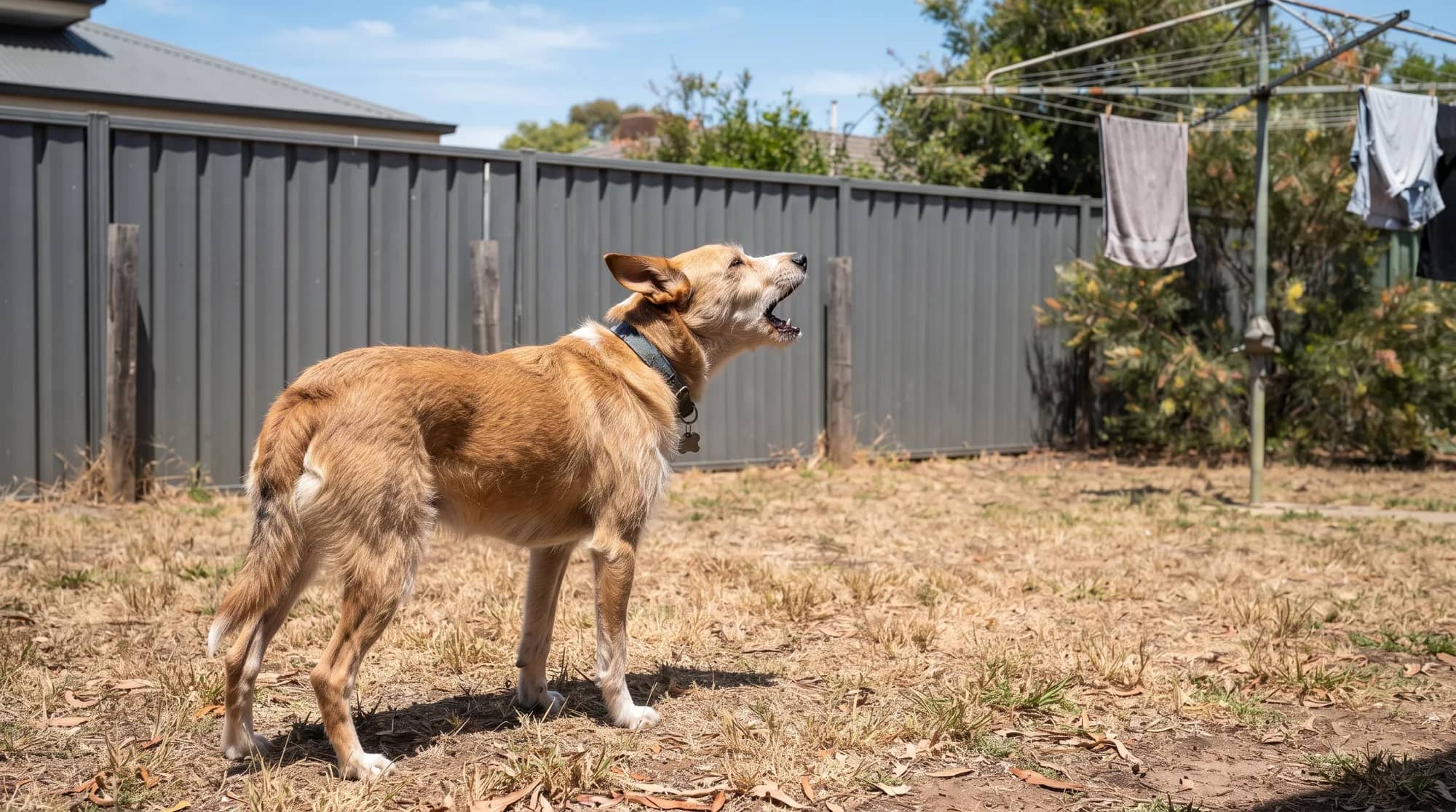
I do in-home training and behaviour work across southern Adelaide and the Fleurieu. That covers the obedience end — pulling, recall, jumping, settling, puppies — and the behaviour end: reactivity, aggression, anxiety, guarding and barking.
What I am not is a vet or a veterinary behaviourist. Where I think a case needs a pain workup, a medication conversation, or a specialist referral, I will tell you and I would rather do that than train around a problem I cannot solve.
That is the standard worth holding any trainer to, including me: do they know where the edge of their competence is, and will they tell you when you have reached it.