
Barking Dog Training · Happy Valley
Barking Dog Training in Happy Valley
Barking is a symptom, not a diagnosis. Six different problems produce the same noise — and they need six different answers.
In short
Happy Valley produces more barking complaints than almost anywhere else I work, and the reasons are structural: compact estate blocks, narrow side yards, and a settled population who are home to hear it. If the City of Onkaparinga has been in touch, there are two things worth doing today — change what your dog can see and reach, and start a written log.
Why Happy Valley
What makes this different in Happy Valley
Most Happy Valley barking cases arrive the same way. The owner had no idea it was happening, because they were at work. A neighbour complained. The council wrote. And now there is a letter on the fridge with a deadline on it.
So let me put the urgent, practical part first.
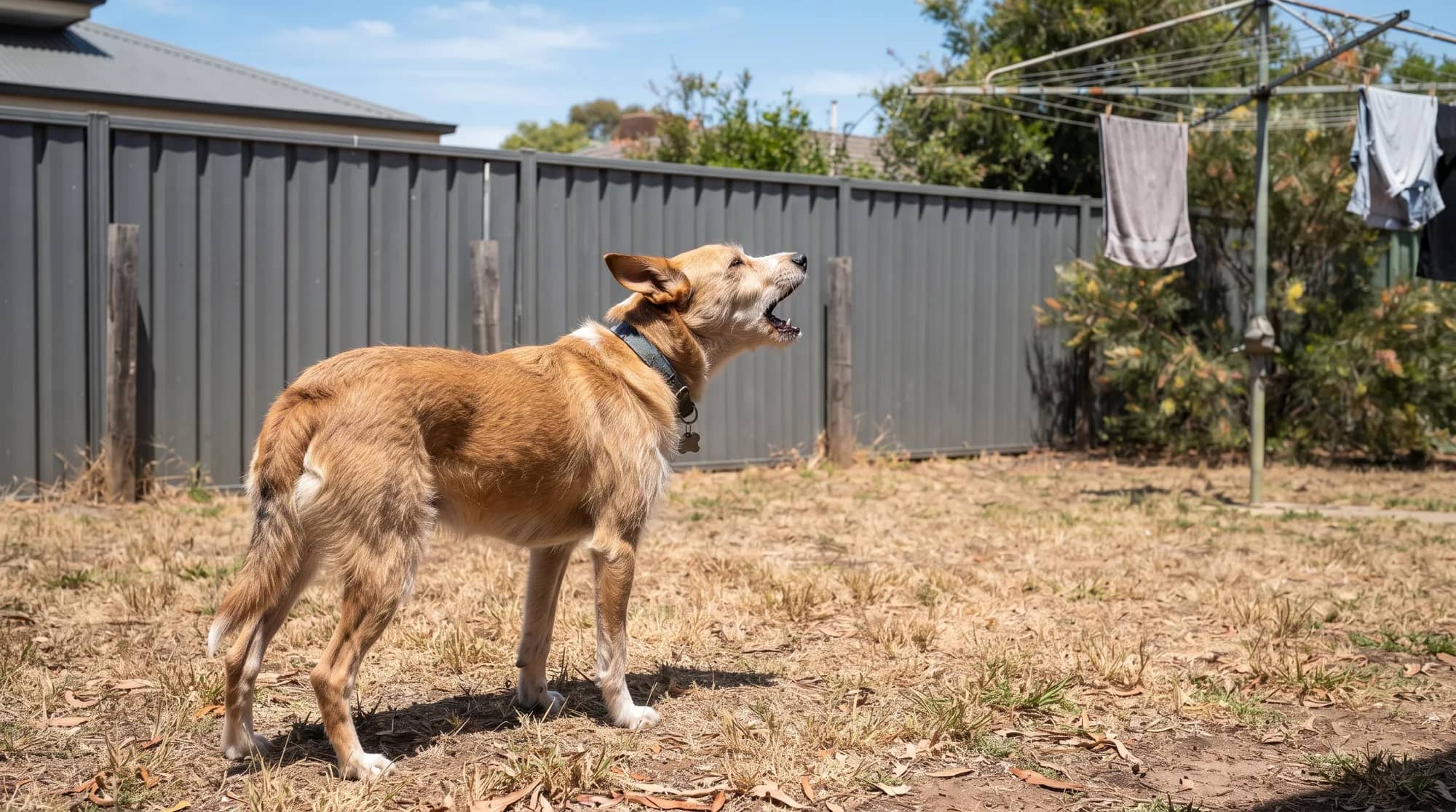
Today, before anything else: change what your dog can see and reach. Block line of sight to the street and to the fence line the barking happens at — screening, shade cloth, restricting yard access, moving the dog's day-space to the other side of the house. This is not the training and it will not fix the underlying cause, but it very often cuts the barking substantially within a day, and when there is a council process running that matters.
Also today: start a log. Date, time, duration, and what you think triggered it. Get a camera on it if you can — a phone on a shelf is fine. You need to know what is actually happening, and the council will take you a great deal more seriously if you can show them a record and a plan rather than an assurance.
And talk to your neighbour. This is the step people skip and it is the one that most changes how a complaint plays out. Most complaints escalate not because the barking is unbearable but because the neighbour believes nothing is being done. Telling them you have engaged a trainer and are working on it defuses a surprising number of these.
Now the actual cause. In Happy Valley specifically, the three most common are boredom, territorial arousal at the fence, and genuine separation distress. They sound similar from three houses away and they need completely different plans, which is why the camera matters — the timing tells you which one you have. A dog that starts within ten minutes of you leaving and focuses on the door is a different problem from a dog that starts at 2pm when the neighbour's dog comes out.
The estate design is doing you no favours here. Large houses on compact lots leave narrow side yards close to the neighbours' living areas, and there is not much for a dog to do in that space. A lot of what gets diagnosed as a behaviour problem in this suburb is a dog with an under-stimulating day.
Local factors
What sets dogs off in Happy Valley
The specifics of this suburb, and why they matter for barking dog training.
- Narrow side yards close to neighbouring living areas
- Neighbours working from home and hearing everything
- Compact estate blocks with little for a dog to do
- Fence lines shared with dogs on two or three sides
- Long days alone with no structure
In practice
Reading the camera footage
Once you have thirty minutes of footage, here is how to interpret it — because the timing tells you which of six problems you actually have, and they need completely different plans.
Starts within five to twenty minutes of you leaving, focused on doors and windows, with pacing, panting or drooling, and the food you left untouched. That is separation distress. It is a panic response, it does not respond to correction, and treating it as a noise problem makes it worse. It is also the slowest to fix — weeks to months, not days.
Starts an hour or two in, wanders, chews whatever is interesting rather than the exits, eats the food immediately. Boredom. Responds well to structuring the day, and improves within a fortnight.
Bursts triggered by something specific — a person passing, the neighbour's dog coming out, the bin truck. Territorial or frustration barking. Usually the most fixable of the lot, and often mostly an environmental fix.
Happens on some days and not others, correlating with weather or events rather than your departure. Noise phobia.
Aimed at you while you are home. Demand barking, and it continues because it works.
The reason this matters in Happy Valley particularly is that the council process runs on a clock. Getting the category right first time is the difference between a fortnight and six months — and it is why I would rather you spent one evening setting up a phone on a shelf than six weeks guessing.
Locally
The Onkaparinga process, and what actually helps your case
Barking sits under the Dog and Cat Management Act and is administered by your council. The City of Onkaparinga publishes guidance for both owners and complainants, and the shape of the process is fairly consistent: a complaint is lodged, the council investigates, and if the barking is assessed as a nuisance they can issue a Control (Barking Dog) Order, with escalation to SACAT if it is not resolved.
What is worth understanding is that councils are not trying to punish you. They are trying to make the noise stop. An owner who engages, acts and can demonstrate it is in a completely different position from one who ignores the letters.
Three things carry real weight, and none of them require a trainer.
A log. Dates, times, duration, suspected trigger. It shows you are taking it seriously and it gives the council something concrete.
Visible environmental change. Screening on the fence, blocked line of sight to the street, the dog's day-space moved. These reduce the barking measurably within days and they are the fastest wins available.
Talking to your neighbour. The step people skip, and the one that changes outcomes most. Most complaints escalate not because the barking is unbearable but because the neighbour believes nothing is being done. "I genuinely didn't know, I've got a camera on it and I've booked a trainer" defuses a surprising number of these.
Happy Valley's estate layout — large houses on compact lots, narrow side yards against the neighbours' living areas, and a lot of people now home during the day — means this suburb generates more of these than anywhere else I work. The good news is that a large share of it responds quickly.
Sound familiar?
What I'm called about in Happy Valley
- Barking at everything that passes the front window
- Non-stop barking while you are at work
- A neighbour has complained, or the council has been in touch
- Fence-fighting with the dog next door
- Demand barking at you for food, attention or the ball
- You have tried a bark collar and it has not helped, or made it worse
How it works
How it works
Work out which kind of barking it is
Alert, territorial, boredom, frustration, anxiety and demand barking sound similar and need different plans. This step decides everything else.
Change the environment
Most window-barking stops when the dog cannot see the street. Most fence-fighting stops when the dog cannot reach the fence. Unglamorous, immediate, and it buys you room to train.
Teach an alternative
A dog that has been given something specific to do when the trigger appears does not have to invent a response. That is what replaces the barking.
Deal with the neighbours
If a complaint is live, there are practical things worth doing — a log, a conversation, evidence of action taken. It matters to how the council handles it.
Related
The full service page, the suburb guide, and the wider area.
Read up
Free guides on this
Written for owners in this part of the south. If one of these fixes it and you never ring me, that is a good outcome.
Behaviour Problems
You Have Had a Barking Complaint. What Happens Now?
There is a letter from the council on your kitchen bench. Here is exactly what it means, what happens next, and the two things worth doing today.

Adelaide Dog Life
Off-Leash Dog Beaches: Southern Adelaide to Victor Harbor
From Glenelg to Victor Harbor, a run-down of the coast, how the off-leash hours generally work, and the two words in the legislation that catch people out.

Puppy Training
When Should Puppy Training Actually Start?
The most valuable training window in your dog's entire life closes at around sixteen weeks. Most people start using it at six months.
Questions
Barking Dog Training in Happy Valley — questions
The council has sent me a letter. What is the very first thing to do?
What is a Control (Barking Dog) Order?
Should I just get a bark collar to make it stop quickly?
My council has sent me a barking notice. What should I do first?
Do bark collars work?
My dog only barks when I am not home. How can I train that?
Ready when you are
Dog training in Happy Valley, starting this week.
Tell me what's going on and I'll tell you straight whether I can help — and roughly what it will take. No obligation, no pressure. Southern suburbs of Adelaide — CBD to Victor Harbor.
Send a quick enquiry
Four things and I’ll come back to you. If it is urgent, ring instead — that is always faster.