
Aggressive Dog Training · Victor Harbor
Aggressive Dog Help in Victor Harbor
If you are frightened of what your dog might do, you need someone who will tell you the truth rather than sell you a quick fix.
In short
Aggression cases in Victor Harbor carry an extra problem: distance from help. The nearest specialist behaviour support has generally been ninety minutes away, and aggression is exactly the kind of case that gets worse while an owner decides whether the trip is worth it. Early assessment matters more here than anywhere else in my service area.
Why Victor Harbor
What makes this different in Victor Harbor
This is the page I most wanted to write, because the delay problem in aggression cases is real and it is worse on the Fleurieu than anywhere.
Aggression escalates through rehearsal. Every time a dog growls, lunges or snaps and the strategy works — the person backs off, the other dog goes away, the hand withdraws — that behaviour gets stronger. A case that would have been straightforward in March can be substantially harder by July, purely because of the repetitions in between.
Now add ninety minutes of driving each way to the decision. It is completely understandable that people wait. They try things off the internet. They manage around it. They hope adolescence sorts it out. And in the meantime the dog gets four more months of practice.
So the message for Victor Harbor specifically: if your dog has growled at someone, guarded something, or done anything that frightened you, get an assessment early. Not because it is necessarily serious — a lot of these cases are far more workable than owners fear — but because finding out early is what keeps it that way.
There is a local factor too. The Victor Harbor foreshore in summer is a crowded, unpredictable environment with a lot of visiting dogs whose owners do not know the area or each other. For a dog with any aggression history, that is a high-risk setting, and it arrives on a schedule. A dog that has been managed successfully all winter can be put in a genuinely difficult position in January simply because the town filled up.
What I will do is give you an honest read. What happened, how serious it is, what can realistically change, and what needs managing rather than fixing. If I think you need your vet involved for a pain workup, or a veterinary behaviourist rather than a trainer, I will say that. I would rather send you to the right person than take a booking I cannot justify.
Local factors
What sets dogs off in Victor Harbor
The specifics of this suburb, and why they matter for aggressive dog training.
- Long delays before help is sought, because help is far away
- A crowded summer foreshore full of unfamiliar visiting dogs
- Limited local options for a proper behaviour assessment
- Cases that have escalated through months of rehearsal
- Holiday-season environments that undo winter management
In practice
What the assessment actually involves
Because aggression cases carry real risk, it is worth setting out exactly what happens, so you know what you are booking and what I will and will not do.
History first, and it is not a formality. What happened, in what context, how many times, how much damage, and how quickly your dog recovered afterwards. Those questions determine everything downstream. Please answer them completely, including anything you are embarrassed about — withholding a bite history changes what I do in your house and can put people at risk.
Then observation, without provocation. I will not set your dog up to fail in order to prove a point. That is unnecessary, it makes the case worse, and it teaches your dog that strangers in the house are a threat. I watch how your dog moves through its own space, where it positions itself, what it monitors, and how it responds to ordinary events. Body language tells you most of what you need if you slow down enough to read it.
Then a veterinary conversation, where warranted. A meaningful share of sudden-onset aggression is a dog in pain. If your dog is over about seven, if this appeared suddenly, or if it is worse around handling, I will want your vet involved before we treat it as behaviour.
Then management, before any modification. Gates, routines, changed patterns, muzzle conditioning where appropriate. Every rehearsal makes the behaviour more likely, so the first job is always to stop the repetitions.
Then a prognosis you can plan around, including the parts that will need managing long term rather than resolving.
Locally
Why distance makes these cases worse, and what to do about it
The Fleurieu has a structural problem with aggression cases and it is worth naming plainly, because it changes what you should do today.
Aggression escalates through rehearsal. Every time a dog growls, lunges or snaps and the strategy works — the person backs off, the other dog goes away, the hand withdraws — the behaviour gets stronger. A case that would have been straightforward in March can be substantially harder by July purely because of the repetitions in between.
Now add a ninety-minute drive each way to that decision. It is completely understandable that people wait. They try things from the internet. They manage around it. They hope adolescence sorts it out. And the dog gets four more months of practice.
So the message for Victor Harbor specifically: if your dog has growled at someone, guarded something, or done anything that frightened you, get it assessed early. Not because it is necessarily serious — a lot of these cases are far more workable than owners fear — but because finding out early is what keeps it that way.
There is a seasonal factor too. The foreshore in summer is a crowded, unpredictable environment full of visiting dogs, and it arrives on a schedule. A dog that has been managed successfully all winter can be put in a genuinely difficult position in January simply because the town filled up. If you have a dog with any history, January planning should start in October.
Tell me it is an aggression case when you get in touch and it goes to the front of the queue.
Sound familiar?
What I'm called about in Victor Harbor
- Growling, snapping or lunging at people or other dogs
- A bite has happened, or a near-miss that frightened you
- Guarding food, toys, beds or a particular family member
- Aggression that has appeared suddenly in an older dog
- You are managing the house around the dog and it is exhausting
- Someone has suggested rehoming or worse and you want another opinion
How it works
How it works
Safety and honesty first
Before anything else: what has actually happened, how close it came, who is at risk. I will not downplay it and I will not catastrophise it. You need an accurate picture to make good decisions.
Rule out pain
A meaningful proportion of sudden-onset aggression is a sore dog. Before we treat this as behaviour, I will want your vet to have ruled out the physical, particularly for any dog over about seven.
Management that actually holds
Gates, routines, muzzle conditioning if appropriate, changed patterns. This is not the training — it is what stops the situation getting worse while the training happens.
Work the underlying emotion
Structured, gradual, always under threshold. We change how your dog feels about the trigger. Suppressing the display without changing the feeling produces a dog that bites without warning.
Related
The full service page, the suburb guide, and the wider area.
Read up
Free guides on this
Written for owners in this part of the south. If one of these fixes it and you never ring me, that is a good outcome.
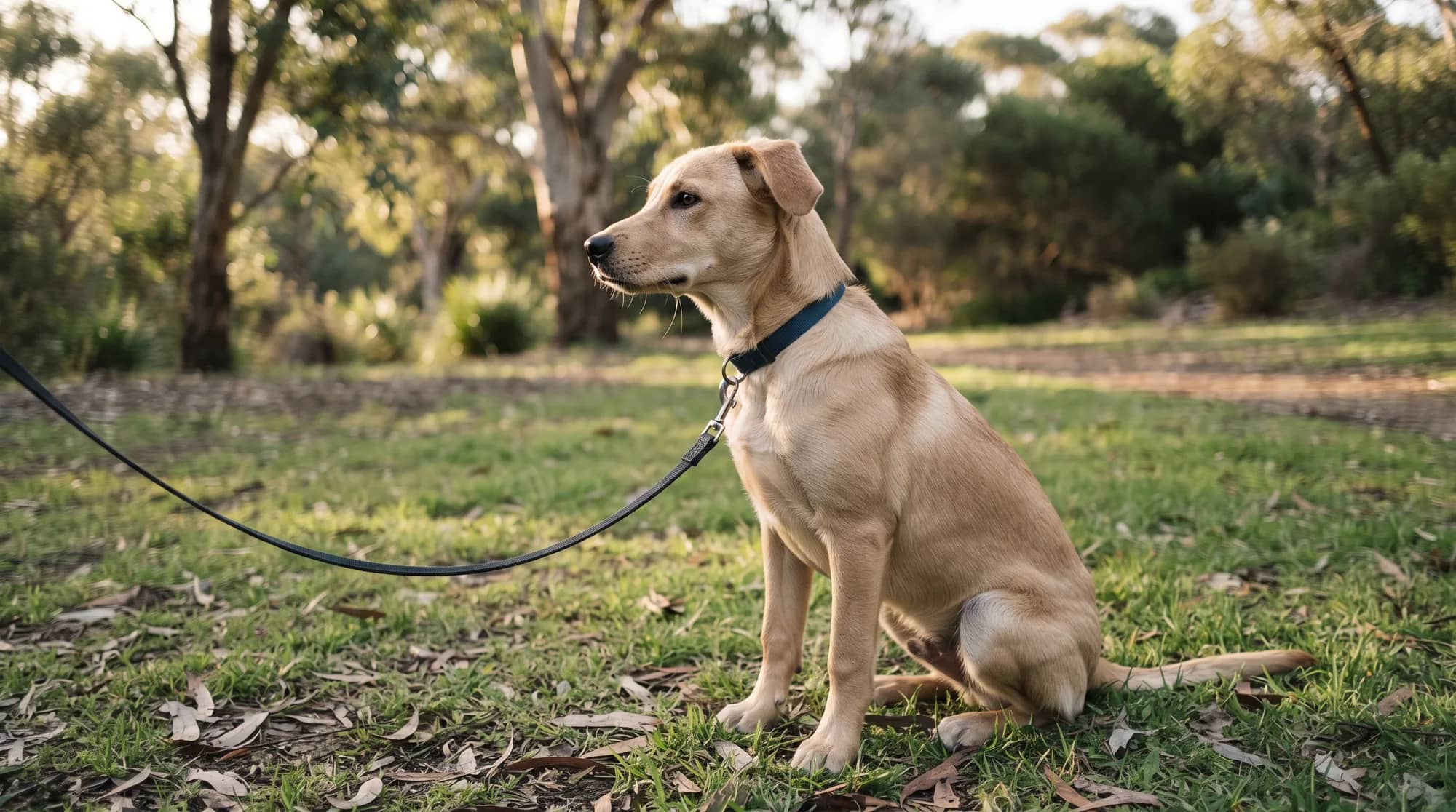
Obedience & Training
Your Dog Has Not Forgotten Its Training. It Is a Teenager.
At around ten months, a lot of owners conclude their training failed. It did not. Their dog hit adolescence — and almost nobody warns you about it.

Behaviour Problems
The First 30 Days With a Rescue Dog
The dog you bring home is not the dog you have adopted. It takes about three weeks for the real one to show up — and what you do in that window matters.
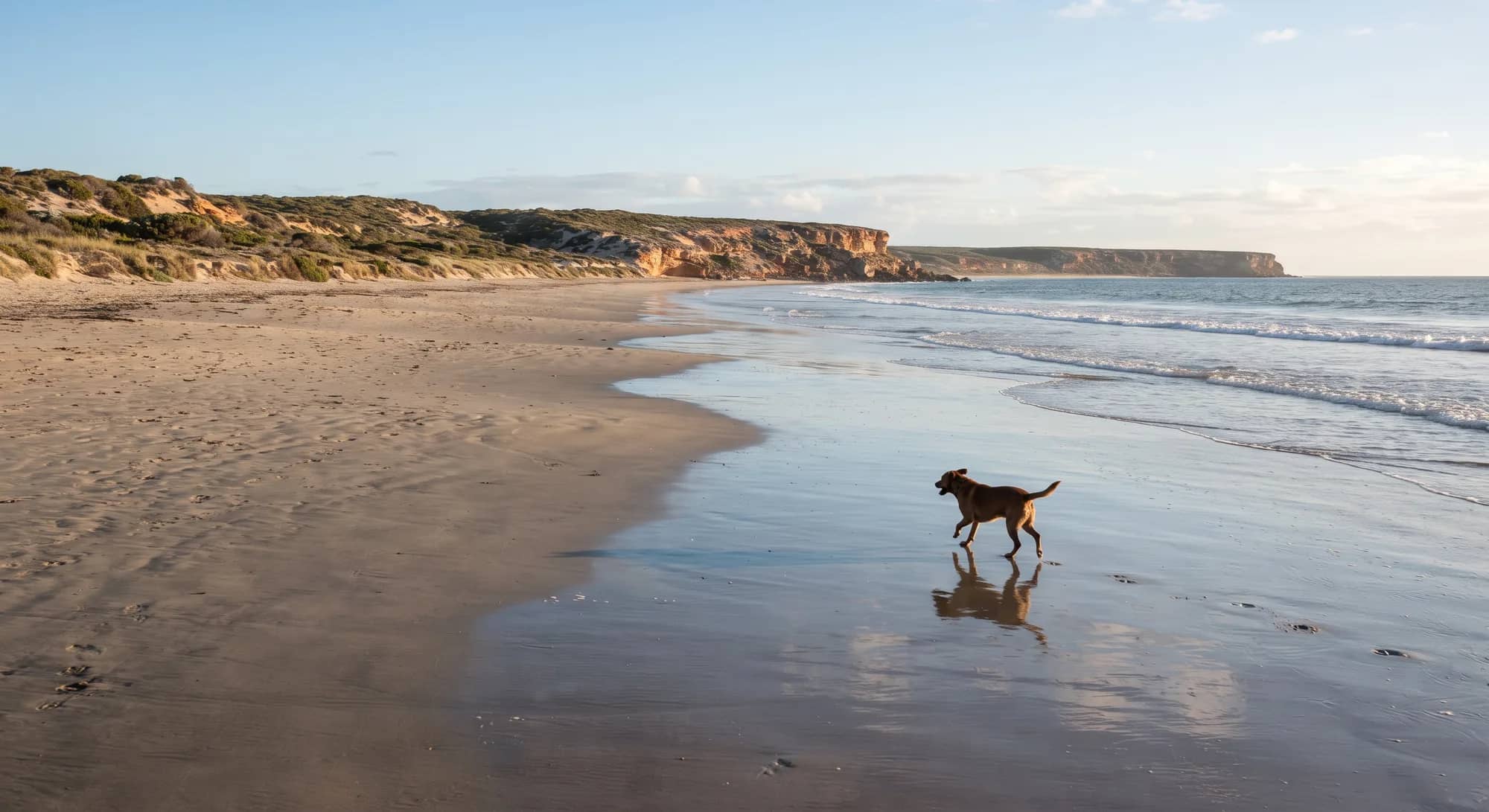
Adelaide Dog Life
Off-Leash Dog Beaches: Southern Adelaide to Victor Harbor
From Glenelg to Victor Harbor, a run-down of the coast, how the off-leash hours generally work, and the two words in the legislation that catch people out.
Questions
Aggressive Dog Training in Victor Harbor — questions
My dog growled at a visitor. Is that an emergency?
How soon could you get down here?
Will you tell me honestly if it is bad?
Is my dog dangerous?
Should I get a muzzle?
My dog only does it to one person. Why?
Ready when you are
Dog training in Victor Harbor, starting this week.
Tell me what's going on and I'll tell you straight whether I can help — and roughly what it will take. No obligation, no pressure. Southern suburbs of Adelaide — CBD to Victor Harbor.
Send a quick enquiry
Four things and I’ll come back to you. If it is urgent, ring instead — that is always faster.