
Puppy Training · Victor Harbor
Puppy Training in Victor Harbor
Everything your puppy learns in the next twelve weeks, they will believe for the rest of their life. Worth getting right.
In short
Puppy training in Victor Harbor has one complication you will not find in the suburbs: the town changes dramatically between seasons. A puppy socialised entirely through a quiet winter has genuinely not met the town it lives in, and will meet it for the first time as an adolescent in January — which is the worst possible timing.
Why Victor Harbor
What makes this different in Victor Harbor
There is a specific trap for puppies raised in Victor Harbor, and almost nobody warns owners about it.
Say your puppy arrives in May. You do everything right. You take it out, you introduce it to the foreshore, the beach, the shops. It is confident and relaxed everywhere. By September you have a lovely, well-adjusted young dog and you reasonably conclude that the socialisation went well.
Then January arrives. The causeway is busy. The horse tram is running. Granite Island has a stream of visitors. The foreshore is full of families, and there are holiday dogs everywhere — dogs your dog has never met, many of them also out of their depth. And your dog, which is now eight or nine months old and squarely in adolescence, meets all of it at once for the first time.
That is not a socialisation failure. It is a socialisation gap, and it is entirely predictable if you know the town has two seasons.
So a Victor Harbor puppy plan has to account for it deliberately. If your puppy is raised over winter, we build in extra work on crowds, noise and unpredictable dogs using whatever proxies exist — the supermarket car park, event days, the school run, a visit up to a busier beach. And we plan for a deliberate re-exposure programme in the shoulder season before summer proper, so the change is gradual rather than a shock.
The other Victor Harbor reality is that local puppy options are limited. The vet clinic at Encounter Bay runs preschool, which is worth doing. Beyond that, one-on-one help has meant driving to Adelaide. That is the gap I come down to fill.
Local factors
What sets dogs off in Victor Harbor
The specifics of this suburb, and why they matter for puppy training.
- A town that is quiet in winter and packed in January
- The causeway, horse tram and Granite Island visitor traffic
- Holiday dogs arriving in numbers for a few weeks a year
- Limited local options beyond vet-clinic preschool
- Beaches that swing from empty to crowded
In practice
Raising a winter puppy in a summer town
This is the single most useful thing I can tell a Victor Harbor puppy owner, and almost nobody gets told it.
Say your puppy arrives in May. You do everything right — you take it out, you introduce it to the foreshore, the beach, the shops. It is confident and relaxed everywhere it goes. By September you have a lovely, well-adjusted young dog and you reasonably conclude the socialisation went well.
Then January arrives. The causeway is busy. The horse tram is running. Granite Island has a constant stream of visitors. The foreshore is full of families and holiday dogs — dogs from out of town, many of them also out of their depth, whose owners do not know the area or each other. And your dog, now eight or nine months old and squarely in adolescence, meets all of it at once.
That is not a socialisation failure. It is a socialisation gap, and it is completely predictable once you know the town has two seasons.
So a winter-puppy plan here has to deliberately manufacture what winter will not supply. Busy car parks. Event days. The school run at pick-up time. A trip up to a busier beach at Aldinga or Moana. All watched from a comfortable distance, all counting as exposure.
Then a graduated re-introduction through spring, so summer arrives as a gradient rather than a wall. Start that in September, not December. Preparing before the season is a fraction of the work of repairing after it.
Locally
What is available locally, and the fenced park
Local puppy options in Victor Harbor are thinner than in the suburbs, and it is worth being straight about that so you can plan around it.
Encounter Bay Veterinary Clinic runs puppy preschool, which is a good thing and covers structured puppy contact in the early weeks. There is a community obedience club doing genuinely valuable group work. Beyond those two, one-on-one help has generally meant a ninety-minute drive to Adelaide.
What Victor Harbor does have, and what a lot of local owners under-use, is a fenced dog park with agility equipment and a separate small-dog area. For a puppy that is the most valuable piece of infrastructure in town — not as a place to be thrown in with strange dogs, but as the one enclosed space where you can build a recall while the consequences of failure are zero.
Use it early, use it quietly, and use it deliberately. Go when it is empty and work recall with the fence as your safety net. If there are other dogs and your puppy is uneasy, work from the far corner at whatever distance it can still think at, and leave before it tips over. The small-dog area is genuinely useful if you have a small breed and the main yard is busy with adolescents.
The foreshore off-lead area has time restrictions that the council sets and reviews, so check the current hours rather than assuming. And remember that a foreshore in June and a foreshore in January are two different training environments entirely.
Sound familiar?
What I'm called about in Victor Harbor
- Needle teeth on hands, ankles and the kids — constantly
- Toilet training that is nearly there and then suddenly is not
- Screaming the house down the moment they are left alone
- Already pulling, already barking, already running the show
- Not sure how to socialise safely before the vaccinations are done
- Getting completely contradictory advice from the internet
How it works
How it works
Set the house up properly
Where the crate goes, where the bed goes, what the routine looks like, what everyone in the house is and is not allowed to do. Half of puppy training is environment, and it is the half nobody tells you about.
Fix the three things that drive owners mad
Biting, toileting and settling. We work on all three in the session, with technique you can actually apply at 11pm on a Tuesday when you are exhausted.
Build a socialisation plan
Not "meet as many dogs as possible" — that advice ruins puppies. A structured list of what to expose them to, in what order, and how to read whether it is going well.
Start the real training
Name response, loose lead from the first walk, sit and drop, and the beginnings of recall. Started now, these are easy. Started at ten months, they are work.
Related
The full service page, the suburb guide, and the wider area.
Read up
Free guides on this
Written for owners in this part of the south. If one of these fixes it and you never ring me, that is a good outcome.
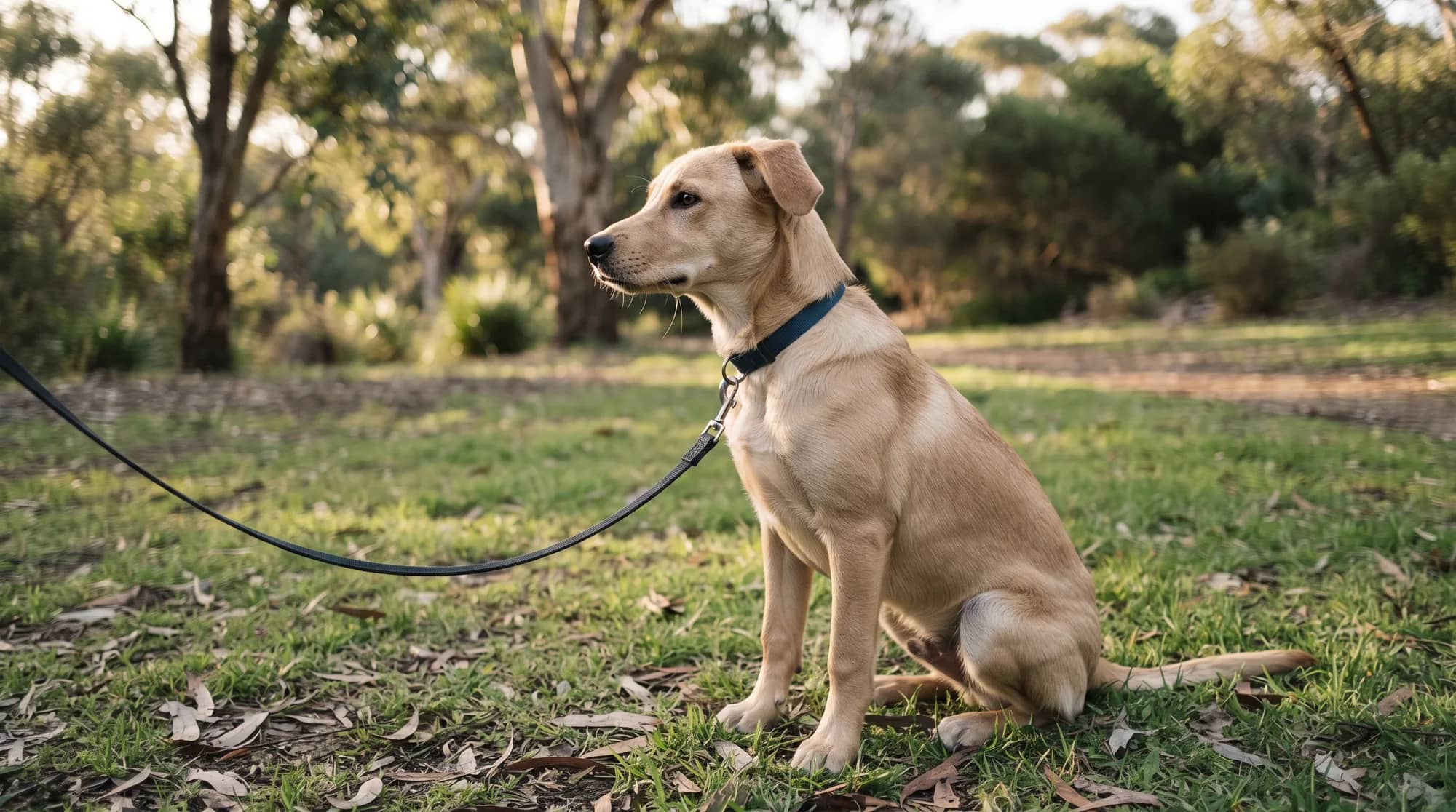
Obedience & Training
Your Dog Has Not Forgotten Its Training. It Is a Teenager.
At around ten months, a lot of owners conclude their training failed. It did not. Their dog hit adolescence — and almost nobody warns you about it.
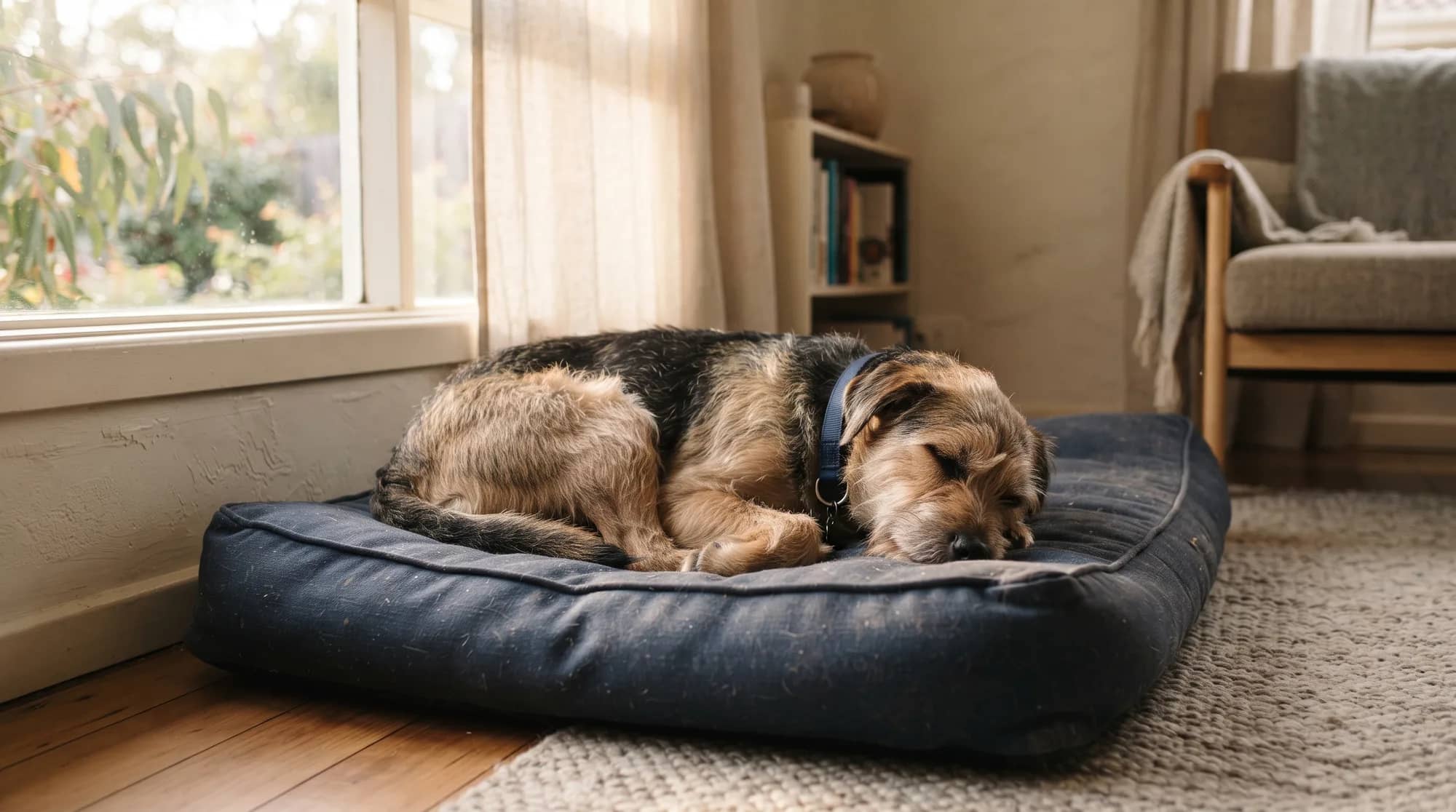
Behaviour Problems
The First 30 Days With a Rescue Dog
The dog you bring home is not the dog you have adopted. It takes about three weeks for the real one to show up — and what you do in that window matters.
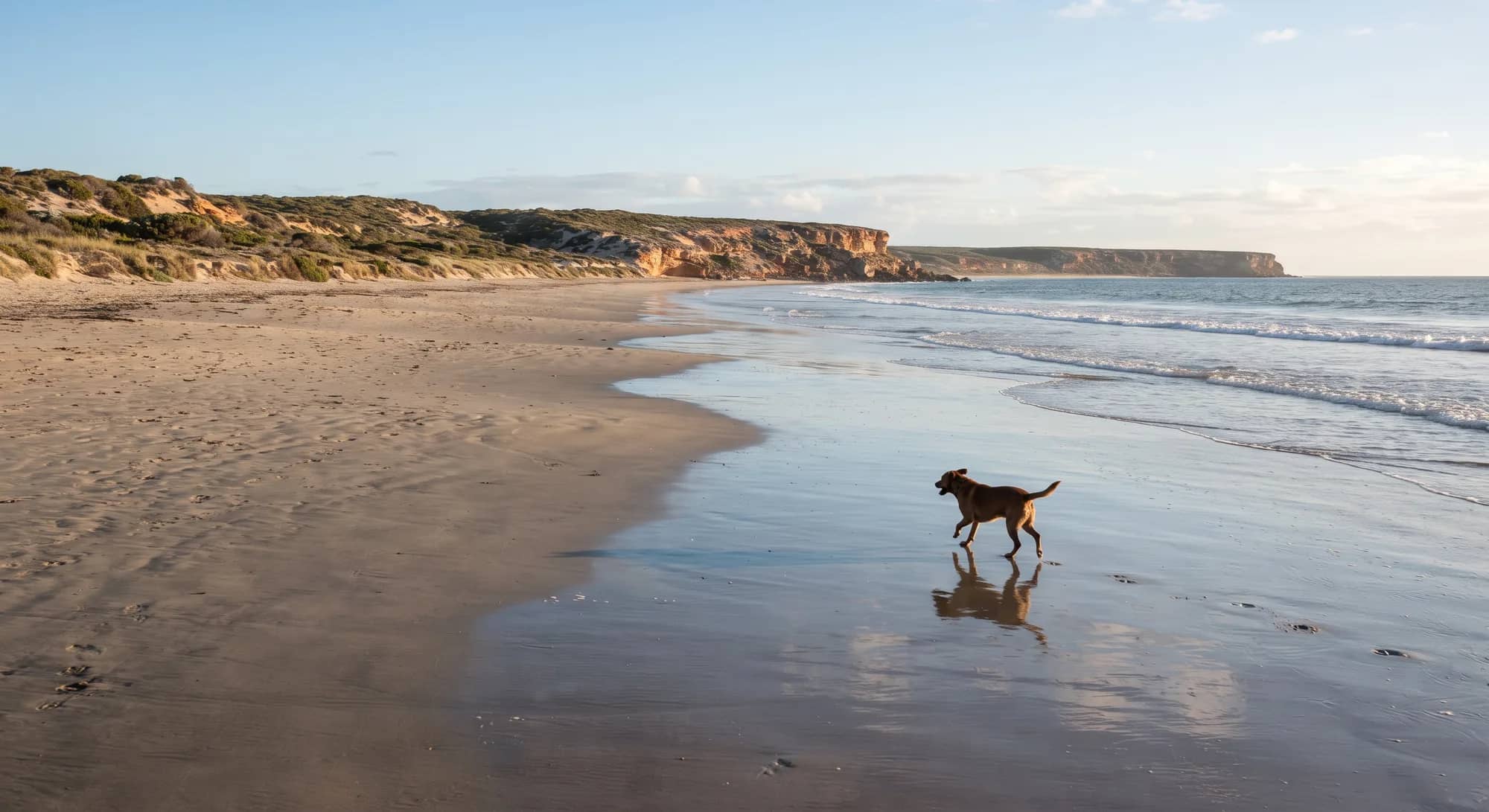
Adelaide Dog Life
Off-Leash Dog Beaches: Southern Adelaide to Victor Harbor
From Glenelg to Victor Harbor, a run-down of the coast, how the off-leash hours generally work, and the two words in the legislation that catch people out.
Questions
Puppy Training in Victor Harbor — questions
My puppy is being raised over winter. What should I do differently?
Should I do the vet clinic puppy school as well?
How do I book if you are only down periodically?
How old should my puppy be before we start?
My puppy has not had all its vaccinations. Can we still socialise?
Should I do this instead of puppy preschool?
Ready when you are
Dog training in Victor Harbor, starting this week.
Tell me what's going on and I'll tell you straight whether I can help — and roughly what it will take. No obligation, no pressure. Southern suburbs of Adelaide — CBD to Victor Harbor.
Send a quick enquiry
Four things and I’ll come back to you. If it is urgent, ring instead — that is always faster.