
Puppy Training · Noarlunga
Puppy Training in Noarlunga
Everything your puppy learns in the next twelve weeks, they will believe for the rest of their life. Worth getting right.
In short
Noarlunga is unusually well set up for puppy socialisation. Within about ten minutes you can reach river trails, an estuary, beach, and genuine busy-retail foot traffic at Colonnades — which is exactly the range of environments a structured socialisation plan needs. The advantage only counts if the exposure is planned; unstructured exposure at the wrong intensity does harm rather than good.
Why Noarlunga
What makes this different in Noarlunga
Most suburbs give you one or two environments. Noarlunga gives you four, and that is a genuine head start for a puppy.
A good socialisation plan is not "meet as many dogs as possible" — that advice has ruined a lot of puppies. It is controlled exposure to a wide range of sights, sounds and surfaces, at an intensity where your puppy is curious rather than overwhelmed. Which means you need variety, and variety is exactly what this area has.
The Onkaparinga River trails give you calm, low-stimulus outdoor exposure — birds, water, uneven ground, the occasional passing dog at a workable distance. The beach at Port Noarlunga and Christies gives you sand, waves, open space and a completely different set of sounds. The Coast Park path gives you bikes and joggers at a predictable distance. And Colonnades, watched from a quiet corner of the car park, gives you trolleys, automatic doors, delivery trucks, crowds and hard surfaces — the urban stuff that is genuinely hard to find otherwise.
The trick is doing it at the right distance. A puppy sitting on your lap at the edge of a car park watching a trolley go past thirty metres away is learning that trolleys are normal. The same puppy dragged through the middle of the crowd is learning that the world is frightening and you will not protect it from it. Same location, opposite outcome.
There is also a long-established obedience club in this area, and it is a genuinely good option for structured contact with other puppies. If that is what your puppy most needs, I will say so. What a class cannot do is fix your kitchen at 6am — the biting, the toileting, the puppy that will not settle. That is what the in-home session is for.
Local factors
What sets dogs off in Noarlunga
The specifics of this suburb, and why they matter for puppy training.
- Colonnades foot traffic, trolleys and automatic doors
- Estuary birdlife and water
- Coast Park cyclists and joggers
- Beach sand, surf noise and open space
- Quiet river trails for low-stimulus early exposure
In practice
A twelve-week socialisation plan built on Noarlunga geography
Noarlunga gives you four genuinely different environments within ten minutes, which is unusual. Here is roughly how I would sequence them for a puppy that comes home at eight weeks.
Weeks 8–10, carried. Your puppy does not need to be on the ground to learn. Sit on a bench at the edge of the Colonnades car park with the puppy on your lap and let it watch trolleys, automatic doors, delivery trucks and crowds from thirty metres. That single location supplies most of the urban exposure that is otherwise hard to arrange, and none of it requires paws on public ground.
Weeks 9–12, quiet outdoor. The Onkaparinga River trails. Low-stimulus, uneven ground, birds, water, the occasional dog at a workable distance. This is where a puppy learns the outdoors is unremarkable.
Weeks 10–14, surfaces and sound. The beach at Port Noarlunga South or Christies. Sand underfoot, surf noise, wind, open horizon — a completely different sensory environment from anywhere inland, and one that pays off for the rest of the dog's life.
Weeks 12–16, predictable movement. The Coast Park path, where bikes and joggers pass at a distance you choose. Far better than a footpath, because you can see them coming.
Throughout, the rule that decides whether any of this helps: your puppy should be observing comfortably, not coping. Loose body, tail up, choosing to look at the thing — good. Tucked, freezing, trying to leave — too close, increase the distance. Same location, opposite outcome, and the difference is entirely how far away you stand.
Locally
Puppy school, the club, and what in-home adds
Noarlunga has a long-established obedience club with real history behind it, and there are vet-run puppy preschools in the area. Both are worth knowing about, and I would rather tell you that plainly than pretend otherwise.
A good puppy class does something I cannot: supervised contact with age-matched puppies in a controlled space, with someone stepping in when it gets too much. That is genuinely valuable and it is not the same thing as a dog-park free-for-all. If your puppy needs structured puppy contact, go.
What a class cannot do is see your house. It cannot fix the biting at 6pm when everyone is tired, the toileting routine that does not fit your work hours, the puppy that screams when you shut the bathroom door, or the fact that one person in the household is undoing what everyone else is doing. Those are the things that make the first two months miserable, and they all live at your address.
The other thing in-home does for a Noarlunga puppy specifically is build the socialisation plan around the geography above. A class gives you an hour a week. What you do with the other six days is what actually shapes the dog, and most owners are never given a plan for it — just told to "socialise", which is the most misunderstood instruction in dog ownership.
For most households the honest answer is both. Class for the puppy contact, in-home for the house and the plan.
Sound familiar?
What I'm called about in Noarlunga
- Needle teeth on hands, ankles and the kids — constantly
- Toilet training that is nearly there and then suddenly is not
- Screaming the house down the moment they are left alone
- Already pulling, already barking, already running the show
- Not sure how to socialise safely before the vaccinations are done
- Getting completely contradictory advice from the internet
How it works
How it works
Set the house up properly
Where the crate goes, where the bed goes, what the routine looks like, what everyone in the house is and is not allowed to do. Half of puppy training is environment, and it is the half nobody tells you about.
Fix the three things that drive owners mad
Biting, toileting and settling. We work on all three in the session, with technique you can actually apply at 11pm on a Tuesday when you are exhausted.
Build a socialisation plan
Not "meet as many dogs as possible" — that advice ruins puppies. A structured list of what to expose them to, in what order, and how to read whether it is going well.
Start the real training
Name response, loose lead from the first walk, sit and drop, and the beginnings of recall. Started now, these are easy. Started at ten months, they are work.
Related
The full service page, the suburb guide, and the wider area.
Read up
Free guides on this
Written for owners in this part of the south. If one of these fixes it and you never ring me, that is a good outcome.
Adelaide Dog Life
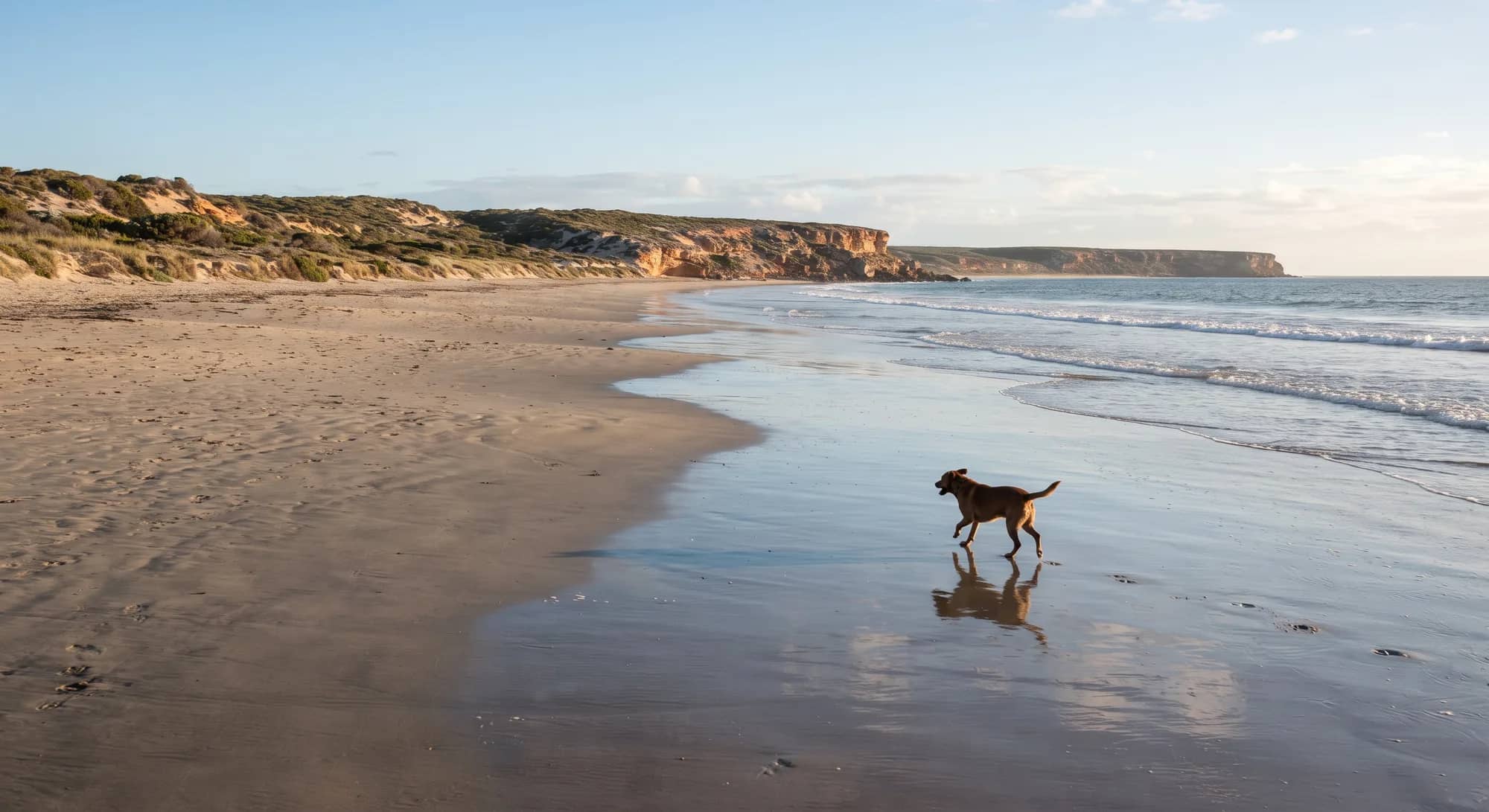
Off-Leash Dog Beaches: Southern Adelaide to Victor Harbor
From Glenelg to Victor Harbor, a run-down of the coast, how the off-leash hours generally work, and the two words in the legislation that catch people out.
Obedience & Training
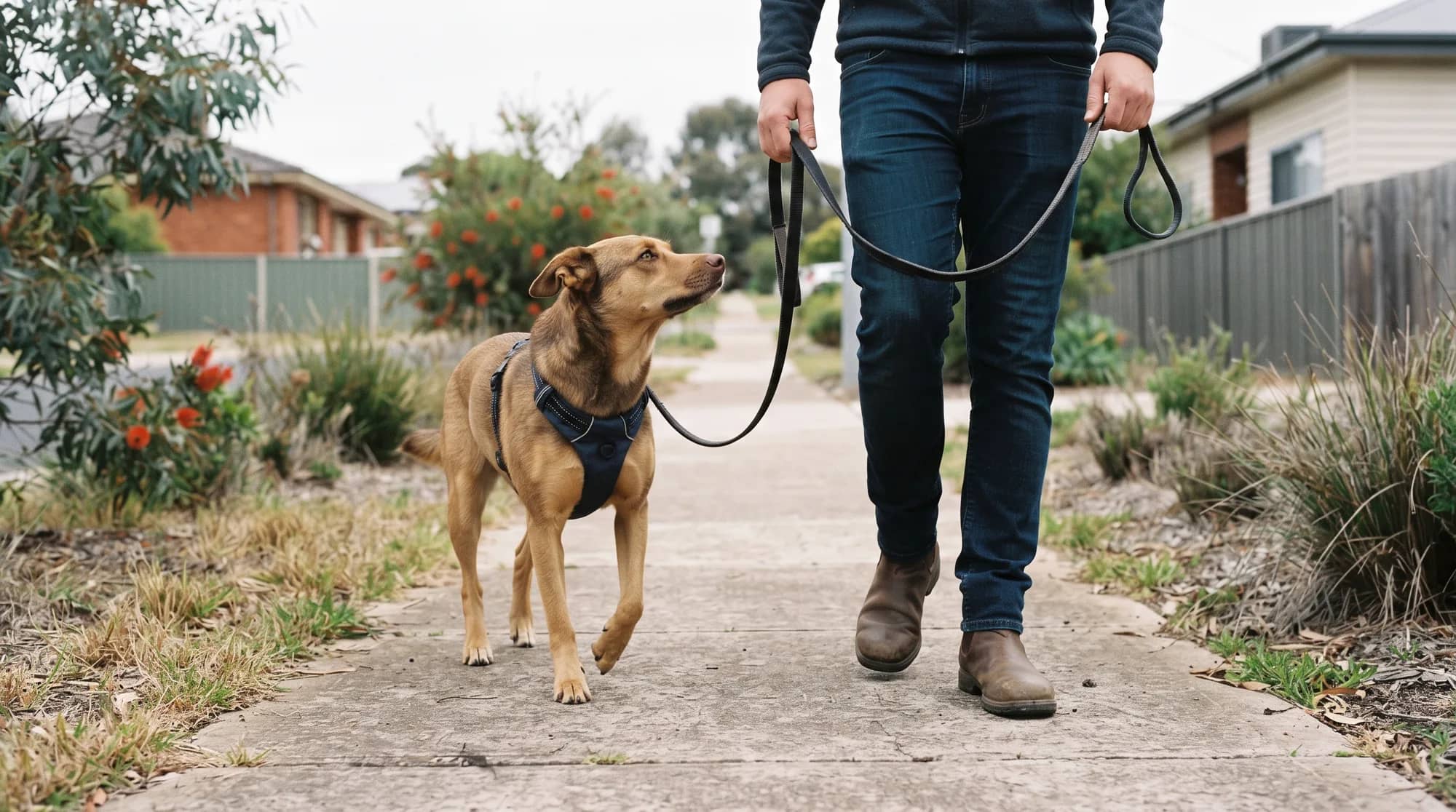
How to Stop Your Dog Pulling on the Lead
Your dog is not pulling because it is dominant, stubborn, or untrained. It is pulling because pulling works — and it has worked every single walk since the day you got it.
Puppy Training
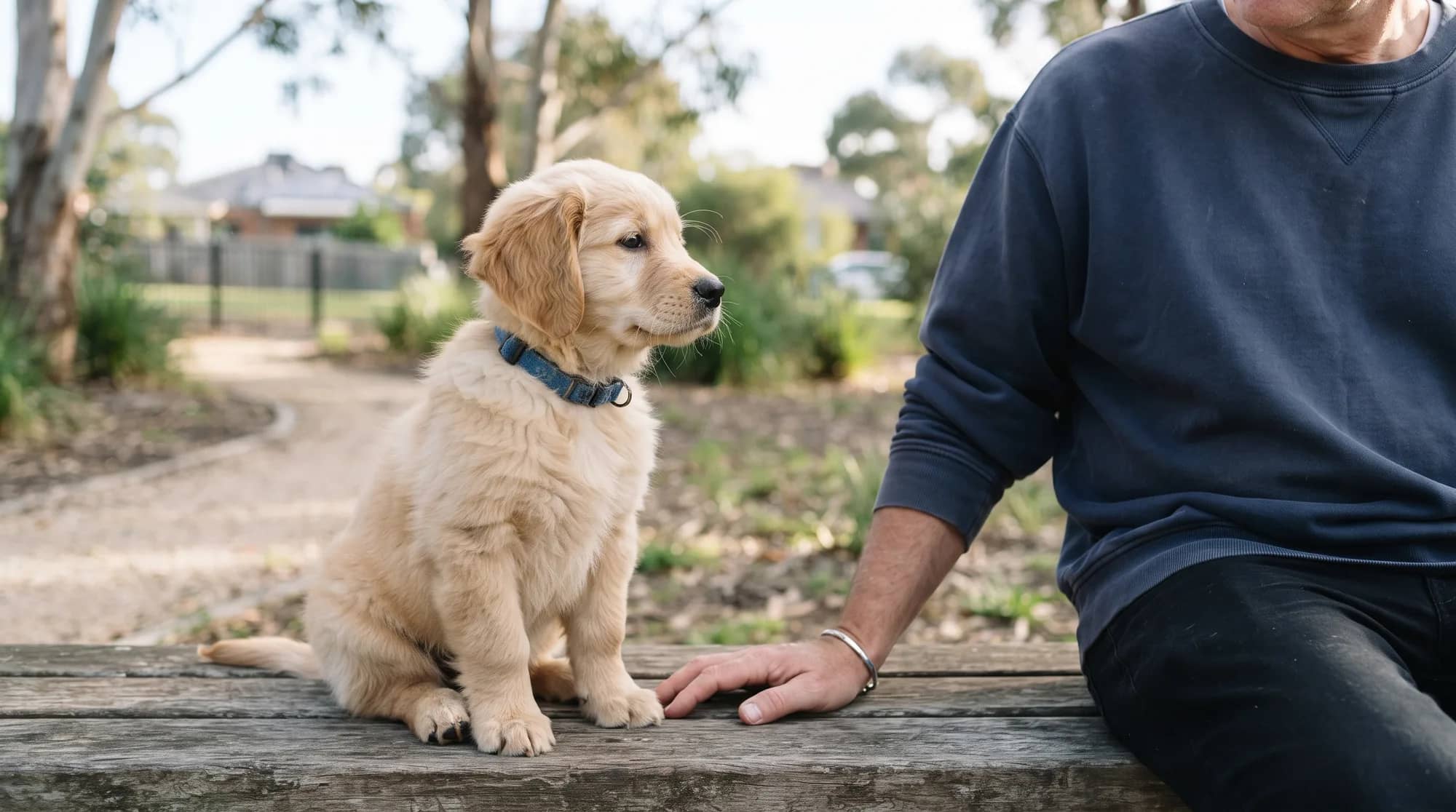
When Should Puppy Training Actually Start?
The most valuable training window in your dog's entire life closes at around sixteen weeks. Most people start using it at six months.
Questions
Puppy Training in Noarlunga — questions
My puppy has not finished its vaccinations. Can we start?
Is this instead of puppy school?
How old should my puppy be before we start?
My puppy has not had all its vaccinations. Can we still socialise?
Should I do this instead of puppy preschool?
Ready when you are
Dog training in Noarlunga, starting this week.
Tell me what's going on and I'll tell you straight whether I can help — and roughly what it will take. No obligation, no pressure. Southern suburbs of Adelaide — CBD to Victor Harbor.
Send a quick enquiry
Four things and I’ll come back to you. If it is urgent, ring instead — that is always faster.